SHUOQIANG ELECTRONICS
+86 136 0306 3656
info@sqpcb.com
HOME
PCB QUOTE
PRODUCTS
Rigid flex PCB and special PCB
Multilayer PCB
Aluminum base PCB
PCB Mounting and Soldering
Recommend
EQUIPMENTS
CAPABILITY
NEWS
Industry News
Company News
Product Dynamics
FAQ
CONTACT US
HOME
PCB QUOTE
PRODUCTS
Rigid flex PCB and special PCB
Multilayer PCB
Aluminum base PCB
PCB Mounting and Soldering
Recommend
EQUIPMENTS
CAPABILITY
NEWS
Industry News
Company News
Product Dynamics
FAQ
CONTACT US
English
Arabic
Chinese (Simplified)
Dutch
English
French
German
Italian
Portuguese
Russian
Spanish
-->
NEWS & BLOG
Check out the news about us
Home
>
Post Tag
>
PCB Supplier
2025-09-01
296
Does Your Application Run Hot? What is a High Tg PCB and Why It Might Be Your Solution
Introduction: The Growing Need for Heat-Resistant PCBs In today’s electronics-driven world, the demand for devices that are smaller, faster, and more powerful is unrelenting. Engineers are constantly faced with a difficult trade-off: as circuits become more compact and power densities increase, the thermal load inside printed circuit boards (PCBs) also climbs. This naturally leads to one crucial q...
Read More
2025-08-29
296
Relative Permittivity of Copper in PCB Design and Production
Relative Permittivity of Copper in PCB Design and Production Copper isn’t just the “wiring” of modern electronics—it’s the backbone of every printed circuit board (PCB). While engineers often highlight copper’s excellent conductivity, its electromagnetic behavior and interaction with high-frequency signals make its relative permittivity and surface properties critical in advanced PCB design. So, w...
Read More
2025-08-09
332
PCB Copper Plating Lines: Manual, Gantry, and Vertical Continuous Systems
PCB Copper Plating Lines Introduction In PCB manufacturing process, copper electroplating is a critical process for building conductive layers and ensuring the durability of the circuit. The efficiency, precision, and stability of this step largely depend on the type of electroplating line used. Today’s factories typically adopt one of three main systems: Manual Copper Plating Lines Gantry (Hoist-...
Read More
2025-08-09
402
PCB Copper Plating Process: Three Common Methods and Their Pros & Cons
Three Common PCB Copper Plating Process Methods and Their Pros & Cons In printed circuit board (PCB) manufacturing, copper electroplating is a critical process for building reliable conductive pathways both on the PCB surface and inside plated through-holes (PTH). The choice of plating process directly affects product reliability, manufacturing cost, and delivery time. This guide explores the...
Read More
2025-08-07
445
Understanding 2OZ Copper Thickness: IPC Standard vs. Real-World Practice
When customers request a “2OZ copper thickness” for their PCBs, it seems like a straightforward specification. After all, 2OZ copper equates to 70μm in theory. But here's where it gets tricky—once the PCB Manufacturer is manufactured and cross-sectioned, the measured copper thickness often shows just around 60μm, sometimes even lower. This discrepancy frequently causes misunderstandings a...
Read More
2025-08-03
554
Relative Permittivity of Copper: Key Role in PCB Design and Production
Copper is the lifeline of every modern printed circuit board (PCB). But beyond just being an excellent conductor, copper's interaction with electromagnetic signals—especially at high frequencies—makes its surface properties and relative permittivity crucial in advanced PCB design. So what’s the real story behind the relative permittivity of copper and how does it shape your circuit board’s perform...
Read More
2025-07-29
348
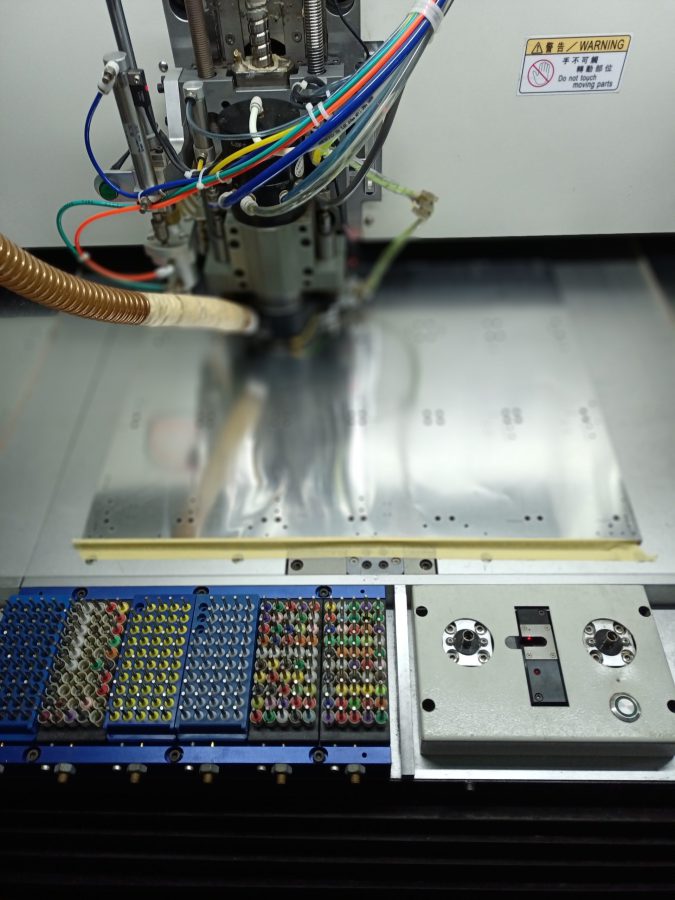
Complete Guide to PCB Drill Machines: Technology, Drives, and SQPCB’s Investment
PCB Drill Machine: In PCB manufacturing, the drilling process is essential for creating vias and through-holes that electrically and mechanically connect the layers of a circuit board. PCB drilling machines—also known as mechanical drilling machines—are specialized equipment used to precisely drill thousands of holes in a single PCB panel. These machines operate with incredible accuracy, of...
Read More
2025-07-28
340
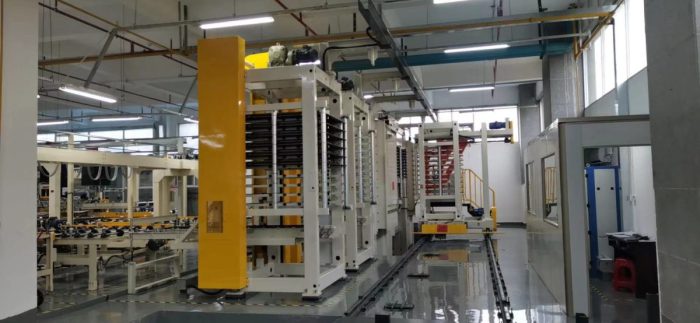
PCB Laminating Machines: Essential Equipment in PCB Manufacturing
In the PCB manufacturing process, laminating machines (also called lamination presses) are indispensable. These machines are designed to bond multiple layers of materials, including copper foil, insulating layers, and core substrates, by applying high heat and pressure. As electronic devices continue to shrink and designs become increasingly intricate, the demands on laminating machines have inten...
Read More
2025-07-26
374
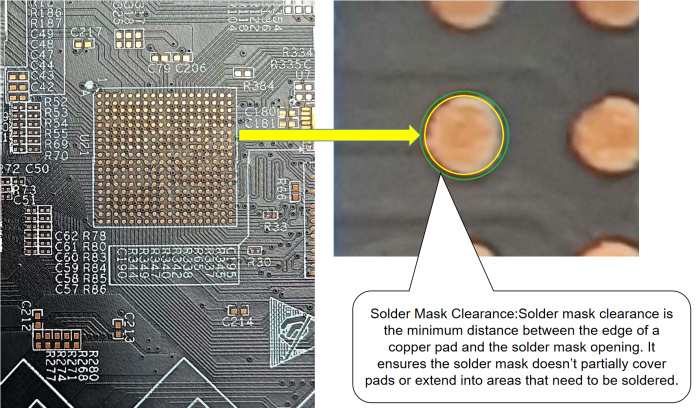
Solder Mask Clearance: Engineering Precision for High-Reliability PCBs
Solder Mask Clearance: Engineering Precision for High-Reliability PCBs In the world of PCB manufacturer, solder mask clearance isn’t just a design detail—it’s a critical factor that determines whether your board meets modern performance, reliability, and assembly standards. As component sizes shrink and BGA packages dominate high-speed designs, achieving tighter solder mask clearances becomes incr...
Read More
2025-07-21
344
Flash Gold, ENIG, and Gold Plating: Understanding Their Differences and Advantages in PCB Manufacturing
Flash Gold, ENIG, and Gold Plating In the world of PCB manufacturing, the choice of surface finish plays a crucial role in ensuring the quality, durability, and performance of the final product. Gold finishes, including flash gold, ENIG (Electroless Nickel Immersion Gold), and gold plating, are commonly used to protect the copper traces and pads on the PCB from oxidation, improve solderability, an...
Read More
2025-07-18
278
What are BOM, DIP, SMT, SMD
What Are BOM, DIP, SMT, and SMD in Modern Electronics Manufacturing? In the design and manufacturing process of modern electronic products, BOM, DIP, SMT, and SMD are four unavoidable keywords. Each represents a critical stage—from design blueprints and component installation methods to automated production processes. This article provides a comprehensive explanation of these four concepts and com...
Read More
2025-07-18
312
ICT Testing Explained: From Principles to Applications
ICT Testing: Unlocking the Core of PCBA Quality Control (with SQPCB Case Study) In the electronics manufacturing field, PCBA (Printed Circuit Board Assembly) quality control is the key to ensuring product reliability. Among the various testing methods, ICT (In-Circuit Test System) is known as the “golden tool” of PCBA testing. With its efficiency and precision, ICT has become a standard practice i...
Read More
‹
1
2
3
4
5
6
7
8
9
›
NEWS LIST
Industry News
Company News
Product Dynamics
Faq
manufacturer
Product Center
long board pcb
Flexible PCBs
Special PCB
Express Printed Circuit Board
Pcb Prototype
LED PCB
PCB
Printed Circuit Board
Pcb meaning
Pcb manufacturer
Rigid pcb board
Rigid Flex PCB
Contact Us
+86 136 0306 3656
info@sqpcb.com
Get A Quote
n5ksMp
Quote
Name:
E-mail:
Your Message:
Submit
E-mail
info@sqpcb.com
Whatsapp
+86 136 0306 3656



 Quote
Quote
 E-mail