The Unseen Design Trap: A Deep Dive into the Stub Effect and Its Impact on PCB Manufacturing
1. Introduction: Why the Stub Effect Matters in Modern PCB Manufacturing
In high-speed printed circuit board manufacturing, performance failures often come from silent, invisible design traps rather than spectacular, easily recognizable defects. One of the most deceptive and powerful traps is the phenomenon known as the stub effect, a parasitic structure resulting from unused or poorly terminated via or trace segments that degrade signal integrity without immediately revealing its true source.
What makes the stub effect so damaging is not merely that it disrupts transmission, but that it selectively targets the areas where modern designs are most vulnerable: fast edges, tight timing budgets, small noise margins, and high-frequency signals that push copper interconnects close to their theoretical limits.
Fundamentally, the stub effect teaches us an important lesson: there are no shortcuts in high-frequency engineering, and every abandoned segment on a PCB has consequences.
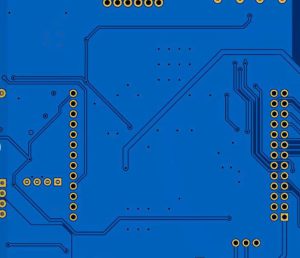
stub effect
2. The Definition of Stub Effect in PCB Manufacturing
2.1 Understanding Stub Effect in Signal Architecture
The stub effect refers to an unwanted segment of conductor—generally a portion of a via barrel, trace, or branch—that remains electrically connected to a signal path but is not part of the intended signal route. In other words, it is a physical structure that carries the same electrical potential, but does not participate in the transmission of data.
The danger of this structure comes from its passive interaction with the main signal. Instead of carrying information, it behaves like a resonator or energy trap, absorbing and reflecting portions of the high-frequency waveform back into the transmission line. This reflected energy causes distortion, attenuation, and frequency-selective interference.
The severity of the stub effect increases dramatically with frequency because the unused segment begins to behave like an antenna or transmission line whose electrical length corresponds to the wavelength of the signal.
At certain frequencies, the stub becomes resonant—meaning that it will sustain standing waves, amplifying interference and reflection. Designers often fail to anticipate these effects because simulation environments typically assume idealized structures or low-frequency operation.
2.2 Physical and Electromagnetic Mechanisms Behind Stub Effect
From an electromagnetic perspective, the stub effect can be characterized through three primary mechanisms:
-
Partial energy accumulation
The unused conductor stores electromagnetic energy proportional to its length and geometry. -
Phase-shifted reflection
The stored energy is released back into the main line with a phase delay, creating multi-path interference. -
Resonant amplification
When the stub’s electrical length reaches ¼ wavelength, it enters resonance and reflects maximum energy.
This phenomenon follows a predictable physical model, yet becomes unpredictable in real boards due to dielectric variability, copper roughness, discontinuities, surface finishes, and manufacturing tolerances.
When engineers encounter inconsistent results or intermittent failures across batches, the stub effect is often the hidden root cause.
3. Stub Effect and PCB Performance: The Hidden Saboteur of High-Speed Signals
3.1 Stub Effect in Signal Integrity: Bandwidth Loss and Eye Diagram Collapse
One of the critical impacts of the stub effect is the deterioration of signal integrity. Due to reflection and attenuation, high-speed signals experience:
-
Eye diagram shrinking
-
Increased jitter
-
Reduced rise time
-
Higher bit error rates
-
Increased susceptibility to crosstalk
In differential systems, the stub effect disrupts the delicate balance between signal pairs, creating skew that cannot be compensated by equalization alone. Ironically, modern equalization algorithms sometimes amplify high-frequency distortions, making stub-induced problems worse.
3.2 Impact of Stub Effect on EMI/EMC Performance
A well-designed PCB is a closed communication system, but the stub effect introduces unintended radiation points that become antennas. These antennas can emit or receive electromagnetic energy, causing:
-
System-level emissions failures
-
Susceptibility to external interference
-
Crosstalk propagation across layers
Many companies spend weeks debugging EMI failures by adding shields, absorbers, and guard structures—only to discover that the “antennas” were stubs created by unused vias.
3.3 Impact of Stub Effect on Power Delivery and Timing
Although primarily associated with signal routing, the stub effect also indirectly influences timing closure and power delivery. Timing delays increase because energy reflection slows edge transitions, while harmonic content in the line can inject noise into PDN structures.
I once worked with a team that assumed PDN-induced jitter was caused by simultaneous switching noise. It turned out the real source was a collection of 2mm via stubs on a differential clock net.
This taught us that optimizing power systems is futile if routing mistakes quietly sabotage timing stability.
4. Stub Effect in PCB Design: Why Good Intentions Create Hidden Failures
4.1 How Common Layout Practices Accidentally Create Stub Effect
The stub effect is rarely the result of negligence. Instead, it is caused by:
-
Using through-hole vias for signals that transition only between a few layers
-
Multi-branch routing without proper termination
-
Layer transitions that leave unused segments
-
Overuse of stacked vias in dense designs
-
Debug pads that remain after prototype spins
Designers often prioritize routing convenience, manufacturability, or flexibility without considering high-frequency behavior. Even simulation specialists may not model these effects if verification is conducted at low frequencies.
4.2 Why the Stub Effect Is Worse in HDI and Multilayer PCBs
The stub effect becomes particularly challenging in HDI because high layer counts make via depths deeper, causing unused barrel sections to be longer. Meanwhile, signal frequencies are higher and margins tighter.
The combination of:
-
Deep vias
-
Short traces
-
High frequencies
-
Dense routing
creates the perfect storm.
This is why high-density PCB manufacturing requires not only advanced materials, but also design methodologies capable of eliminating or minimizing structural vulnerabilities.
5. Prevention Measures Against Stub Effect in PCB Manufacturing
5.1 Backdrilling: The Most Effective Solution to Stub Effect
The industry-standard solution to the stub effect is backdrilling, a controlled depth drilling process that removes the unused portion of a via, leaving only the electrically necessary part intact.
Benefits include:
-
Minimized reflection and resonance
-
Improved high-frequency performance
-
Lower EMI emissions
-
Increased jitter stability
-
Cleaner eye diagrams
Backdrilling is not new, but its adoption is growing because multi-gigabit systems require signal paths that are practically perfect.
5.2 Blind and Buried Vias: Reducing Stub Effect by Design
Where possible, designers can eliminate stub-prone topologies by using:
-
Microvias
-
Blind vias
-
Buried vias
Compared to traditional through-holes, these structures allow more controlled design of electrical lengths while improving density and routing efficiency.
However, microvias add cost and yield complexity. Manufacturers with poor process control should be avoided.
One reason I recommend SQ PCB is because their microvia and HDI process stack-ups are far more stable than low-cost vendors that treat HDI features as mass-market commodity.
5.3 Impedance Control and Simulation
Simulation tools such as HFSS, Sigrity, ADS, and HyperLynx can model stub-induced reflections, but only if engineers define realistic geometries and dielectric variables.
Too many teams trust textbook impedance calculations that ignore copper roughness, fiber weave, and plating thickness.
Manufacturing reality always corrupts theoretical models. Good engineering anticipates that.
5.4 Design Rules for Stub Effect Mitigation
Best practices include:
-
Minimize via transitions on high-speed nets
-
Shorten via barrels by selecting optimal layer spans
-
Remove test pads in final revisions
-
Avoid multi-branch routing on critical nets
-
Apply termination strategies where unavoidable
Stub elimination is not a technology decision—it is a discipline.
Stub Effect Mitigation Strategies in PCB Manufacturing
The following table compares common engineering and manufacturing strategies used to manage or reduce the stub effect, along with their benefits, limitations, and best-fit scenarios.
| Mitigation Strategy | Mechanism of Reduction | Impact on Performance | Cost Level | Manufacturing Complexity | Best Use Case | Limitations |
|---|---|---|---|---|---|---|
| Backdrilling | Removes unused via barrel segments | Very High: Major SI and EMI improvement | Medium to High | High | Multi-gigabit systems, telecom, servers | Requires tight depth control; added tooling |
| Blind Vias | Limits vertical via length | High: Shorter electrical length | High | Very High | HDI, small-form-factor design | Yield risk; expensive materials |
| Buried Vias | Routes signals between inner layers only | Medium to High | High | Very High | Dense multilayer boards | Limited flexibility; high cost |
| Microvias | Layer-to-layer short connection | High | Very High | Very High | Mobile, aerospace, RF | Reliability concerns in stacking |
| Controlled Impedance Routing | Minimizes reflection effects | Medium | Low | Medium | General high-speed signals | Can’t fix long stubs |
| Simulation-Based Verification | Identifies problematic structures early | Medium | Low | Medium | Complex or novel designs | Accuracy depends on modeling |
| Restrict Via Count | Avoids unnecessary transitions | Medium | Low | Low | Cost-sensitive designs | Limited for dense routing |
| Remove Debug/Test Pads | Eliminates unintended branches | Low to Medium | Low | Low | Any design | Often ignored in late revisions |
Conclusion: Understanding Stub Effect as a Strategic Design Responsibility
The stub effect is often seen as a technical issue, but its true significance lies deeper: it is a structural vulnerability created by design decisions, architectural compromises, and manufacturing realities. The complexity of high-frequency PCBs means that every physical structure—whether used, unused, or “left behind”—becomes an active participant in signal behavior.
Understanding the stub effect requires acknowledging that unintended geometry is not passive, especially in multi-gigabit signaling environments. A 1–2 mm via segment may seem insignificant to a designer working under deadline pressure, yet it behaves like an antenna, a resonator, or an energy trap, affecting:
-
Timing margins
-
Eye diagram openness
-
Jitter tolerance
-
Crosstalk propagation
-
Emission compliance
-
Power integrity
And unlike other forms of noise, stub-induced disturbances are recurrent, frequency-dependent, and extremely sensitive to manufacturing variation. This makes debugging expensive, unpredictable, and often inconclusive.
From a manufacturing perspective, the stub effect has reshaped how high-performance PCBs are fabricated. Solutions such as backdrilling, microvias, and HDI architectures are no longer optional—they are infrastructure requirements for advanced computing, telecom, AI accelerators, and defense systems. Preventing parasitic structures is not a matter of luxury; it is a matter of functional survival.
However, the most effective form of mitigation begins before the PCB reaches the factory. Good routing strategies, thoughtful via usage, and meaningful simulation can eliminate the majority of stub-related risk before fabrication. Manufacturing-level interventions should be applied to the remaining high-criticality structures, not used as corrective patches for careless design.
In practice, success depends on collaboration. A designer without manufacturing insight cannot predict tolerances or process limitations. A factory without engineering maturity cannot anticipate parasitic risks from certain stack-ups, via spans, or plating geometries.
This is why engineering-driven manufacturers such as SQ PCB become strategic partners rather than commodity suppliers. Their ability to validate stack-ups, control advanced processes, and eliminate parasitic vulnerabilities provides designers with a safety net—reducing project risk, time-to-market, and total cost of ownership.
In my experience, organizations that treat the stub effect as a “rare edge-case problem” are the ones most frequently disrupted by it. Organizations that treat it as a system-level design responsibility are the ones that achieve sustainable, predictable performance.
By respecting this fact, the industry continues to evolve toward cleaner architectures, more disciplined design methodologies, and manufacturing ecosystems capable of supporting the relentless demand for speed, density, and reliability.
FAQs
-
What is the difference between a via barrel and a microvia?
A via barrel is a long plated hole passing through multiple layers. A microvia is a small, laser-drilled via connecting one layer at a time. -
What is the main cause of the stub effect in PCB designs?
The stub effect is caused by unused conductive segments such as via barrels or trace branches that remain electrically connected and cause signal reflections. -
How does backdrilling help mitigate the stub effect?
Backdrilling removes unused via segments, reducing resonance and improving signal integrity in high-frequency systems. -
Does the stub effect matter in low-frequency designs?
It has minimal impact below about 500 MHz, but becomes increasingly severe in multi-gigahertz applications. -
Are microvias a guaranteed solution to stub-related issues?
They reduce stub length but introduce cost, reliability, and yield considerations. Proper manufacturing capability is essential.

- long board pcb
- Flexible PCBs
- Special PCB
- Express Printed Circuit Board
- Pcb Prototype
- LED PCB
- PCB
- Printed Circuit Board
- Pcb meaning
- Pcb manufacturer
- Rigid pcb board
- Rigid Flex PCB
 Quote
Quote
 E-mail