The Backbone of Advanced Electronics: The Strategic Role of Sequential Lamination in PCB Fabrication
Introduction: Why Sequential Lamination Matters in Advanced PCB Fabrication
The evolution of modern electronics is no longer driven solely by semiconductor scaling. As chip-level integration approaches physical and economic limits, the printed circuit board has emerged as a decisive enabler of system performance, reliability, and miniaturization. In this context, Sequential Lamination is not merely a fabrication technique—it represents a strategic architectural shift in how complex electronic systems are physically realized.
Traditional PCB fabrication methods were conceived in an era when layer counts were modest, interconnect density was low, and electrical performance constraints were forgiving. However, today’s electronic products—ranging from 5G infrastructure and autonomous vehicles to medical imaging and aerospace control systems—demand unprecedented levels of interconnect precision, signal integrity, and structural reliability. These requirements have fundamentally redefined the role of PCB fabrication technology.
Sequential Lamination has emerged as a cornerstone process in meeting these challenges. By enabling multilayer structures to be built incrementally rather than in a single monolithic lamination cycle, this approach unlocks design freedoms that were previously unattainable. It allows engineers to integrate high-density interconnects, stacked microvias, and complex layer configurations without compromising manufacturability or performance.
From a strategic perspective, Sequential Lamination bridges the gap between semiconductor packaging and traditional PCB fabrication. It transforms the PCB from a passive interconnection platform into an active structural and electrical participant in system-level performance. This shift is particularly evident in advanced HDI boards, where routing density, via reliability, and impedance control are tightly interwoven.
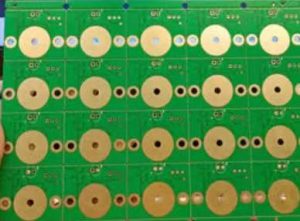
Sequential Lamination
Sequential Lamination Definition and Fundamental Concepts
Sequential Lamination refers to a multilayer PCB fabrication methodology in which layers are laminated in multiple, controlled stages rather than bonded together in a single lamination cycle. Each lamination step builds upon a previously fabricated sub-structure, allowing new layers, vias, and interconnections to be added progressively.
At its core, Sequential Lamination is defined by three fundamental characteristics:
-
Incremental Layer Build-Up
Instead of pressing all dielectric and copper layers simultaneously, the PCB stack-up is divided into multiple lamination phases. Each phase forms a stable structural unit before subsequent layers are added. -
Interstage Via Formation
Vias—particularly microvias—are drilled, plated, and validated between lamination steps. This enables complex via architectures such as stacked, staggered, or skip vias that are impractical or unreliable in single-pass lamination. -
Process Isolation and Control
Each lamination stage can be independently optimized for material flow, pressure, temperature, and alignment, significantly improving yield and dimensional accuracy.
From a fabrication standpoint, Sequential Lamination introduces a layered manufacturing logic similar to additive processes. However, unlike purely additive manufacturing, each stage must maintain strict mechanical and electrical compatibility with the next. This requirement elevates the importance of material selection, surface preparation, and process consistency.
One of the most important conceptual distinctions is that Sequential Lamination is not synonymous with HDI, although it is a critical enabler of HDI technology. While HDI defines a design outcome—high wiring density, fine lines, and microvias—Sequential Lamination defines a manufacturing pathway that makes such outcomes feasible at scale.
In practical terms, a PCB fabricated using Sequential Lamination may undergo two, three, or even more lamination cycles depending on layer count and design complexity. Each cycle introduces new copper layers and dielectric materials, followed by drilling and metallization steps that establish vertical electrical connections.
From an engineering perspective, this staged approach offers a powerful advantage: risk segmentation. Potential defects are localized to specific lamination stages, making them easier to detect, analyze, and mitigate. This is particularly valuable in high-reliability applications where latent defects can have catastrophic consequences.
Sequential Lamination Materials Selection and Stack-Up Philosophy
Materials selection is where Sequential Lamination transitions from a mechanical process into a system-level engineering discipline. Because layers are added incrementally, each dielectric and copper interface must be compatible not only with adjacent layers, but also with all previous lamination histories.
Dielectric Materials in Sequential Lamination Structures
In Sequential Lamination, dielectric materials are exposed to multiple thermal cycles. This imposes strict requirements on glass transition temperature (Tg), coefficient of thermal expansion (CTE), and resin flow behavior.
High-Tg FR-4, modified epoxy systems, and low-loss materials are commonly employed depending on application requirements. For high-speed or RF designs, low Dk/Df materials must maintain dielectric stability across repeated lamination cycles—a nontrivial challenge that directly affects impedance consistency.
One subtle but critical consideration is resin compatibility between lamination stages. Incompatible resin systems can lead to weak interlaminar bonds or micro-delamination under thermal stress.
Copper Foil Considerations in Sequential Lamination
Copper selection also takes on heightened importance. Rolled annealed copper and electrolytic copper each behave differently during repeated lamination and etching cycles. Surface roughness, peel strength, and grain structure all influence long-term reliability.
In Sequential Lamination, thinner copper foils are often preferred for build-up layers to support fine-line imaging and microvia formation. However, this must be balanced against current-carrying requirements and mechanical robustness.
Stack-Up Philosophy: Designing for Sequential Lamination
A successful Sequential Lamination stack-up is not simply layered—it is strategically staged. Designers must decide which layers are fabricated early and which are added later, based on signal criticality, via architecture, and mechanical constraints.
High-speed signal layers are often positioned closer to stable reference planes formed in early lamination cycles, minimizing impedance variation. Conversely, less critical routing may be placed in later build-up layers where density is highest.
Sequential Lamination vs Conventional Lamination: Structural Differences
To fully appreciate the strategic role of Sequential Lamination, it is essential to contrast it with conventional single-pass lamination—not just in terms of process steps, but in how each approach shapes PCB architecture, reliability, and performance boundaries.
Structural Philosophy: Monolithic vs Progressive Construction
Conventional lamination follows a monolithic philosophy. All dielectric layers, copper foils, and cores are stacked and bonded in one lamination cycle. This approach prioritizes simplicity and throughput, but it inherently limits structural complexity. Once laminated, internal features are permanently sealed, leaving no opportunity for intermediate validation or correction.
Sequential Lamination, by contrast, adopts a progressive construction philosophy. Each lamination stage creates a semi-finished structure that is electrically functional and mechanically stable. Subsequent layers are added only after the integrity of earlier stages has been verified.
This distinction fundamentally alters risk distribution. In conventional lamination, risk is concentrated at a single point. In Sequential Lamination, risk is segmented and managed incrementally.
Via Architecture Limitations and Opportunities
Via formation highlights one of the most significant structural differences. Single-pass lamination typically relies on through-holes or limited blind vias with challenging aspect ratios. As layer counts increase, via reliability becomes increasingly difficult to maintain.
Sequential Lamination enables controlled formation of blind, buried, stacked, and staggered microvias. Each via connects only a limited number of layers, dramatically reducing mechanical stress and plating challenges. Structurally, this results in a more resilient vertical interconnect network.
Dimensional Stability and Registration Accuracy
In conventional lamination, all layers are subject to a single thermal and pressure cycle. Variations in material expansion can accumulate, leading to misregistration—especially in fine-line designs.
With Sequential Lamination, alignment is recalibrated at each stage. This repeated registration significantly improves layer-to-layer accuracy, which is critical for HDI and ultra-fine pitch applications.
From a structural engineering standpoint, Sequential Lamination trades procedural simplicity for architectural precision—a trade that modern electronics increasingly demand.
Sequential Lamination vs Conventional Lamination Comparison
| Aspect | Conventional Lamination | Sequential Lamination |
|---|---|---|
| Lamination Cycles | Single-pass lamination | Multiple staged lamination cycles |
| Layer Count Capability | Limited for high-density designs | Excellent for high layer counts |
| Via Types Supported | Mainly through-holes, limited blind vias | Blind, buried, stacked, staggered microvias |
| Registration Accuracy | One-time alignment | Re-alignment at each stage |
| Risk Distribution | Concentrated in one step | Segmented across stages |
| Suitability for HDI | Limited | Highly suitable |
| Typical Applications | Low–medium complexity PCBs | Advanced, high-performance PCBs |
Conclusion
As electronic systems evolve toward higher speeds, greater integration, and tighter spatial constraints, the role of the PCB has fundamentally changed. It is no longer a passive carrier of components, but an active architectural element that shapes electrical performance, thermal behavior, and long-term reliability. Within this transformation, Sequential Lamination stands out as a strategic backbone technology rather than a mere fabrication option.
What makes Sequential Lamination truly significant is not only its ability to support high layer counts or microvia structures, but its alignment with modern engineering realities. Complexity in advanced electronics is unavoidable; Sequential Lamination does not attempt to eliminate this complexity, but instead manages it intelligently—by breaking it into controlled, verifiable stages.
From a design perspective, Sequential Lamination encourages intentional architecture. Engineers are forced to think beyond flat stack-ups and consider vertical interconnect strategies, staged reference planes, and localized performance optimization. This often leads to cleaner signal paths, more robust power delivery, and more predictable thermal behavior.
From a manufacturing perspective, Sequential Lamination redistributes risk. Defects are identified earlier, yield loss is localized, and process learning becomes cumulative rather than reactive. Over time, this results in higher consistency, especially for HDI, high-speed, and high-reliability applications.
Perhaps most importantly, Sequential Lamination supports scalability of innovation. As packaging technologies, data rates, and integration levels continue to advance, PCB fabrication must evolve in parallel. Sequential Lamination provides a flexible framework capable of adapting to future requirements without forcing radical process reinvention.
In this sense, Sequential Lamination is not simply a response to current challenges—it is an enabling foundation for the next generation of electronic systems.
Frequently Asked Questions (FAQ)
1. When should designers avoid Sequential-Lamination?
For low-layer-count, low-speed, or cost-sensitive designs where routing density and performance demands are modest, conventional lamination may be more appropriate.
2. Is Sequential-Lamination always required for HDI PCBs?
Not all HDI designs require Sequential-Lamination, but most high-layer-count or microvia-intensive HDI boards rely on it to achieve acceptable yield and reliability.
3. How does Sequential-Lamination affect PCB cost?
Sequential-Lamination increases process steps, which raises fabrication cost. However, improved yield, performance, and reliability often reduce total system cost over the product lifecycle.
4. Can Sequential-Lamination improve signal integrity?
Yes. By enabling precise dielectric control, shorter vias, and optimized layer placement, Sequential Lamination significantly improves impedance control and reduces signal loss.
5. What are the main reliability benefits of Sequential-Lamination?
Key benefits include improved via fatigue resistance, reduced thermo-mechanical stress, and early detection of defects through staged testing.

- long board pcb
- Flexible PCBs
- Special PCB
- Express Printed Circuit Board
- Pcb Prototype
- LED PCB
- PCB
- Printed Circuit Board
- Pcb meaning
- Pcb manufacturer
- Rigid pcb board
- Rigid Flex PCB
 Quote
Quote
 E-mail