The Gauge of Process Capability: A Deep Dive into Minimum Annular Ring Control in PCB Fabrication
Introduction: Why Minimum Annular Ring Is the Silent Judge of PCB Process Capability
In modern PCB fabrication, many quality indicators are visible only after failure has already occurred. Among these, the annular ring around a drilled hole is often overlooked until it becomes the root cause of electrical opens, reliability failures, or catastrophic yield loss. The Minimum Annular Ring serves as a quiet but decisive gauge of process capability, linking design intent, drilling accuracy, material behavior, and plating uniformity into a single measurable outcome.
Minimum Annular Ring control is not merely a dimensional requirement on a drawing—it is a comprehensive reflection of how well a fabrication process is understood, stabilized, and continuously improved. As PCB technology moves toward higher density, smaller vias, and thinner dielectrics, the margin for error around the annular ring continues to shrink, making disciplined control essential rather than optional.
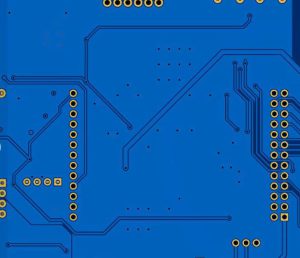
Minimum Annular Ring
Minimum Annular Ring Definition and Technical Meaning in PCB Fabrication
Minimum Annular Ring Definition in PCB Standards and Manufacturing Practice
The Minimum Annular Ring refers to the smallest radial width of copper remaining around a drilled hole after all drilling, plating, and etching processes are completed. It is typically measured from the edge of the finished hole wall to the nearest edge of the surrounding pad copper.
In practical fabrication terms, this value represents the worst-case copper retention around the hole, accounting for drill wander, registration error, layer shift, and plating variation. Industry standards such as IPC-2221 and IPC-6012 specify minimum acceptable values depending on board class, but experienced manufacturers often set internal limits tighter than IPC to maintain yield stability.
Minimum Annular Ring as a Process Capability Indicator
Unlike trace width or spacing, which can be tightly controlled by photolithography, the Minimum Annular Ring is influenced by multiple upstream and downstream variables. This makes it an excellent indicator of overall process capability. When annular ring variation increases, it often signals deeper issues such as drill bit wear, stack movement during lamination, or inadequate tooling accuracy.
Minimum Annular Ring Advantages in Ensuring Electrical and Mechanical Reliability
Minimum Annular Ring Contribution to Electrical Continuity
One of the most direct advantages of maintaining an adequate Minimum Annular Ring is ensuring stable electrical connectivity between layers. A sufficient copper ring provides a robust interface for plated through holes and vias, reducing the risk of circumferential cracks or localized thinning during thermal cycling.
In high-reliability applications, even minor annular ring loss can translate into intermittent opens that escape initial testing but fail in the field.
Minimum Annular Ring Role in Mechanical Strength and Via Integrity
Mechanically, the annular ring acts as a stress-distribution buffer. During soldering, reflow, or mechanical shock, stresses concentrate around the hole edge. A well-controlled Minimum Annular Ring disperses these stresses more evenly into the surrounding copper, significantly improving via pull strength and fatigue resistance.
Minimum Annular Ring Impact on Overall PCB Performance
Minimum Annular Ring Influence on Thermal Cycling Performance
Repeated thermal expansion and contraction place shear stress on plated holes. Boards with marginal annular rings often show accelerated failure during thermal cycling tests. Adequate copper width allows plated copper to anchor more effectively to the pad, improving long-term performance.
Minimum Annular Ring and Signal Integrity Considerations
While often discussed from a mechanical standpoint, Minimum Annular Ring also subtly affects signal integrity. In high-speed designs, pad geometry influences impedance discontinuities. Consistent annular ring geometry contributes to predictable electrical behavior, especially in back-drilled or high-speed via structures.
Minimum Annular Ring Control Challenges in Advanced PCB Fabrication
Minimum Annular Ring Challenges from Drill Wander and Tool Wear
As drill diameters decrease, even micron-level wander can dramatically reduce annular ring width. Tool wear, entry material selection, and spindle stability all play decisive roles. Without proactive tool management, Minimum Annular Ring erosion becomes unavoidable.
Minimum Annular Ring Challenges in Multilayer Registration
Layer-to-layer misregistration during lamination compounds annular ring risk. Even if drilling is perfectly centered, inner-layer pad shift can still produce localized annular ring breakout, particularly in HDI and high-layer-count boards.
Minimum Annular Ring Failure Modes and Root Cause Analysis in PCB Fabrication
From a failure-analysis perspective, Minimum Annular Ring loss rarely occurs as a single-point defect. Instead, it is typically the visible symptom of multiple compounded process deviations. Understanding these failure modes is essential for building a predictive, rather than reactive, quality system.
Minimum Annular Ring Breakout and Its Manufacturing Implications
Annular ring breakout occurs when drilling or registration error removes copper entirely on one side of the hole. While visually obvious in severe cases, partial breakout may only be detected under microsection analysis. This condition dramatically reduces via reliability and often correlates with high scrap rates in multilayer production.
Minimum Annular Ring Thinning Caused by Over-Etching
Even when drilling is well-centered, aggressive etching can thin the copper ring beyond acceptable limits. This failure mode highlights the importance of viewing annular ring control as a cross-process responsibility, not solely a drilling issue.
Minimum Annular Ring Measurement Methods and Inspection Strategies
Minimum Annular Ring Evaluation Using Microsection Analysis
Microsectioning remains the most authoritative method for Minimum Annular Ring verification. By physically exposing the via cross-section, manufacturers can accurately measure the smallest remaining copper width and correlate it with process parameters.
Minimum Annular Ring Monitoring Through AOI and Statistical Sampling
Although AOI cannot directly measure internal annular rings, it plays a supporting role by identifying registration shifts and pad anomalies that may increase annular ring risk. When combined with statistical sampling plans, AOI data becomes a powerful early-warning signal.
Minimum Annular-Ring Process Capability Indices and Data Interpretation
Minimum Annular-Ring and Cp/Cpk Analysis
In mature PCB factories, Minimum Annular Ring is increasingly evaluated using Cp and Cpk indices rather than simple pass/fail criteria. A process that merely meets minimum specifications may still be statistically unstable.
From my experience, a Cpk value above 1.33 for annular ring width indicates a reasonably capable process, while values approaching 1.67 or higher reflect world-class manufacturing discipline.
Minimum Annular-Ring as a KPI for Continuous Improvement
Tracking annular ring trends over time allows engineering teams to validate the effectiveness of process improvements, equipment upgrades, and operator training initiatives.
Minimum Annular-Ring Design-for-Reliability Considerations
Minimum Annular-Ring Margin Allocation in High-Reliability Designs
High-reliability sectors such as aerospace, medical, and industrial control often specify annular ring targets significantly above IPC minimums. This added margin absorbs unavoidable process variation and extends product lifespan.
Minimum Annular Ring Trade-Offs with Routing Density
Increasing annular ring width consumes valuable board real estate. The key is not maximizing copper indiscriminately, but aligning annular ring targets with realistic fabrication capability and electrical performance requirements.
Minimum Annular-Ring Risk Assessment Matrix
| Risk Factor | Impact Level | Typical Root Cause |
|---|---|---|
| Drill Wander | High | Tool wear, stack instability |
| Layer Shift | High | Lamination pressure imbalance |
| Over-Etching | Medium | Chemistry control deviation |
| Poor DFM | High | Unrealistic design constraints |
| Equipment Aging | Medium | Maintenance gaps |
Conclusion
In the final analysis, Minimum Annular Ring stands out as one of the most revealing indicators of PCB fabrication maturity. It compresses the effects of design decisions, material behavior, equipment precision, and human discipline into a single measurable outcome.
Rather than treating annular ring requirements as a static compliance target, forward-looking manufacturers and designers recognize them as a dynamic gauge of process capability. Tight, stable annular ring distributions signal not only technical competence but also organizational alignment between engineering, production, and quality.
The future of advanced PCB fabrication will increasingly depend on how intelligently Minimum Annular-Ring margins are designed, monitored, and improved. Those who master this subtle yet powerful parameter will consistently deliver boards that perform reliably—not just at test, but throughout their entire service life.
In conclusion, the Minimum Annular-Ring is far more than a geometric specification—it is a holistic measure of PCB fabrication capability. Its control reflects the alignment of design intent, manufacturing discipline, and quality culture. From electrical reliability to mechanical durability and long-term performance, the annular ring quietly governs outcomes that define success or failure in the field.
FAQs
1. How can designers verify Minimum Annular-Ring capability before production?
Early DFM review with the PCB manufacturer, combined with historical capability data and pilot builds, is the most reliable way to validate annular ring control before volume production.
2. Why is Minimum Annular-Ring more critical in HDI PCBs?
HDI designs use smaller vias and tighter spacing, leaving less margin for drill and registration errors. Even minor deviations can significantly reduce annular ring width, increasing reliability risk.
3. Can a PCB pass electrical test but still fail due to Minimum Annular-Ring issues?
Yes. Boards with marginal annular rings may pass initial electrical tests but fail later due to thermal cycling, vibration, or mechanical stress.
4. How does drill bit wear affect Minimum Annular-Ring control?
Worn drill bits increase hole wander and roughness, which can locally erode annular ring width and create weak points in plated through holes.
5. Is increasing pad size always the best solution for annular ring problems?
Not necessarily. Larger pads consume routing space and may impact impedance. A balanced approach combining pad sizing, process capability, and material selection is more effective.

- long board pcb
- Flexible PCBs
- Special PCB
- Express Printed Circuit Board
- Pcb Prototype
- LED PCB
- PCB
- Printed Circuit Board
- Pcb meaning
- Pcb manufacturer
- Rigid pcb board
- Rigid Flex PCB
 Quote
Quote
 E-mail