Impact of Rising Copper Prices On PCB
2026-01-15
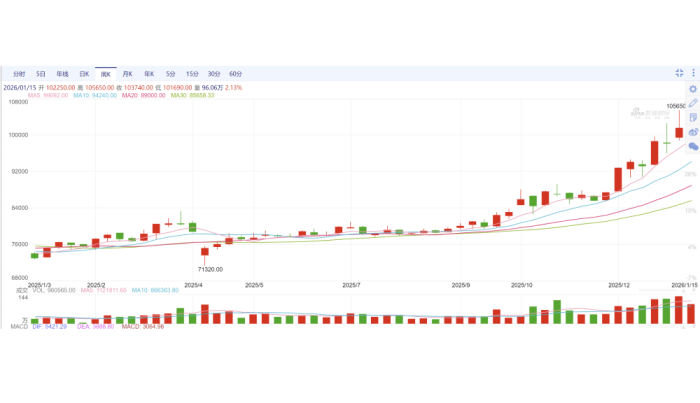
Impact of Rising Copper Prices On PCB? As the “neural hub” of electronic devices, the production cost of printed circuit boards (PCBs) is highly bound to the price of raw materials. Among them, copper, due to its high proportion and significant volatility, has become a core variable affecting PCB pricing. Since 2025, international copper prices have continued to soar, with the London Metal Exchange (LME) copper price rising by nearly 36% cumulatively. Coupled with the explosive growth in downstream demand from emerging sectors such as AI servers and new energy vehicles, the PCB industry is facing significant cost pressure. This article will take the industry’s mainstream 1.6mm-thick double-sided boards as a sample, accurately calculate copper consumption, quantitatively analyze the cost increment (including RMB and USD dual-currency accounting) based on copper price fluctuation data around September 2025, and provide actionable industry response plans for practitioners in the industrial chain.
Impact of Rising Copper Prices On PCB
I. Industry Background: Core Drivers of Rising Copper Prices and PCB Industry Dependence
(1) Core Drivers of Rising Copper Prices in 2025
The current round of rising copper prices is not accidental but the result of the combined effect of supply-demand imbalance and macroeconomic factors: on the supply side, global copper mine output has decreased slightly by 0.12%, and LME European copper inventories have plummeted from 70,000 tons in April 2025 to 14,500 tons in December, highlighting a tight supply pattern; on the demand side, emerging sectors such as AI servers and new energy vehicles have driven a surge in PCB demand, thereby boosting copper consumption. In addition, macroeconomic factors such as the weakening US dollar index and global central bank interest rate cut expectations have further amplified the upward elasticity of copper prices.
(2) High Dependence of the PCB Industry on Copper
Copper plays a crucial role in PCB production, mainly used in the copper foil substrate of copper-clad laminates and electroplating processes. According to data from China International Capital Corporation (CICC), copper foil accounts for 42% of the production cost of copper-clad laminates (CCLs), and CCLs in turn account for 40% of the total production cost of PCBs, forming a strong transmission chain of “copper price – copper foil – CCL – PCB”. For ordinary double-sided boards, the direct cost ratio of copper can reach 15%-20%; for high-end AI PCBs, due to more layers and higher via copper standards, copper consumption is even greater, and the cost ratio further increases to more than 25%.
II. Core Calculation: Accurate Accounting of Copper Consumption per Square Meter for Mainstream Double-Sided Boards
Taking the industry’s mainstream 1.6mm-thick double-sided boards as the calculation sample, their copper consumption is divided into two parts: “copper foil of CCL substrate” and “electroplated copper balls”. Moreover, double-sided boards include upper and lower copper foil layers, which need to be separately accounted for and superimposed.
(1) Copper Foil Consumption of CCL Substrate (Double Layers)
This sample uses 1.5mm H/H specification copper foil (H oz, i.e., 1/2 oz, corresponding to a copper thickness of 18μm). One square meter of PCB requires one piece of 1040mm×1240mm copper-clad substrate (calculated based on the core area of 1 square meter). The core formula for copper consumption is: Mass (kg) = Volume (m³) × Copper Density (kg/m³) (Volume = Area × Thickness).
Specific calculation steps:
-
-
Unit unification: Copper thickness 18μm = 18×10⁻⁶m, copper density adopts the industry standard value of 8930kg/m³;
-
Single-layer volume: 1m² × 18×10⁻⁶m = 1.8×10⁻⁵m³;
-
Single-layer mass: 1.8×10⁻⁵m³ × 8930kg/m³ ≈ 0.1607kg;
-
Total double-layer mass: 0.1607kg/m² × 2 = 0.3214kg/m².
-
(2) Consumption of Electroplated Copper Balls
The electroplating process is the core of constructing PCB conductive paths, which requires consuming copper balls to supplement copper ions. According to the actual production experience of factories, the electroplating of 1 square meter of this specification double-sided board requires 0.33kg of high-purity copper balls (purity ≥ 99.99%). This part is a necessary processing loss and needs to be included in the total copper consumption.
(3) Summary of Total Copper Consumption per Square Meter of Double-Sided Boards
Total copper consumption = Double-layer substrate copper foil consumption + Electroplated copper ball consumption = 0.3214kg + 0.33kg = 0.6514kg. That is, the total copper consumption per square meter of 1.6mm-thick double-sided boards is approximately 0.65kg. This data is the core basis for cost accounting (a copper price trend chart will be supplemented later to intuitively show the price fluctuation trajectory).
III. Impact of Rising Copper Prices On PCB: Dual-Currency Accounting (RMB/USD) of Rising Copper Prices
Combined with actual copper price fluctuation data (average 78 RMB/kg before September 2025, approximately 103 RMB/kg currently), the cost increment of 1 square meter of PCB caused by rising copper prices can be accurately calculated and converted into US dollars for reference in international business.
(1) RMB Cost Increment Accounting
-
-
Price increase per unit copper: 103 RMB/kg – 78 RMB/kg = 25 RMB/kg;
-
Increased copper cost per square meter of PCB: 25 RMB/kg × 0.6514kg ≈ 16.29 RMB/square meter.
-
This means that due to rising copper prices alone, the raw material cost of producing 1 square meter of mainstream double-sided boards increases by approximately 16.3 RMB. For a PCB enterprise with an annual production capacity of 1 million square meters, the annual additional copper cost can reach 16.3 million RMB.
(2) US Dollar Cost Increment Conversion
Referring to the central parity rate announced by the China Foreign Exchange Trade System (CFETS) on January 15, 2026 (100 US dollars = 700.64 RMB), that is, 1 RMB ≈ 0.1427 US dollars. Therefore:
Increased copper cost per square meter of PCB (US dollars): 16.29 × 0.1427 ≈ 2.32 USD/square meter.
Core Conclusion: Due to rising copper prices alone, the cost of 1 square meter of mainstream double-sided boards increases by approximately 16.29 RMB (2.32 USD).
IV. Practical Strategies for PCB Enterprises to Respond to Copper Price Fluctuations
Faced with the new normal of high copper prices, PCB enterprises can respond from three dimensions: supply chain management, process optimization, and product structure upgrading to reduce cost pressure.
(1) Supply Chain Management: Lock in Costs and Avoid Fluctuation Risks
Sign long-term fixed-price agreements: Sign 1-3 year fixed-price contracts with upstream copper foil and copper ball suppliers to lock in the purchase price of core raw materials and avoid the impact of short-term copper price surges;
Carry out futures hedging: Hedge price fluctuations through copper futures hedging. Leading enterprises such as Dongshan Precision have basically controlled the impact of raw material price increases through this method;
Diversified procurement layout: Expand domestic and foreign copper supplier channels to reduce single dependence, and at the same time pay attention to the utilization of recycled copper resources to reduce raw material costs.
(2) Process Optimization: Reduce Copper Consumption and Improve Utilization Efficiency
Promote the application of thin copper foil: On the premise of meeting performance requirements, replace traditional 35μm copper foil with 18μm thin copper foil, which can reduce copper consumption by more than 30%;
Optimize electroplating processes: Adopt half-hole/blind hole processes instead of full-hole copper plating to reduce electroplated copper consumption by more than 20%; try to replace copper ball electroplating with copper powder to improve copper ion utilization and reduce environmental pressure.
(3) Product Structure Upgrading: High-End Premium to Offset Cost Pressure
Increase the R&D and production of high-end PCBs for AI servers and new energy vehicles. Such products have higher copper utilization rate, and downstream customers have higher price tolerance, with a premium capacity of 20%-30%. For example, switch to the production of 18-layer or more high-multilayer boards and HDI boards, and cover the cost of rising copper prices through the improvement of product added value.
V. Future Trends and Conclusion
Looking ahead to 2025-2030, high copper prices may become the norm: on the supply side, the growth rate of global copper mine output is only 1.5% with a long expansion cycle; on the demand side, copper demand in sectors such as AI and new energy will continue to be strong, and the supply-demand gap will support copper prices for a long time. For the PCB industry, the cost pressure from copper price fluctuations cannot be eliminated in the short term, and the industry will accelerate polarization – leading enterprises will expand their market share by virtue of supply chain integration capabilities and high-end product advantages, while small and medium-sized enterprises need to accurately position niche markets or achieve technological breakthroughs.
This article shows through accurate calculations that rising copper prices have brought significant cost pressure to the PCB industry. However, enterprises can effectively hedge risks through scientific supply chain management, process optimization and product upgrading. For upstream and downstream enterprises in the industrial chain, accurately accounting for copper consumption and establishing a coordinated response mechanism will be the key to surviving the cost cycle and achieving sustainable development.
Data Sources: China International Capital Corporation (CICC) Research Report, China Foreign Exchange Trade System (CFETS), PCB Industry Production Practice Data

Product Center
- long board pcb
- Flexible PCBs
- Special PCB
- Express Printed Circuit Board
- Pcb Prototype
- LED PCB
- PCB
- Printed Circuit Board
- Pcb meaning
- Pcb manufacturer
- Rigid pcb board
- Rigid Flex PCB
Contact Us
 Quote
Quote
 E-mail