Immersion Silver (IAg): Low-Cost, Flat Finish for High-Frequency Applications
Introduction
In modern printed circuit board manufacturing, surface finish selection directly influences solderability, signal integrity, shelf life, assembly reliability, and overall production cost. As electronic devices continue moving toward higher frequencies, tighter impedance control, and smaller geometries, PCB designers increasingly seek finishes that combine excellent electrical performance with practical manufacturing economics. Among the many available finishes, Immersion Silver has emerged as a compelling solution for high-frequency applications where flatness, conductivity, and affordability are essential.
Immersion Silver is widely used in telecommunications equipment, RF modules, automotive electronics, aerospace control systems, medical devices, industrial automation hardware, and consumer electronics requiring precise electrical behavior. Compared with traditional Hot Air Solder Leveling (HASL), the finish provides a much flatter surface. Compared with ENIG (Electroless Nickel Immersion Gold), it offers lower cost and avoids the presence of a nickel layer that can slightly degrade ultra-high-frequency signal performance.
The growing popularity of 5G infrastructure, high-speed computing, IoT devices, automotive radar systems, and microwave communication products has accelerated the adoption of high-frequency PCB materials and specialized finishes. Designers today not only evaluate material dielectric constants and conductor roughness but also examine how surface finishes influence insertion loss and impedance continuity. In such environments, even minor conductivity improvements can contribute to measurable system advantages.
Another reason for the continued interest in Immersion Silver is manufacturing flexibility. The process is relatively mature, compatible with fine-pitch components, and suitable for lead-free assembly environments. PCB manufacturers can implement the finish without excessively increasing fabrication complexity, making it attractive for both high-volume and medium-volume production.
At the same time, Immersion Silver is not without limitations. Tarnishing, handling sensitivity, storage conditions, and contamination risks require disciplined process control. Improper packaging or environmental exposure can compromise solderability over time. Therefore, understanding both the strengths and weaknesses of the finish is critical when selecting it for demanding applications.
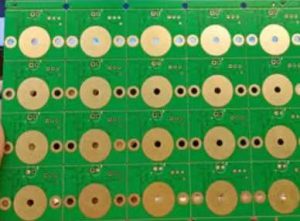
Immersion Silver
Understanding Immersion Silver
Immersion Silver Definition and Core Principles
Immersion Silver is a chemically deposited metallic silver coating applied over exposed copper pads on a printed circuit board. Unlike electroplating processes that require external electrical current, the deposition mechanism relies on a controlled chemical displacement reaction. During processing, silver ions replace copper atoms on the PCB surface, creating a thin, uniform metallic layer.
The thickness of the deposited silver is usually very small, commonly ranging from approximately 0.1 to 0.4 micrometers. Despite its thinness, the coating provides excellent solderability and superior electrical conductivity.
The resulting surface is flat, smooth, and highly conductive. Because there is no thick deposited metal buildup, the finish is especially suitable for fine-pitch components and controlled impedance circuits.
From an electrical standpoint, silver possesses the highest conductivity of all metals commonly used in PCB manufacturing. This characteristic makes it especially valuable in RF and microwave systems where conductor losses significantly influence performance.
Unlike ENIG, Immersion Silver does not contain a nickel barrier layer. This distinction becomes important at very high frequencies because nickel can contribute to signal loss due to its magnetic permeability and lower conductivity compared with copper and silver.
Immersion Silver Chemistry and Deposition Mechanism
The chemistry behind Immersion Silver relies on ionic exchange. Copper on the PCB surface dissolves into solution while silver ions deposit onto the copper surface.
This displacement reaction continues until the silver layer fully covers the copper surface. Once coverage is complete, the reaction naturally slows because the silver layer prevents further direct copper exposure.
Several chemical additives are used to stabilize the bath and optimize deposition quality:
- Complexing agents
- Grain refiners
- Wetting agents
- Anti-tarnish compounds
- pH stabilizers
Process engineers must carefully monitor bath composition, temperature, immersion time, and contamination levels. Poor chemical control can produce porous deposits, discoloration, or weak solderability performance.
One interesting aspect of Immersion Silver is that the deposited layer remains relatively thin compared with electroplated coatings. This characteristic contributes to the excellent surface flatness that designers value in high-density assemblies.
Immersion Silver Surface Morphology and Microstructure
The microstructure of a PCB surface finish significantly affects both electrical behavior and solder joint reliability. Although the silver layer deposited during the immersion process is extremely thin, its crystalline structure influences oxidation resistance, solder wetting performance, and long-term stability.
During deposition, silver atoms form a fine-grained metallic layer directly on the copper surface. Ideally, the coating should be:
- Uniform
- Dense
- Low in porosity
- Smooth in texture
- Free from contamination
A high-quality deposition process creates a compact crystalline structure that minimizes microvoids and surface discontinuities. When deposition conditions become unstable, however, rough grains or porous regions may develop. These imperfections can accelerate corrosion and reduce solderability.
One of the reasons Immersion Silver performs well in high-frequency circuits is its relatively smooth conductor profile. Signal losses increase when conductor surfaces become rough because high-frequency current travels near the outer conductor layer. Excessive roughness forces current to travel through a more irregular path, increasing effective resistance.
In many RF systems, engineers now pay close attention not only to dielectric loss but also to conductor surface roughness. Even though copper foil selection remains the dominant factor, the surface finish still contributes to the overall conductor profile.
Modern immersion chemistry has improved substantially compared with early generations of the process. Advanced additives now help manufacturers produce finer grain structures with more consistent morphology across the PCB panel. This consistency becomes especially important in large-format telecom backplanes and high-layer-count networking products.
Immersion Silver Comparison Table
| Surface Finish | Electrical Conductivity | Surface Flatness | Cost Level | High-Frequency Performance | Shelf Life | Lead-Free Compatibility | Main Advantages | Main Limitations |
|---|---|---|---|---|---|---|---|---|
| Immersion Silver | Excellent | Excellent | Medium | Excellent | Moderate | Excellent | Low RF loss, flat surface, affordable | Tarnish sensitivity |
| ENIG | Good | Excellent | High | Good | Excellent | Excellent | Long shelf life, strong reliability | Nickel may increase RF loss |
| HASL | Moderate | Poor | Low | Limited | Good | Good | Low cost, robust solderability | Uneven surface |
| Lead-Free HASL | Moderate | Poor | Low | Limited | Good | Excellent | RoHS compliant | Surface non-uniformity |
| OSP | Good | Excellent | Very Low | Good | Limited | Excellent | Very economical | Short shelf life |
| ENEPIG | Good | Excellent | Very High | Very Good | Excellent | Excellent | Advanced packaging compatibility | High manufacturing cost |
Conclusion
Immersion Silver has evolved from a niche PCB surface finish into a highly respected solution for modern high-frequency and high-speed electronic applications. Its unique combination of excellent electrical conductivity, superior flatness, lead-free compatibility, and relatively low manufacturing cost allows it to occupy an important position within advanced PCB fabrication technologies.
As electronic systems continue progressing toward higher operating frequencies, faster data transmission rates, and denser component integration, the importance of surface finish selection becomes increasingly significant. In the past, PCB finishes were often viewed primarily as solderability protection layers. Today, however, engineers recognize that finishes can influence signal integrity, conductor loss, impedance consistency, thermal reliability, and manufacturing yield.
Immersion Silver performs particularly well in RF and microwave applications because silver possesses the highest electrical conductivity among commonly used engineering metals. Since high-frequency current concentrates near conductor surfaces due to the skin effect, the conductive characteristics of the outermost PCB layer directly affect insertion loss and transmission efficiency. By eliminating the nickel barrier layer found in ENIG finishes, Immersion Silver reduces one potential source of RF signal degradation.
Another major advantage of the finish is its extremely flat surface profile. In advanced SMT assembly environments involving fine-pitch BGAs, CSPs, QFNs, and HDI structures, surface planarity strongly affects solder joint consistency and assembly reliability. Immersion Silver helps maintain accurate solder paste deposition and reliable reflow performance while supporting high-density circuit integration.
From a manufacturing perspective, the finish provides an attractive economic balance. Compared with premium gold-based finishes, Immersion Silver delivers strong electrical performance at lower cost. Although the process requires disciplined environmental management and careful packaging to prevent tarnishing, modern manufacturing facilities with mature process control systems can successfully manage these challenges.
The finish also aligns well with global trends toward environmentally responsible electronics production. Its compatibility with RoHS regulations and lead-free soldering processes supports sustainable manufacturing objectives across multiple industries.
Applications likely to continue driving Immersion Silver adoption include:
- 5G infrastructure
- Automotive radar systems
- Aerospace communication hardware
- AI server interconnects
- High-speed networking equipment
- RF antennas and microwave modules
- Industrial automation systems
- Satellite communication electronics
As PCB technologies continue advancing toward higher bandwidth and lower loss requirements, Immersion Silver will likely remain one of the most practical and technically effective finishes available for demanding electronic systems.
In many ways, the future of Immersion Silver reflects the future of electronics itself: faster, denser, more connected, and increasingly dependent on precise electrical performance at microscopic scales.
FAQ
1. What is the difference between Immersion Silver and ENIG?
Immersion Silver uses a thin chemically deposited silver layer directly over copper, while ENIG includes both electroless nickel and immersion gold layers. Immersion Silver generally offers better conductivity and lower RF loss, whereas ENIG provides longer shelf life and stronger oxidation resistance.
2. Why is Immersion Silver preferred for high-frequency PCBs?
Immersion Silver is preferred because silver has extremely high electrical conductivity. The finish also avoids the nickel layer used in ENIG, which can slightly increase signal loss at microwave frequencies.
3. Does Immersion Silver tarnish easily?
Yes. Silver can react with sulfur-containing compounds in the atmosphere, causing tarnish formation. Proper packaging, humidity control, and sulfur-free storage environments help minimize this issue.
4. What is the difference between rolled copper foil and electrolytic copper foil?
Rolled copper foil is produced by mechanically rolling copper into thin sheets, offering better surface quality and mechanical strength. Electrolytic copper foil is deposited through an electrolytic process and is generally more cost-effective and easier to manufacture in large volumes.
5. Is Immersion Silver compatible with lead-free soldering?
Yes. Immersion Silver performs very well in lead-free assembly environments and provides excellent solder wetting characteristics during reflow soldering processes.

- long board pcb
- Flexible PCBs
- Special PCB
- Express Printed Circuit Board
- Pcb Prototype
- LED PCB
- PCB
- Printed Circuit Board
- Pcb meaning
- Pcb manufacturer
- Rigid pcb board
- Rigid Flex PCB
 Quote
Quote
 E-mail