Engineering a Safer Future: The Materials and Reliability of Halogen-Free PCB Fabrication
Introduction
The printed circuit board has always been more than a passive carrier of electronic components. As electronic systems evolve toward higher power density, tighter integration, and broader deployment in safety-critical environments, the PCB itself becomes an active determinant of system reliability, environmental impact, and long-term sustainability.
In recent years, regulatory pressure, environmental awareness, and fire-safety requirements have collectively reshaped material selection strategies across the electronics industry. Among the most significant shifts is the move away from traditional halogenated laminates toward halogen-free material systems. This transition is not merely a compliance exercise—it represents a fundamental re-engineering of PCB material science.
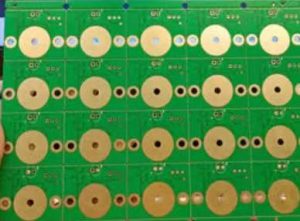
Halogen-Free PCB
Halogen-Free PCB Definition and Regulatory Foundations
At its core, a Halogen-Free PCB is defined by the intentional exclusion of halogen elements, primarily chlorine (Cl) and bromine (Br), from the base laminate and resin system. These halogens are traditionally used in epoxy resins as flame retardants, most notably in brominated compounds such as tetrabromobisphenol A (TBBPA).
From a regulatory standpoint, the industry generally accepts the following quantitative thresholds:
-
Chlorine (Cl): < 900 ppm
-
Bromine (Br): < 900 ppm
-
Total halogens: < 1,500 ppm
These limits are referenced in standards such as IEC 61249-2-21, which has become a de facto benchmark for halogen-free laminate classification.
However, engineering practice reveals that a Halogen-Free PCB is not defined solely by elemental absence. It represents a complete reconfiguration of flame-retardant chemistry, typically replacing halogenated compounds with phosphorus-based, nitrogen-based, or inorganic mineral systems. This change has cascading effects on thermal stability, resin cross-link density, moisture absorption, and dielectric behavior.
Halogen-Free PCB Chemical Composition and Material Architecture
Traditional FR-4 laminates rely on halogenated epoxy systems where flame retardancy is achieved through gas-phase radical quenching during combustion. While effective in suppressing flame propagation, this mechanism generates corrosive and toxic by-products when exposed to fire.
In contrast, Halogen-Free PCB materials typically employ condensed-phase flame retardant mechanisms. Phosphorus-containing compounds promote char formation, creating an insulating barrier that limits heat release and oxygen diffusion. Nitrogen synergists further stabilize this char layer, improving flame resistance without relying on halogen chemistry.
From a materials engineering perspective, this shift introduces several structural consequences:
-
Higher glass transition temperatures (Tg) are often required to compensate for modified resin networks
-
Increased filler content may be necessary to achieve UL 94 V-0 flammability ratings
-
Resin polarity changes, affecting moisture absorption and dielectric loss
These changes mean that a Halogen-Free PCB laminate cannot be evaluated as a drop-in replacement for traditional FR-4. Instead, it must be assessed as a distinct material class, with its own strengths and constraints.
Halogen-Free PCB Environmental and Fire-Safety Advantages
One of the most compelling arguments for Halogen-Free PCB adoption lies in fire behavior and post-combustion impact. When halogenated materials burn, they release hydrogen halides such as HCl and HBr, which are both corrosive and hazardous to human health. In enclosed environments—data centers, transportation systems, medical equipment—these emissions significantly increase secondary damage and evacuation risk.
Halogen-free materials, by contrast, exhibit:
-
Lower smoke density
-
Reduced toxicity of combustion gases
-
Minimal corrosive residue on nearby components
From an engineering ethics standpoint, this is not a marginal improvement. It directly influences system survivability and serviceability after thermal incidents. In mission-critical applications, protecting surrounding circuitry and infrastructure can be just as important as preventing ignition itself.
Halogen-Free PCB Mechanical and Thermal Reliability Impacts
The replacement of halogenated resins inevitably alters mechanical performance. Many early halogen-free laminates suffered from brittleness, lower peel strength, or reduced thermal cycling endurance. Modern material systems have significantly improved, but trade-offs remain.
Key reliability considerations include:
-
Z-axis coefficient of thermal expansion (CTE), particularly for high layer-count designs
-
Thermal decomposition temperature (Td) under lead-free reflow conditions
-
Interlaminar adhesion strength, affecting via reliability
In practice, manufacturers with mature process control—such as SQ PCB, which has invested heavily in halogen-free process optimization—are better positioned to mitigate these risks through controlled lamination profiles and resin system matching.
Halogen-Free PCB Cost Structures and Yield Implications
A common misconception is that Halogen-Free PCB fabrication is inherently expensive. While material costs are often higher at the laminate level, the true cost equation is more nuanced and must account for yield, rework rates, and lifecycle reliability.
Cost-driving factors include:
-
Higher raw laminate prices
-
Process optimization overhead
-
Initial yield learning curves
However, when evaluated over the full product lifecycle, halogen-free solutions can offer net economic advantages, particularly in markets sensitive to compliance risk, fire safety liability, or environmental certification.
Halogen-Free PCB vs Traditional Halogenated FR-4
| Category | Halogen-Free PCB | Traditional Halogenated FR-4 |
|---|---|---|
| Flame Retardant Mechanism | Phosphorus- or nitrogen-based, condensed-phase char formation | Halogen-based radical quenching (typically brominated epoxy) |
| Halogen Content | Cl < 900 ppm, Br < 900 ppm (Total < 1500 ppm) | High bromine content (e.g., TBBPA-based systems) |
| Smoke Toxicity During Combustion | Low smoke density, reduced toxicity | Higher smoke density, toxic and corrosive gases |
| Corrosive By-products | Minimal, non-halogenated residues | HCl/HBr formation causing corrosion |
| Environmental Impact | More environmentally responsible, easier compliance | Increasing regulatory and environmental scrutiny |
| Electrical Performance | Comparable Dk/Df in modern materials; suitable for high-speed designs | Stable and well-characterized, but less environmentally friendly |
| Thermal Reliability | High Tg and Td available; requires precise process control | Mature, forgiving process windows |
| Manufacturing Difficulty | Higher process sensitivity; requires experience | Easier processing, broader manufacturing tolerance |
| Long-Term Reliability | Lower ionic contamination; reduced CAF risk | Higher risk of corrosive residue-related degradation |
| Typical Applications | Automotive, medical, telecom, data centers, industrial control | Consumer electronics, cost-sensitive applications |
| Cost Consideration | Slightly higher material cost; lifecycle benefits | Lower upfront cost; potential hidden risks |
| Regulatory Readiness | Strong alignment with future regulations | Risk of future compliance limitations |
Conclusion
The evolution toward Halogen-Free PCB fabrication reflects a broader transformation in how the electronics industry defines responsibility. What once centered on electrical functionality and cost optimization has expanded to include fire behavior, environmental impact, long-term reliability, and human safety. In this context, halogen-free materials are not simply an alternative—they represent a recalibration of engineering priorities.
From a materials science perspective, Halogen-Free PCB technology demonstrates that flame retardancy does not have to rely on chemically aggressive elements. Through refined resin chemistry and condensed-phase flame-retardant mechanisms, modern halogen-free laminates achieve robust thermal and mechanical performance while significantly reducing toxic and corrosive emissions. This shift directly benefits high-density, high-power, and safety-critical systems where failure consequences extend far beyond the PCB itself.
From an engineering practice standpoint, the adoption of Halogen-Free PCB materials encourages deeper collaboration between designers and manufacturers. Material selection can no longer be treated as a checkbox exercise; it becomes a strategic decision that influences process windows, yield stability, and lifecycle reliability. Manufacturers with mature halogen-free experience—such as SQ PCB—illustrate how disciplined process control can transform potential material challenges into predictable, high-quality outcomes.
Looking ahead, Halogen-Free PCB fabrication is likely to move from “preferred” to “expected” across many industries. As regulations tighten and sustainability metrics gain commercial weight, engineers who understand the true performance implications of halogen-free materials will be better equipped to design products that remain viable, compliant, and competitive over time.
Engineering a safer future is not about eliminating risk entirely—it is about managing failure intelligently, responsibly, and transparently. In that sense, Halogen-Free PCB technology is less a material trend and more a reflection of modern engineering values.
FAQ
1. How do Halogen-Free PCB materials impact long-term reliability?
By reducing ionic contamination and corrosive by-products, halogen-free systems can improve resistance to latent failures such as CAF, contributing to more stable long-term performance.
2. Does a Halogen-Free PCB always have better fire resistance than traditional FR-4?
Not necessarily. Fire resistance depends on the complete laminate system and its flame-retardant mechanism. While halogen-free materials reduce toxic and corrosive emissions, both material types can meet UL 94 V-0 requirements if properly formulated.
3. Will switching to Halogen-Free PCB materials affect signal integrity?
Modern halogen-free laminates can support high-speed and high-frequency designs effectively. However, designers must account for dielectric properties, moisture behavior, and process consistency to maintain signal integrity.
4. Are Halogen-Free PCB materials more difficult to manufacture?
They can be more process-sensitive, especially during lamination and drilling. Experienced manufacturers with established halogen-free workflows can mitigate these challenges effectively.
5. Is Halogen-Free PCB technology required for regulatory compliance?
While not universally mandatory, halogen-free materials are increasingly favored under environmental, safety, and customer-driven requirements, particularly in automotive, medical, and telecommunications sectors.

- long board pcb
- Flexible PCBs
- Special PCB
- Express Printed Circuit Board
- Pcb Prototype
- LED PCB
- PCB
- Printed Circuit Board
- Pcb meaning
- Pcb manufacturer
- Rigid pcb board
- Rigid Flex PCB
 Quote
Quote
 E-mail