A Greener Circuit: The Strategic Shift to Halogen-Free Manufacturing in the PCB Industry
Introduction: Why Halogen-Free Manufacturing Is No Longer Optional
The printed circuit board industry has long stood at the crossroads of technological progress and environmental responsibility. For decades, performance, reliability, and cost dominated manufacturing decisions, while environmental considerations were often treated as secondary constraints rather than strategic drivers. However, this paradigm is rapidly changing. Today, sustainability is no longer a peripheral concern—it is becoming a core metric by which PCB technologies are evaluated, adopted, and regulated.
Among the most significant developments in this transformation is the industry’s shift toward Halogen-Free manufacturing. This transition is not merely a response to regulatory pressure or consumer activism; it represents a deeper recalibration of how materials science, reliability engineering, and environmental stewardship intersect in modern electronics.
From consumer electronics and automotive systems to industrial automation and medical devices, Halogen-Free PCB materials are steadily replacing traditional halogen-containing laminates. The motivation extends beyond compliance. Manufacturers are increasingly recognizing that Halogen-Free approaches can deliver competitive performance while reducing toxic emissions, improving workplace safety, and aligning PCB production with long-term sustainability goals.
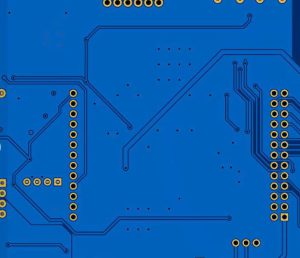
Halogen-Free
Halogen-Free Definition and Its Role in Sustainable PCB Manufacturing
At its core, the term Halogen-Free refers to materials that do not intentionally contain halogen elements such as chlorine (Cl), bromine (Br), fluorine (F), or iodine (I) beyond trace levels. In the context of PCB manufacturing, this designation is most closely associated with laminate and prepreg materials used in multilayer board construction.
Traditionally, brominated flame retardants—particularly tetrabromobisphenol A (TBBPA)—have been widely used in epoxy resin systems to meet flame-retardant standards such as UL 94 V-0. While effective, these brominated compounds pose significant environmental and health risks when PCBs are incinerated or improperly recycled, as they can form toxic substances such as dioxins and furans.
A H-alogen-Free PCB material is generally defined by international standards as containing:
-
Less than 900 ppm of bromine
-
Less than 900 ppm of chlorine
-
Less than 1500 ppm total halogens
This definition, while seemingly technical, reflects a broader commitment to reducing persistent organic pollutants throughout the electronics lifecycle.
From my perspective, what makes the Halogen-Free definition particularly important is that it reframes flame retardancy as a materials engineering challenge rather than a chemical shortcut. Instead of relying on halogen chemistry to suppress combustion, Halogen-Free systems employ alternative mechanisms—such as phosphorus-based compounds, inorganic fillers, or nitrogen synergists—to achieve flame resistance.
This shift fundamentally changes how PCB materials are designed, tested, and optimized. Flame retardancy is no longer an additive afterthought; it becomes an integrated property of the resin matrix itself.
H-alogen-Free Regulatory Background and Industry Standards
The momentum behind Halogen-Free adoption did not emerge in isolation. It is closely tied to global regulatory frameworks that increasingly restrict hazardous substances in electronic products.
Key regulations influencing Halogen-Free PCB manufacturing include:
-
RoHS (Restriction of Hazardous Substances) in the EU
-
REACH (Registration, Evaluation, Authorisation and Restriction of Chemicals)
-
WEEE (Waste Electrical and Electronic Equipment Directive)
Although RoHS does not explicitly ban halogens, its restrictions on certain brominated flame retardants have indirectly accelerated the development of Halogen-Free alternatives. Meanwhile, major OEMs have introduced their own internal standards that go beyond regulatory minimums, effectively making Halogen-Free materials a prerequisite for supplier qualification.
What is particularly interesting is how these regulations have reshaped the competitive landscape. Halogen-Free capability is no longer a niche differentiator—it is becoming a baseline expectation for PCB manufacturers serving high-end markets.
In conversations with industry peers, I often hear the same sentiment: customers no longer ask whether a supplier can offer Halogen-Free PCBs, but how mature and stable that capability is. This subtle shift in questioning reveals how deeply Halogen-Free manufacturing has been integrated into procurement logic.
H-alogen-Free Material Systems Compared to Traditional Laminates
One common misconception is that Halogen-Free materials are simply “less toxic versions” of traditional laminates. In reality, the differences run much deeper.
Conventional FR-4 materials rely heavily on brominated epoxy systems. In contrast, Halogen-Free laminates typically employ:
-
Phosphorus-based flame-retardant epoxies
-
Modified phenolic or polyphenylene ether (PPE) resins
-
High filler loading strategies to suppress flame propagation
These changes affect not only environmental performance but also electrical, thermal, and mechanical properties.
From my own analysis, the most critical shift lies in thermal behavior. Many Halogen-Free systems exhibit higher glass transition temperatures (Tg) and improved thermal stability, making them better suited for lead-free assembly processes. However, achieving this stability often requires tighter process control during lamination and drilling.
This introduces a paradox: H-alogen-Free materials can offer superior performance potential, but only when manufacturing discipline is sufficiently mature. In other words, Halogen-Free manufacturing rewards precision and punishes complacency.
H-alogen-Free Production Flow in Modern PCB Fabrication
The production flow for H-alogen-Free PCBs follows the same high-level stages as conventional boards, but with critical adjustments at each step.
H-alogen-Free Material Selection and Incoming Inspection
The process begins with careful material selection. Halogen-Free laminates are more sensitive to moisture absorption and thermal stress, making incoming inspection particularly important. Parameters such as resin content, Tg, decomposition temperature (Td), and coefficient of thermal expansion (CTE) must be tightly verified.
Many advanced manufacturers, including suppliers like SQ PCB, invest heavily in material characterization labs to ensure Halogen-Free laminates meet both environmental and performance criteria before entering production.
H-alogen-Free Lamination and Pressing Control
During multilayer lamination, Halogen-Free resin systems often require optimized pressure and temperature profiles. Inadequate control can lead to resin starvation, delamination, or microvoid formation.
In my view, this step represents the real “entry barrier” of Halogen-Free manufacturing. Factories that treat it as a simple material substitution frequently encounter yield loss, while those that redesign lamination parameters from the ground up achieve stable, scalable results.
H-alogen-Free Impact on Thermal Performance and Lead-Free Assembly
Thermal performance is one of the strongest arguments in favor of Halogen-Free PCB adoption. Many Halogen-Free laminates are engineered with higher Tg and Td values to compensate for the absence of brominated flame retardants.
In practice, this often results in:
-
Improved resistance to lead-free solder reflow cycles
-
Reduced risk of delamination and measling
-
Enhanced dimensional stability under thermal stress
From my own observation, Halogen-Free materials tend to perform particularly well in assemblies requiring multiple reflow passes, such as complex BGA or fine-pitch SMT designs. The reduced evolution of corrosive gases during thermal exposure also contributes to better long-term reliability.
That said, higher thermal stability does not automatically guarantee better outcomes. Some Halogen-Free systems exhibit higher stiffness, which can increase stress at plated through holes during thermal cycling if board stack-up design is not optimized.
This reinforces a recurring theme: Halogen-Free manufacturing improves the ceiling of PCB performance, but raises the floor of process discipline required to reach it.
Comparative Table: H-alogen-Free vs. Traditional PCB Manufacturing
| Aspect | Halogen-Free PCB Manufacturing | Traditional Halogen-Containing PCB Manufacturing |
|---|---|---|
| Flame Retardant Mechanism | Phosphorus-, nitrogen-, or filler-based systems | Brominated flame retardants (e.g., TBBPA) |
| Environmental Impact | Reduced toxic gas formation during disposal | Risk of dioxins and furans during incineration |
| Regulatory Alignment | Strong alignment with RoHS, REACH, OEM green standards | Increasing regulatory and customer restrictions |
| Thermal Performance | Often higher Tg and Td, better lead-free compatibility | Adequate but more sensitive to repeated reflow |
| Process Sensitivity | Requires tighter lamination and drilling control | More forgiving to legacy processes |
| Electrical Stability | Stable long-term dielectric behavior | Potential degradation from halogen residues |
| CAF Resistance | Strong when material and process are optimized | Well-understood but moisture-sensitive |
| Manufacturing Cost | Higher initial material and process cost | Lower upfront cost |
| Long-Term Reliability | High potential with disciplined execution | Proven but limited by environmental concerns |
| Strategic Value | Differentiator for high-end and regulated markets | Increasingly viewed as baseline or legacy option |
Conclusion
The transition toward H-alogen-Free manufacturing in the PCB industry should not be interpreted as a short-term response to environmental regulation or market pressure. Rather, it represents a deeper structural adjustment in how the industry balances performance, responsibility, and long-term resilience.
What becomes increasingly clear is that H-alogen-Free materials do not simply replace traditional brominated systems on a one-to-one basis. They alter the entire manufacturing equation. Material behavior during lamination, drilling, plating, and thermal cycling demands higher precision and a more integrated understanding of process–material interactions. As a result, Halogen-Free manufacturing exposes both the strengths and weaknesses of a PCB producer’s technical foundation.
From my perspective, this is precisely why H-alogen-Free adoption has strategic value. It forces manufacturers to move away from experience-based trial-and-error and toward data-driven, materials-aware engineering. In doing so, it elevates the overall maturity of PCB fabrication, benefiting not only environmental outcomes but also product reliability and customer trust.
Another important realization is that sustainability and performance are no longer opposing goals. When implemented correctly, Halogen-Free solutions can enhance thermal stability, reduce long-term electrical degradation, and improve assembly robustness—particularly in demanding applications such as automotive electronics, industrial controls, and advanced consumer devices.
However, Halogen-Free manufacturing is not a shortcut to differentiation. Superficial adoption, driven purely by marketing or compliance checklists, often results in higher costs and unstable yields. True value emerges only when Halogen-Free principles are embedded across material selection, design collaboration, and process control.
Looking forward, Halogen-Free capability will increasingly function as a litmus test for PCB manufacturers. Those who master it will position themselves as long-term partners capable of supporting complex, high-reliability electronics in a sustainability-conscious world. Those who treat it as a temporary trend risk being locked into low-margin, commodity roles.
In this sense, the shift to Halogen-Free manufacturing is less about changing what PCBs are made of—and more about changing how the industry thinks.
FAQs
1. Is H-alogen-Free mandatory for all electronic products?
While not universally mandatory, Halogen-Free is increasingly required by OEM standards, particularly in automotive, medical, and environmentally regulated markets.
2. Does H-alogen-Free PCB material always cost more than traditional FR-4?
Halogen-Free materials typically have higher initial costs, but improved thermal stability and reliability can reduce long-term failure rates and total system cost.
3. Are H-alogen-Free PCBs suitable for high-speed digital applications?
Yes. Modern Halogen-Free materials offer competitive dielectric properties and stable long-term signal performance when properly processed.
4. Does H-alogen-Free manufacturing require different PCB design rules?
In many cases, yes. Designers may need to adjust stack-up, hole sizes, and thermal relief strategies to fully leverage Halogen-Free material properties.
5. How does H-alogen-Free impact PCB recyclability?
Halogen-Free PCBs reduce the formation of toxic byproducts during recycling or incineration, making end-of-life processing safer and more environmentally responsible.

- long board pcb
- Flexible PCBs
- Special PCB
- Express Printed Circuit Board
- Pcb Prototype
- LED PCB
- PCB
- Printed Circuit Board
- Pcb meaning
- Pcb manufacturer
- Rigid pcb board
- Rigid Flex PCB
 Quote
Quote
 E-mail