Introduction to FCT Tester
Functional Circuit Testing (FCT) is a pivotal process in the manufacturing of printed circuit boards (PCBs), ensuring that each board operates as intended before it reaches the end user. This comprehensive guide explores the intricacies of FCT testers, their significance, methodologies, and best practices in the PCB industry. An FCT tester evaluates the dynamic functionality of a PCB by providing input signals and verifying the corresponding outputs against design specifications. This process ensures that all components on the board interact correctly, mimicking real-world operating conditions.
A Functional Circuit Test (FCT) tester is a critical tool in electronics manufacturing, designed to validate the operational performance of printed circuit board assemblies (PCBAs) by simulating real-world conditions. Unlike in-circuit testers (ICT) that check individual components, an FCT tester verifies the entire system’s functionality, ensuring that the final product meets design specifications. This guide explores the intricacies of FCT testers, from their architecture and applications to advanced automation strategies, providing actionable insights for engineers and manufacturers.
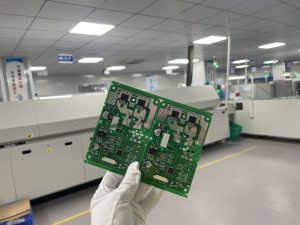
FCT tester
2. Importance of FCT Testing in PCB Manufacturing
Implementing FCT testing is crucial for several reasons:
-
Quality Assurance: Identifies functional defects early in the production process, ensuring only fully operational boards proceed to the next stage.
-
Cost Efficiency: Detecting and addressing issues early reduces the cost associated with rework or scrapping defective boards.
-
Customer Satisfaction: Delivering reliable products enhances brand reputation and reduces returns or warranty claims.
3. Components of an FCT Tester
An FCT tester typically comprises:
-
Test Fixture: A customized interface that connects the tester to the PCB, ensuring accurate signal transmission.
-
Measurement Instruments: Devices such as digital multimeters, oscilloscopes, and signal generators that measure and analyze the PCB’s responses.
-
Control Software: Manages the testing process, collects data, and determines pass/fail criteria.
4. FCT Testing Process
The FCT testing process involves several key steps:
-
Preparation: Mount the PCB onto the test fixture, ensuring proper alignment and connectivity.
-
Initialization: The control software configures the test parameters based on the PCB’s design specifications.
-
Signal Injection: Input signals are applied to the PCB to simulate operational conditions.
-
Response Measurement: The tester measures the PCB’s outputs, comparing them against expected results.
-
Analysis: The control software analyzes the data to identify any discrepancies or defects.
-
Reporting: A detailed report is generated, indicating pass/fail status and highlighting any issues detected.
5. Types of FCT Testers
FCT testers can be categorized based on their application and complexity:
5.1 Manual FCT Testers
Operators manually connect and operate these testers, suitable for low-volume production or prototype testing.
5.2 Automated FCT Testers
Integrated into production lines, these testers automatically handle PCBs, ideal for high-volume manufacturing.
5.3 Modular FCT Testers
Designed for flexibility, these testers allow for quick reconfiguration to accommodate different PCB designs.
6. Designing an Effective FCT Test Fixture
A well-designed test fixture is crucial for accurate FCT testing:
-
Customization: Tailored to the specific PCB layout to ensure reliable connections.
-
Durability: Built to withstand repeated use without compromising accuracy.
-
Maintenance: Designed for easy maintenance and quick replacement of worn components.
7. Challenges in FCT Testing
Several challenges can arise during FCT testing:
7.1 Test Coverage
Ensuring comprehensive testing without redundancy requires careful planning and understanding of the PCB’s functionality.
7.2 Fixture Design Complexity
Complex PCB designs may necessitate intricate fixtures, increasing the risk of connection issues or signal interference.
7.3 Signal Integrity
Maintaining signal integrity during testing is crucial, as noise or interference can lead to inaccurate results.
8. Best Practices for FCT Testing
To optimize FCT testing processes:
-
Early Involvement: Incorporate testability considerations during the PCB design phase.
-
Regular Calibration: Ensure all measurement instruments are calibrated regularly to maintain accuracy.
-
Continuous Training: Provide ongoing training for personnel to keep them updated on best practices and new technologies.
9. Integrating FCT Testing with Other Testing Methods
FCT testing is often used in conjunction with other testing methods to ensure comprehensive quality assurance:
9.1 In-Circuit Testing (ICT) vs. FCT Testing
While ICT focuses on verifying the correct placement and connection of individual components, FCT assesses the overall functionality of the assembled PCB. Typically, ICT is performed before FCT to identify and rectify component-level issues early in the process.
9.2 Burn-In Testing
Subjecting PCBs to elevated temperatures and voltages over extended periods, burn-in testing identifies early-life failures. Integrating burn-in testing with FCT provides a comprehensive evaluation of both the durability and functionality of the PCB.
10. Advancements in FCT Testing
The field of FCT testing continues to evolve with technological advancements:
10.1 Automated Test Equipment (ATE)
Modern ATE systems offer high-speed, automated testing capabilities, reducing human error and increasing throughput.
10.2 Artificial Intelligence (AI) and Machine Learning (ML)
AI and ML algorithms analyze test data to predict potential failures and optimize test processes, leading to more efficient and accurate testing.
Conclusion: The Future of FCT Tester Technology and Its Impact on PCB Manufacturing
The evolution of FCT tester technology continues to play a crucial role in ensuring the quality, reliability, and functionality of printed circuit boards (PCBs). As PCB designs become increasingly complex and demand for high-performance electronic devices rises, manufacturers must adopt advanced FCT testing strategies to meet industry standards and customer expectations.
12.1 The Growing Importance of FCT Testing
As the electronics industry advances, PCBs are becoming more intricate, with higher component densities, smaller trace widths, and more layers. These advancements make FCT testing more essential than ever. The FCT tester ensures that PCBs function correctly under real-world conditions by identifying electrical issues, verifying component placement, and detecting potential failures before the board reaches the end user.
Without robust FCT testing, defects can slip through the production process, leading to increased failure rates, higher return costs, and damage to a company’s reputation. Implementing FCT testers in the manufacturing workflow not only enhances product reliability but also improves cost efficiency by minimizing rework and scrap.
12.2 The Shift Toward Automation in FCT Testing
Automation is revolutionizing FCT testing, making it faster, more accurate, and more cost-effective. Traditional manual FCT testing is time-consuming and prone to human error, especially when dealing with high-volume production. Automated FCT testers eliminate these inefficiencies by integrating advanced robotics, high-speed measurement tools, and intelligent software that streamlines the entire testing process.
Key benefits of automated FCT testing include:
- Increased Speed and Efficiency: Automated FCT testers can perform multiple tests simultaneously, reducing overall testing time.
- Improved Accuracy: Automated systems minimize the risk of human error, ensuring consistent and precise test results.
- Scalability: Automated FCT testers can be easily scaled to accommodate varying production volumes without compromising quality.
- Cost Reduction: By reducing labor costs and improving throughput, automation lowers the overall cost of FCT testing.
As more manufacturers transition to automated FCT testers, they gain a competitive advantage by improving production efficiency and maintaining high-quality standards.
12.3 Artificial Intelligence (AI) and Machine Learning in FCT Testing
AI and machine learning are transforming FCT testing by enabling predictive analytics and intelligent defect detection. Traditional FCT testers rely on predefined test scripts and fixed parameters to evaluate PCB functionality. However, AI-powered FCT testers can analyze vast amounts of test data, identify patterns, and detect anomalies that may indicate potential failures.
Benefits of AI-driven FCT testing include:
- Enhanced Fault Detection: AI algorithms can identify complex defects that may be difficult to detect using conventional testing methods.
- Predictive Maintenance: AI-driven FCT testers can predict equipment failures before they occur, allowing manufacturers to perform proactive maintenance.
- Optimized Test Strategies: Machine learning models can refine test parameters over time, improving test coverage and reducing false positives.
Integrating AI into FCT testers enables manufacturers to achieve higher accuracy, faster testing speeds, and better decision-making throughout the PCB production process.
12.4 Challenges and Solutions in FCT Testing
Despite its advantages, FCT testing presents several challenges that manufacturers must address to optimize their testing processes:
12.4.1 Increasing Complexity of PCB Designs
Modern PCBs are designed with multiple layers, fine-pitch components, and high-speed signal paths, making FCT testing more challenging. To overcome this, manufacturers can:
- Use high-precision FCT testers capable of handling advanced PCB architectures.
- Develop customized test fixtures that ensure accurate connections for complex layouts.
- Implement advanced test software that adapts to different PCB designs.
12.4.2 High Initial Investment in Advanced FCT Testers
Upgrading to automated FCT testers requires significant upfront investment in equipment, software, and personnel training. To justify this cost, manufacturers should:
- Conduct a cost-benefit analysis to determine long-term savings from automation.
- Gradually transition from manual to automated FCT testing to manage costs effectively.
- Leverage AI-driven testing solutions that optimize test processes and reduce overall expenses.
12.4.3 Test Coverage and False Positives
Ensuring comprehensive FCT testing while minimizing false positives is a constant challenge. Inadequate test coverage can result in undetected defects, while excessive false positives can lead to unnecessary rework. To strike the right balance, manufacturers should:
- Implement boundary scan testing to detect faults in inaccessible areas of the PCB.
- Use AI-driven analytics to refine test parameters and improve defect detection accuracy.
- Continuously update test scripts and methodologies based on real-world failure data.
12.5 The Future of FCT Testing
As technology advances, FCT testing will continue to evolve, incorporating new innovations that enhance efficiency, accuracy, and scalability. The future of FCT testers will likely be shaped by:
12.5.1 5G and High-Speed PCB Testing
With the widespread adoption of 5G technology, FCT testers must adapt to test high-frequency circuits with greater precision. Future FCT testing solutions will include:
- High-bandwidth measurement instruments capable of analyzing high-speed signals.
- Advanced signal integrity testing to ensure optimal PCB performance.
- Enhanced thermal analysis tools to evaluate heat dissipation in high-power applications.
12.5.2 Internet of Things (IoT) Integration
IoT-enabled FCT testers will allow real-time data collection, remote monitoring, and predictive analytics. Manufacturers will benefit from:
- Cloud-based test data storage for improved traceability and analysis.
- Remote diagnostics and troubleshooting to reduce downtime.
- AI-driven optimization of FCT testing based on historical performance trends.
12.5.3 Sustainability and Green Testing Initiatives
As environmental regulations become stricter, manufacturers are exploring sustainable FCT testing practices. Future trends include:
- Energy-efficient FCT testers that reduce power consumption.
- Lead-free and environmentally friendly test methodologies.
- Recycling and reuse of test fixtures to minimize electronic waste.
12.6 Final Thoughts
FCT testers are an indispensable part of PCB manufacturing, ensuring that every board meets the highest quality and performance standards. As PCB designs become more sophisticated, manufacturers must adopt cutting-edge FCT testing technologies, including automation, AI, and IoT integration.
By investing in advanced FCT testing solutions, companies can improve product reliability, reduce production costs, and maintain a competitive edge in the fast-paced electronics industry. As we move into the future, FCT testers will continue to evolve, driving innovation and efficiency in PCB manufacturing.

- long board pcb
- Flexible PCBs
- Special PCB
- Express Printed Circuit Board
- Pcb Prototype
- LED PCB
- PCB
- Printed Circuit Board
- Pcb meaning
- Pcb manufacturer
- Rigid pcb board
- Rigid Flex PCB
 Quote
Quote
 E-mail