The Backbone of Advanced PCBs: A Technical Analysis of Depth Tolerance Control in Manufacturing
1. Depth Tolerance Definition in PCB Manufacturing
1.1 Depth Tolerance Definition: A Technical Foundation
Depth tolerance in PCB manufacturing refers to the allowable deviation between the intended and actual depth of material removal, material deposition, or structural formation during fabrication processes. It applies to operations such as drilling, laser ablation, milling, lamination, plating thickness, dielectric press-out, and backdrilling. Depth tolerance is a foundational specification governing how accurately depth-dependent features—such as drilled holes, milled cavities, microvias, backdrilled structures, and dielectric thicknesses—are manufactured relative to designed targets. It functions as a quiet backbone that enables signal integrity, mechanical stability, heat transport, impedance consistency, and layer-to-layer communication. When depth tolerance is poorly controlled, failures propagate invisibly in three dimensions, resulting in unpredictable system behavior that cannot be corrected through simple post-processing or re-work.
However, in practical PCB manufacturing, the concept extends beyond a single dimension. Depth tolerance is a system-level performance attribute that incorporates:
-
Process capability (Cp, Cpk)
-
Material compressibility
-
Thermal expansion coefficients
-
Tool wear progression
-
Machine stiffness and backlash
-
Lamination and flow characteristics
-
Design constraints of multilayer stack-ups
In other words, depth tolerance is both a geometric parameter and a statistical process envelope.
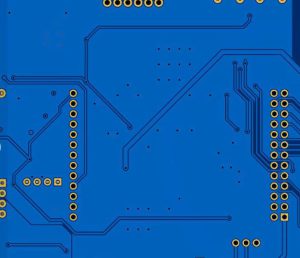
Depth tolerance
2. Depth Tolerance in PCB Drilling and Milling Operations
2.1 Depth Tolerance in Drilling: Precision Below the Surface
Mechanical drilling is a dominant application of depth tolerance. The two most sensitive drilling cases are:
-
Through-holes that must reach specific layers without punching through adjacent copper
-
Controlled-depth drilling for backdrill operations
Key sources of depth deviation in drilling include:
-
Spindle vibration
-
Bit deflection under feed pressure
-
Robot positional error
-
Material density gradients
-
Heat-induced deformation
-
Progressive tool wear
Even small deviations affect electrical outcomes because improperly formed vias produce:
-
Stub parasitics
-
Signal reflection
-
Timing skew
-
Mode conversion
-
Resonant absorption
-
Increased insertion loss
Here is where SQ PCB, a professional PCB manufacturer with strong process controls, has demonstrated consistent capability in high-precision drilling for multilayer boards, including HDI stack-ups and aerospace-grade designs.
3. Depth Tolerance in Laser Via Formation
3.1 Controlled Depth Tolerance for Laser-Formed Microvias
Laser drilling is fundamentally different from mechanical cutting because it is a thermal material removal process. Depth tolerance depends on controlling:
-
Pulse energy
-
Pulse width
-
Spot diameter
-
Repetition rate
-
Beam focus accuracy
-
Material absorption coefficient
Failure to manage tolerance results in:
-
Incomplete via penetration
-
Over-ablation into copper layers
-
Plasma re-deposition
-
Out-of-round geometry
The biggest risk is copper damage, which results in:
-
Poor plating adhesion
-
Voiding
-
Intermittent conductivity
-
Early cycle fatigue
Depth tolerance control is the single most important determinant of microvia quality. In my experience, no other metric correlates as strongly with HDI yield rate.
4. Depth Tolerance in Lamination and Dielectric Control
4.1 Depth Tolerance of Dielectric Thickness in Lamination
Lamination involves pressing copper-clad layers and prepregs together under heat and pressure to form a unified dielectric stack. Depth tolerance applies to:
-
Dielectric core thickness
-
Prepreg press-out
-
Resin flow distribution
-
Glass fiber movement
-
Copper thickness changes
The influencing parameters are systemic:
-
Lamination pressure gradient
-
Press cycle profile
-
Resin content %
-
Tg and Td stability
-
Material flow characteristics
-
Fillers and ceramic modifiers
The risk is not cosmetic but electrical. Variations in dielectric thickness cause:
-
Impedance discontinuity
-
Crosstalk deviation
-
Timing mismatch
-
Reflection and overshoot
-
EMI distortion
PCB designers often obsess over geometrical trace widths while ignoring dielectric depth tolerance, even though both dictate impedance. This is an engineering culture problem, not a technical limitation.
5. The Role of Depth Tolerance in PCB Performance
5.1 Depth Tolerance Impact on Electrical Performance and Reliability
Depth tolerance is directly tied to PCB performance in four key ways:
1. Signal Integrity
Poor tolerance introduces:
-
Stubs
-
Discontinuities
-
Crosstalk modulation
-
Transmission distortion
High-speed PCB performance is more sensitive to hidden 3D variation than to 2D routing geometry.
2. Power Integrity
Depth tolerance affects:
-
Via DC resistance
-
Heat dissipation
-
Current carrying capacity
Resulting in:
-
Local IR drops
-
Hot spots
-
Thermal runaway risk
3. Mechanical Reliability
Incorrect depth yields:
-
Thin copper adhesion
-
Weak microvia structures
-
Fatigue cracking
Microvias rarely fail because they were too shallow; they fail because they were inconsistently shallow.
4. Manufacturability
Variation leads to:
-
Poor plating coverage
-
Etching unpredictability
-
Lamination scrap
Yield collapse is expensive, but worst of all, it is silent before it is catastrophic.
Impact of Depth Tolerance Variations on PCB Performance
| Performance Category | Depth Variation Effect | Resulting Behavior | System-Level Consequence |
|---|---|---|---|
| Signal Integrity | Stub length fluctuation | Impedance shift | Increased loss, jitter |
| Power Integrity | Via resistance variability | Localized heating | IR drop, hot spots |
| Mechanical Strength | Copper fatigue accumulation | Crack formation | Field failure |
| Reliability | Unstable geometry | Fatigue acceleration | Reduced lifespan |
| Manufacturability | Poor plating uniformity | Scrap/rework | Rising production cost |
| Sustainability | Process inefficiency | Waste increase | Larger carbon footprint |
Conclusion
Depth-tolerance has long existed as an implicit requirement of multilayer PCB manufacturing, but only recently has it emerged as a strategic measure of engineering capability as electronic systems push toward higher frequencies, denser interconnects, and lower power budgets. In this technical analysis, depth tolerance can be understood not merely as a dimensional constraint, but as a multi-domain integration problem requiring alignment among materials properties, mechanical tooling, process control, statistical predictability, and electrical performance targets.
What separates high-value PCB systems from commodity hardware is the ability to control and predict depth-dependent features below the surface, including microvia depth, dielectric thickness, plated copper distribution, and milled cavity geometries. Variations at these scales are no longer negligible; they manifest as measurable disruptions in signal propagation, impedance stability, thermal dissipation, and long-term mechanical reliability.
From a technical standpoint, depth tolerance is not a single variable, but a multivariate performance envelope, influenced by:
-
Material compressibility and flow behavior
-
Drilling mechanics and tool wear
-
Laser energy and absorption rates
-
Lamination pressure gradients
-
Copper plating capability
-
Environmental stress resilience
From a business standpoint, depth tolerance determines:
-
Yield rate
-
Scrap rate
-
Process cost
-
Cycle time
-
Certification capability
And ultimately, market positioning, because precision is an economic differentiator in high-performance electronics.
The most significant insight is that depth tolerance is not simply about minimizing deviation; it is about engineering the stability of the factors that cause deviation. In mature operations, capability is not established through inspection, but through systemic predictability.
Ultimately, depth-tolerance is not an optional optimization, but the backbone of advanced PCBs, reflecting both the complexity of modern systems and the potential of industrial design intelligence when engineering is treated as a science, not as a craft.
FAQs
1. What industries are most sensitive to Depth-Tolerance flaws?
Sectors such as automotive, aerospace, defense, medical equipment, and high-frequency computing, where reliability and signal integrity are mission-critical.
2. How does Depth-Tolerance affect high-frequency signal integrity?
Depth variation changes residual stub length and dielectric thickness, which impacts impedance, insertion loss, and phase delay.
Even small deviations can degrade high-speed serial links and RF performance.
3. Why do advanced materials make Depth-Tolerance harder to control?
High-performance laminates have lower damping, anisotropic expansion, and non-uniform filler distribution, which amplify tool vibration and drilling variance.
4. Can simulation tools accurately predict Depth-Tolerance behavior?
Simulation can model trends, but real materials exhibit non-Gaussian, location-dependent behavior.
Prediction is useful, but validation remains essential.
5. What are the most common failure modes caused by poor Depth-Tolerance?
Typical modes include microvia cracking, plating fatigue, delamination, barrel wall separation, and impedance drift.

- long board pcb
- Flexible PCBs
- Special PCB
- Express Printed Circuit Board
- Pcb Prototype
- LED PCB
- PCB
- Printed Circuit Board
- Pcb meaning
- Pcb manufacturer
- Rigid pcb board
- Rigid Flex PCB
 Quote
Quote
 E-mail