The Backbone of Advanced Interconnect: How Controlled Depth Drilling Enables HDI PCBs
Introduction: Why Controlled Depth Matters in the HDI Era
High Density Interconnect (HDI) PCBs represent the structural backbone of modern electronics, from smartphones and wearable devices to automotive ADAS systems and advanced medical equipment. As component pitches shrink and routing density increases, the interconnection strategy within a PCB must evolve beyond traditional through-hole concepts. Among the enabling technologies that make HDI possible, Controlled Depth Drilling stands out as a foundational process rather than a mere fabrication option.
Unlike conventional drilling, which focuses only on hole diameter and position, this approach introduces a third dimension—depth control—as a critical design and manufacturing variable. In my view, this shift from “hole creation” to “layer-precision engineering” marks a philosophical turning point in PCB fabrication. It changes drilling from a subtractive operation into a precision interface-forming process.
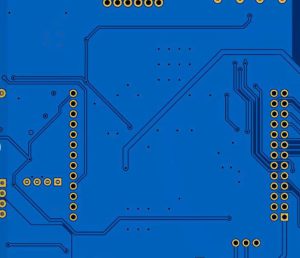
Controlled Depth Drilling
Controlled Depth Drilling: Definition and Fundamental Principles of Controlled Depth Drilling
At its core, Controlled Depth Drilling is a drilling process designed to stop at a precisely defined depth within a multilayer PCB stack-up, rather than penetrating the entire board thickness. The primary objective is to form blind vias or selectively exposed pads without damaging underlying layers.
From a technical standpoint, depth control is achieved through a combination of:
-
Z-axis position feedback
-
Material removal rate modeling
-
Tool wear compensation
-
Real-time spindle load monitoring
What differentiates this method from standard mechanical drilling is not just accuracy, but predictability. The target depth is typically referenced to a specific copper layer, dielectric thickness, or resin interface. Any deviation—often measured in microns—can lead to functional failure.
In HDI structures, where dielectric layers may be thinner than 100 μm, depth tolerance becomes tighter than diameter tolerance. This reverses the traditional drilling priority hierarchy and forces manufacturers to rethink process control strategies.
Controlled Depth Drilling: Why Blind Vias Depend on Controlled Depth Drilling
Blind vias are a defining feature of HDI PCBs. They enable layer-to-layer interconnection without consuming routing real estate across the full board thickness. However, blind vias are only as reliable as the precision of their termination point.
If the drill stops too shallow:
-
Copper exposure is insufficient
-
Plating adhesion is compromised
-
Electrical resistance increases
If the drill penetrates too deep:
-
The target copper layer may be breached
-
Adjacent signal layers can be damaged
-
CAF (Conductive Anodic Filament) risks increase
This is why Controlled Depth Drilling is not optional for HDI—it is structurally mandatory. Laser drilling may dominate microvia formation at very small diameters, but mechanical depth-controlled drilling remains indispensable for larger blind vias, via-in-pad structures, and hybrid HDI designs.
Controlled Depth Drilling: Advantages of Controlled Depth Drilling in HDI PCBs
The advantages of this process extend beyond simple dimensional control. When properly implemented, it delivers system-level benefits that directly affect PCB performance.
1. Improved Electrical Integrity
Precise via termination minimizes stub length, reducing signal reflection and impedance discontinuity—critical for high-speed digital and RF designs.
2. Higher Routing Density
By eliminating unnecessary through-holes, designers gain additional routing layers and tighter trace spacing.
3. Enhanced Reliability
Controlled copper exposure leads to uniform plating thickness and stronger metallurgical bonds, improving thermal cycling endurance.
4. Design Flexibility
Designers can selectively interconnect layers, enabling sequential lamination strategies without excessive complexity.
From an engineering perspective, the most underrated benefit is process repeatability. Once depth control is stabilized, yield variation decreases dramatically—a key reason why advanced HDI suppliers invest heavily in this capability.
Controlled Depth Drilling: Limitations and Challenges of Controlled Depth Drilling
Despite its advantages, Controlled Depth Drilling is not without trade-offs. Understanding these limitations is essential for realistic design-for-manufacturing decisions.
1. Equipment Cost and Calibration Complexity
Depth-controlled drilling requires advanced CNC systems with high-resolution Z-axis feedback. Calibration drift can quickly translate into yield loss.
2. Material Dependency
Different dielectric materials exhibit varying removal characteristics. Glass content, resin type, and filler distribution all affect drilling behavior.
3. Tool Wear Sensitivity
Even minor drill wear can alter depth accuracy. This demands strict tool life management and frequent replacement.
4. Lower Throughput
Compared to standard drilling, cycle times are longer due to reduced feed rates and verification steps.
From my experience, the key risk is false confidence—assuming depth control is perfect simply because the machine is capable. In reality, process discipline matters more than machine specifications.
Controlled Depth Drilling: Impact of Controlled Depth Drilling on PCB Performance
The performance impact of this technology extends across multiple domains:
-
Signal Integrity: Reduced via stubs improve eye diagrams and lower insertion loss.
-
Thermal Performance: Proper via termination enhances heat transfer paths in stacked via structures.
-
Mechanical Strength: Accurate depth control prevents layer delamination and resin cracking.
-
Long-Term Reliability: Consistent plating interfaces reduce fatigue failures during thermal cycling.
For high-reliability applications—such as automotive electronics or industrial control systems—this impact is cumulative. A single poorly controlled blind via can compromise an entire product lifecycle.
Controlled Depth Drilling: Controlled Depth Drilling vs. Laser Drilling in HDI Applications
Although both technologies enable blind vias, Controlled Depth Drilling and laser drilling serve fundamentally different roles.
| Aspect | Controlled Depth Drilling | Laser Drilling |
|---|---|---|
| Via diameter | Medium to large | Very small |
| Aspect ratio | Moderate | High |
| Material interaction | Mechanical | Thermal |
| Copper penetration risk | Low with control | Higher without stop layer |
| Cost per via | Lower at scale | Higher |
Conclusion: Controlled Depth Drilling as the Structural Backbone of HDI
HDI PCBs are not defined by density alone—they are defined by precision. Among all fabrication processes, Controlled Depth Drilling uniquely bridges design intent and physical reality. It translates layer stack-ups from CAD data into functional interconnect structures with micron-level accuracy.
The evolution of HDI PCBs is often described in terms of finer lines, smaller vias, and higher layer counts. Yet beneath these visible indicators of progress lies a more fundamental transformation—the transition from geometry-driven fabrication to depth-aware interconnect engineering. Controlled Depth Drilling represents this shift with exceptional clarity.
Throughout this discussion, it becomes evident that this process is not merely a method for forming blind vias. It is a structural discipline that governs how layers communicate, how electrical integrity is preserved, and how reliability is sustained across the product lifecycle. By introducing depth as a precisely controlled parameter, manufacturers gain the ability to shape interconnect behavior rather than react to its limitations.
From a design perspective, Controlled Depth Drilling redefines feasibility boundaries. It allows designers to confidently pursue denser routing, more aggressive stack-ups, and advanced via architectures without compromising manufacturability. At the same time, it imposes a new responsibility: design intent must align with material reality. HDI success increasingly depends on this alignment.
From a manufacturing standpoint, the process highlights an important truth—capability alone does not guarantee reliability. Machines may be capable of micron-level control, but only disciplined calibration, feedback-driven optimization, and cross-functional collaboration translate that capability into stable production. In this sense, Controlled Depth Drilling becomes a litmus test for manufacturing maturity.
Perhaps most importantly, the impact of this technology extends beyond the factory. Its influence is reflected in signal integrity margins, thermal endurance, and long-term field reliability. Failures caused by poor depth control are rarely immediate, but when they surface, they undermine trust in the entire system. This makes Controlled Depth Drilling not just a technical choice, but a strategic one.
As HDI continues to evolve toward higher integration and mixed-technology substrates, the role of Controlled Depth Drilling will only grow. It will increasingly serve as the backbone of advanced interconnect, enabling innovation while quietly enforcing the limits of physics and materials.
In the final analysis, HDI PCBs are not defined by how many layers they contain, but by how precisely those layers are connected. Controlled Depth Drilling is the process that makes that precision possible—and in doing so, it secures its place at the heart of modern PCB engineering.
FAQs
1. Is Controlled Depth Drilling suitable for cost-sensitive designs?
It increases fabrication cost, but for HDI designs, the performance and reliability gains often outweigh the added expense.
2. Why is Controlled Depth Drilling important for blind vias?
It ensures precise exposure of target copper layers without damaging adjacent layers, directly affecting via reliability and electrical performance.
3. Can Controlled Depth Drilling replace laser drilling in HDI PCBs?
No. The two processes are complementary. Laser drilling is ideal for microvias, while depth-controlled mechanical drilling is better for larger blind vias and hybrid structures.
4. How does Controlled Depth Drilling affect PCB yield?
When properly controlled, it significantly improves yield consistency by reducing over-drill and under-drill defects.
5. What materials are most challenging for Controlled Depth Drilling?
High-glass-content laminates and filled dielectrics are more difficult due to uneven material removal rates.

- long board pcb
- Flexible PCBs
- Special PCB
- Express Printed Circuit Board
- Pcb Prototype
- LED PCB
- PCB
- Printed Circuit Board
- Pcb meaning
- Pcb manufacturer
- Rigid pcb board
- Rigid Flex PCB
 Quote
Quote
 E-mail