Extending Operational Life: The Critical Role of Conformal Coating in PCB Reliability
Introduction: Reliability as the True Measure of Electronic Value
In modern electronics, performance is often celebrated at the moment of deployment—clock speed, signal integrity, miniaturization, and integration density dominate design discussions. Yet in real-world operation, these parameters quickly give way to a more fundamental metric: reliability over time. A printed circuit board that performs flawlessly in a laboratory but fails prematurely in the field represents not only a technical shortcoming, but also a commercial and reputational risk.
It is within this context that Conformal Coating emerges as a critical, though sometimes underestimated, element in PCB design and manufacturing. Unlike core materials or copper geometries, conformal coatings do not directly contribute to signal routing or electrical functionality. Instead, their value lies in preservation—shielding delicate circuitry from the slow, cumulative effects of moisture, contamination, vibration, and chemical exposure.
Conformal coating should no longer be viewed as an optional post-process or a “nice-to-have” enhancement. In an era where electronics are expected to operate reliably in increasingly hostile environments, Conformal Coating is a strategic reliability decision, not merely a protective layer.
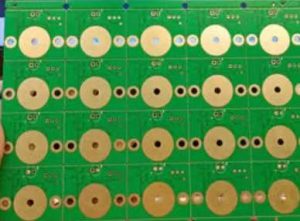
Conformal Coating
Understanding Conformal-Coating: Definition, Scope, and Industry Context
What Is Conformal-Coating in PCB Manufacturing
Conformal Coating refers to a thin, polymeric protective layer applied to the surface of a printed circuit board and its components. True to its name, the coating “conforms” to the contours of the board, covering traces, solder joints, component leads, and exposed conductive areas without significantly altering the board’s geometry.
Typically measured in microns, conformal coatings are engineered to form a continuous, uniform barrier that isolates sensitive electronic elements from external environmental stressors. Unlike potting or encapsulation, conformal coating preserves accessibility and minimizes added weight, making it especially suitable for compact, high-density PCB assemblies.
From an engineering standpoint, the defining feature of conformal coating is selective protection—providing environmental resistance while maintaining electrical functionality, heat dissipation, and serviceability.
Conformal-Coating as a Reliability-Oriented Process
In the broader PCB manufacturing workflow, conformal coating occupies a unique position. It does not correct design flaws, nor does it compensate for poor fabrication quality. Instead, it amplifies the reliability of a well-designed and well-manufactured PCB.
This distinction is important. When conformal coating is applied as a reactive measure—after failures have already occurred—it often delivers inconsistent results. In contrast, when integrated early into the design-for-reliability (DfR) strategy, conformal coating becomes a powerful tool for extending operational life.
Manufacturers with strong reliability cultures, including suppliers such as SQ PCB, increasingly treat conformal coating as an integral part of the PCB solution rather than an afterthought. This shift reflects a deeper industry understanding: environmental exposure is not an exception—it is the norm.
Industry Standards and Regulatory Perspective on Conformal Coating
Conformal coating practices are governed by multiple international standards, including IPC-CC-830 and MIL-I-46058C (legacy). These standards define qualification requirements related to insulation resistance, moisture resistance, fungus resistance, and flammability.
However, compliance alone does not guarantee reliability. In my experience, standards define the minimum acceptable performance, while real-world applications often demand much more. High-humidity regions, polluted industrial atmospheres, and wide thermal cycling ranges regularly push PCBs beyond standard test conditions.
This gap between compliance and actual operating conditions is precisely where conformal coating demonstrates its true value.
Why Conformal-Coating Matters: Core Functions and Protection Mechanisms
Moisture Barrier Function of Conformal-Coating
Moisture remains one of the most destructive environmental factors affecting PCB reliability. Even trace amounts of humidity can lead to electrochemical migration, corrosion, and leakage currents over time.
Conformal-Coating acts as a physical and dielectric barrier, significantly reducing moisture ingress to conductive surfaces. By limiting water adsorption, the coating stabilizes insulation resistance and prevents dendritic growth between closely spaced conductors—an increasingly critical concern in high-density designs.
In practical terms, this moisture resistance often determines whether a PCB survives years of operation or fails silently after a single humid season.
Protection Against Chemical and Particulate Contamination
Beyond moisture, PCBs are frequently exposed to airborne contaminants such as dust, salts, industrial chemicals, and flux residues. These substances can create conductive paths or corrosive environments that degrade electrical performance.
Conformal coating isolates conductive elements from such contaminants, reducing the likelihood of surface leakage and corrosion. In environments where chemical exposure is unavoidable, the choice and thickness of conformal coating can directly influence product lifespan.
Manufacturers like SQ PCB, which serve industrial and automotive markets, often tailor conformal coating strategies to match specific environmental risk profiles, rather than relying on generic solutions.
Mechanical Stress Mitigation Through Conformal Coating
While not a structural reinforcement, conformal coating provides localized mechanical support to solder joints and fine-pitch components. By dampening vibration and reducing micro-movement, the coating helps mitigate fatigue-related failures, particularly in mobile or mechanically dynamic applications.
From my viewpoint, this mechanical contribution is subtle but cumulative—over thousands of vibration cycles, even minor stress reduction can significantly delay crack initiation.
Types of Conformal-Coating and Their Application Characteristics
Acrylic-Based Conformal-Coating Characteristics
Acrylic conformal coatings are widely used due to their ease of application, fast drying times, and good moisture resistance. They offer a practical balance between protection and reworkability, making them suitable for consumer electronics and general industrial applications.
However, acrylic coatings are less resistant to solvents and aggressive chemicals. In environments where chemical exposure is expected, relying solely on acrylic conformal coating may represent a calculated risk rather than a robust solution.
Silicone Conformal-Coating for Extreme Environments
Silicone-based conformal coatings excel in high-temperature and high-humidity conditions. Their flexibility allows them to withstand significant thermal cycling without cracking, which makes them particularly attractive for automotive and outdoor electronics.
In my opinion, silicone conformal coating represents a strategic choice for longevity, especially in applications where environmental stress is both intense and unpredictable. The trade-off, of course, is more complex rework and higher material cost.
Polyurethane and Epoxy Conformal-Coating Trade-Offs
Polyurethane conformal coatings offer excellent chemical resistance and strong mechanical protection, while epoxy coatings provide the highest level of durability and adhesion. These materials are often chosen for mission-critical applications where repairability is secondary to long-term survival.
That said, their rigidity and difficulty of removal demand careful consideration. Once applied, these coatings effectively lock in the design and manufacturing decisions made upstream. This reinforces a recurring theme: conformal coating does not forgive poor design—it magnifies its consequences.
Comparison of Common Conformal-Coating Materials
| Conformal Coating Type | Key Advantages | Main Limitations | Typical Applications |
|---|---|---|---|
| Acrylic | Easy rework, fast curing | Limited chemical resistance | Consumer electronics, light industrial |
| Silicone | Excellent thermal stability, flexibility | Difficult removal | Automotive, outdoor electronics |
| Polyurethane | Strong chemical resistance | Harder to rework | Industrial control systems |
| Epoxy | Maximum durability and adhesion | Poor repairability | Aerospace, defense, mission-critical systems |
Conclusion
As electronic systems continue to migrate into harsher, less predictable operating environments, reliability can no longer be treated as an outcome—it must be treated as a design objective. Within this framework, Conformal-Coating emerges not merely as a protective material, but as a strategic reliability lever that directly influences operational lifespan, maintenance cost, and brand credibility.
One of the most important insights gained from real-world field data is that PCB failures are rarely caused by a single catastrophic event. Instead, they are the result of gradual environmental stress accumulation—moisture ingress, chemical contamination, particulate deposition, and thermal cycling acting together over time. Conformal coating interrupts this failure chain by isolating vulnerable surfaces from the environment, effectively slowing the aging process of the PCB.
From my perspective, the true value of conformal coating lies in its predictability. A well-coated PCB behaves more consistently across seasons, climates, and usage patterns. This predictability simplifies system-level reliability modeling and reduces the uncertainty that often plagues long-life electronic products.
Equally important is the role of conformal coating in supporting modern PCB design trends. As conductor spacing shrinks and component density increases, environmental tolerance margins collapse. In such designs, conformal coating is no longer optional—it becomes a necessary compensating mechanism that restores electrical safety margins lost to miniaturization.
However, conformal coating is not a universal solution. Its effectiveness depends on informed material selection, disciplined process control, and early-stage design integration. When applied without understanding the actual operating environment, it can offer a false sense of security. Conversely, when integrated thoughtfully—something increasingly emphasized by experienced manufacturers such as SQ PCB—conformal coating becomes a powerful enabler of long-term reliability rather than a cosmetic safeguard.
Ultimately, extending the operational life of PCBs is not about adding more protection layers indiscriminately. It is about placing the right protection, in the right form, at the right stage of the product lifecycle. In this sense, conformal coating represents a mature engineering mindset—one that values endurance over short-term performance metrics and recognizes that reliability is built, not assumed.
FAQs
1. Does conformal-coating replace good PCB design practices?
No. Conformal coating enhances reliability but cannot compensate for poor layout, inadequate spacing, or substandard manufacturing. It should be viewed as a complement to—not a substitute for—robust PCB design.
2. Does conformal-coating affect PCB signal integrity?
When properly selected and applied, conformal coating has minimal impact on signal integrity. In many cases, it actually improves long-term signal stability by preventing leakage currents and surface contamination.
3. Can conformal-coating be repaired or removed?
Yes, but the ease of removal depends on the coating material. Acrylic coatings are relatively easy to remove, while silicone, polyurethane, and epoxy coatings require specialized methods and tools.
4. Is conformal-coating necessary for indoor electronics?
Even indoor environments can expose PCBs to humidity, dust, and chemical vapors. Conformal coating significantly improves long-term reliability, especially for products with extended service life expectations.
5. How thick should conformal-coating be applied?
Typical conformal coating thickness ranges from 25 to 75 microns, depending on material type and application requirements. Excessive thickness can introduce thermal and mechanical risks.

- long board pcb
- Flexible PCBs
- Special PCB
- Express Printed Circuit Board
- Pcb Prototype
- LED PCB
- PCB
- Printed Circuit Board
- Pcb meaning
- Pcb manufacturer
- Rigid pcb board
- Rigid Flex PCB
 Quote
Quote
 E-mail