The Invisible Shield: How Conformal Coating Protects PCBs from Harsh Environments
Introduction
Modern electronics increasingly operate in environments that would have destroyed earlier generations of circuit boards. From automotive control units exposed to temperature extremes, to industrial sensors working amid corrosive chemicals, and aerospace electronics facing pressure, vibration, and moisture simultaneously, printed circuit boards (PCBs) are no longer protected by enclosure design alone. The reliability expectations placed on electronics today demand a more intimate, material-level defense strategy—one that operates invisibly, continuously, and with minimal impact on circuit functionality.
This is where conformal coating emerges as a critical yet often underestimated technology. Unlike bulky encapsulation or heavy potting solutions, conformal coating forms a thin, uniform, and protective film that conforms precisely to the contours of the PCB assembly. It shields sensitive circuitry from environmental stress while preserving accessibility, heat dissipation, and electrical performance.
Conformal coating represents a philosophical shift in PCB protection: instead of isolating electronics from the environment, it enables coexistence. This article explores conformal coating not merely as a process step, but as a strategic reliability tool that bridges material science, manufacturing discipline, and long-term product performance.
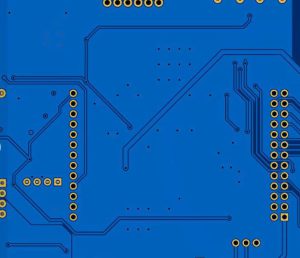
Conformal coating
Conformal Coating Definition and Fundamental Characteristics
Conformal Coating Definition and Scope
Conformal coating is a thin polymeric film applied to the surface of a printed circuit board assembly to protect electronic components and conductive traces from environmental hazards. The term “conformal” reflects the coating’s ability to closely follow the three-dimensional geometry of the PCB, covering component leads, solder joints, and exposed copper without significantly altering board dimensions.
Typically ranging from 25 to 250 micrometers in thickness, conformal coatings are designed to be lightweight, electrically insulating, and chemically resistant. Unlike potting compounds that encapsulate the entire assembly, conformal coating maintains the identity and accessibility of individual components, allowing inspection, testing, and rework when necessary.
Conformal Coating Definition in Relation to PCB Reliability
From a reliability perspective, conformal coating acts as a barrier layer between the PCB and its operating environment. It mitigates failure mechanisms such as:
-
Moisture absorption leading to leakage currents
-
Ionic contamination causing electrochemical migration
-
Corrosive gas exposure degrading copper and solder alloys
-
Dust accumulation leading to short circuits
-
Mechanical vibration inducing micro-cracking at solder joints
In practical terms, conformal coating does not make a PCB “indestructible,” but it dramatically slows degradation processes, extending functional life and stabilizing electrical behavior over time.
Conformal Coating Materials and Classification
Conformal Coating Acrylic Systems
Acrylic conformal coatings are widely used due to their ease of application and removal. They provide good moisture resistance and fast drying times, making them suitable for high-volume manufacturing.
From my experience, acrylic systems are often chosen when reworkability is a priority, especially in consumer or mid-range industrial electronics. However, their limited chemical resistance makes them less suitable for harsh chemical environments.
Conformal Coating Silicone Systems
Silicone conformal coatings excel in extreme temperature conditions, maintaining flexibility across a wide thermal range. This makes them particularly valuable in automotive, aerospace, and power electronics applications.
What stands out about silicone coatings is their ability to absorb mechanical stress without cracking—a property that directly improves solder joint fatigue resistance under vibration.
Conformal Coating Polyurethane Systems
Polyurethane conformal coatings offer strong chemical resistance and durability. They are commonly selected for industrial environments where exposure to fuels, solvents, or industrial gases is expected.
The trade-off lies in rework difficulty. Once cured, polyurethane coatings are challenging to remove, which reinforces the importance of manufacturing accuracy.
Conformal Coating Parylene Systems
Parylene conformal coating is deposited through a vapor deposition process, creating an ultra-thin, pinhole-free film. It provides exceptional moisture and dielectric protection.
In my opinion, parylene represents the pinnacle of conformal coating performance, but its cost and processing complexity restrict its use to high-reliability sectors such as medical implants and aerospace electronics.
Conformal Coating Advantages in PCB Protection
Conformal Coating Advantages Against Moisture and Humidity
Moisture is one of the most persistent threats to PCB reliability. Even trace levels of humidity can lead to corrosion or leakage currents over time. Conformal coating significantly reduces water vapor ingress, stabilizing insulation resistance and preventing dendritic growth between conductors.
In humid operating regions, conformal coating often determines whether a PCB survives years or fails within months.
Conformal Coating Advantages for Chemical Resistance
Industrial environments frequently expose PCBs to corrosive gases such as sulfur dioxide or nitrogen oxides. Without protection, these contaminants attack copper traces and solder joints.
A properly selected conformal coating acts as a chemical buffer layer, slowing reaction rates and preserving metallurgical integrity. This benefit becomes increasingly critical as conductor spacing continues to shrink in high-density PCB designs.
Conformal Coating Advantages in Electrical Stability
By insulating conductive surfaces, conformal coating helps maintain stable impedance characteristics and reduces the risk of parasitic leakage paths. This is particularly valuable in analog, RF, and high-voltage circuits, where even minor leakage can distort signals.
Conformal Coating Impact on PCB Performance
Conformal Coating Impact on Thermal Behavior
One common concern is whether conformal coating traps heat. In reality, thin conformal coatings typically have minimal impact on thermal dissipation when properly specified. Some formulations even enhance heat spreading by eliminating air gaps around components.
From my perspective, thermal issues attributed to conformal coating are more often design or application errors than inherent material limitations.
Conformal Coating Impact on Mechanical Reliability
Conformal coating can improve mechanical robustness by distributing stress across solder joints and component leads. This effect is particularly noticeable in vibration-intensive environments.
High-quality manufacturers such as SQ PCB integrate conformal coating considerations early in the PCB layout and assembly stages, ensuring coating compatibility with component spacing and solder mask design.
Comparison of Common Conformal-Coating Types and Their Impact on PCB Performance
| Conformal Coating Type | Key Material Characteristics | Primary Advantages | Limitations | Typical PCB Applications |
|---|---|---|---|---|
| Acrylic Conformal Coating | Fast-drying, transparent polymer | Easy application and removal, good moisture resistance | Limited chemical and temperature resistance | Consumer electronics, general industrial PCBs |
| Silicone Conformal Coating | Flexible, temperature-stable elastomer | Excellent thermal stability and vibration resistance | Lower abrasion resistance, higher cost | Automotive, aerospace, power electronics |
| Polyurethane Conformal Coating | Tough, chemically resistant polymer | Strong resistance to solvents and corrosive gases | Difficult rework and removal | Industrial control systems, harsh chemical environments |
| Parylene Conformal Coating | Vapor-deposited, ultra-thin polymer | Uniform, pinhole-free coverage, superior dielectric properties | High processing cost, complex equipment | Medical devices, aerospace, ultra-high-reliability PCBs |
| Epoxy-Based Conformal Coating | Rigid, highly adhesive coating | Excellent mechanical protection and adhesion | Brittle under vibration, poor reworkability | Specialized industrial or military electronics |
Conclusion
As electronic systems continue to migrate into environments once considered incompatible with delicate circuitry, protection strategies must evolve beyond traditional enclosure-based thinking. Conformal coating has proven itself to be one of the most efficient and elegant answers to this challenge—not by isolating PCBs from their surroundings, but by enabling controlled interaction with them.
From a technical standpoint, the true strength of conformal coating lies in its balance. It offers environmental resistance without excessive mass, insulation without thermal suffocation, and protection without sacrificing serviceability. This balance explains why conformal coating has quietly become a standard practice across automotive electronics, industrial control systems, aerospace hardware, and increasingly, high-reliability consumer products.
However, conformal coating should not be viewed as a “universal solution.” Its effectiveness is deeply dependent on material selection, application control, cleanliness of the PCB surface, and compatibility with the overall design philosophy. In poorly planned designs, conformal coating can introduce new risks—trapped contaminants, uneven thickness, or unintended coverage of connectors. In well-integrated designs, it becomes almost invisible in operation, silently extending product life and stabilizing performance.
In my view, the most important shift happening today is conceptual rather than technological. Leading manufacturers no longer treat conformal coating as a post-assembly safeguard; instead, they consider it early in the PCB design and manufacturing process. Trace spacing, component placement, solder mask openings, and inspection strategy are increasingly optimized with coating behavior in mind. This systems-level thinking transforms conformal coating from a defensive measure into a reliability enabler.
Experienced PCB partners such as SQ PCB demonstrate how this integration works in practice. By aligning coating selection with layout rules, assembly processes, and quality control standards, they reduce variability and ensure that the protective layer performs as intended throughout the product’s lifecycle. This approach is particularly valuable in harsh-environment applications, where field failures are costly and often irreparable.
Looking ahead, conformal coating technology will continue to evolve—toward smarter materials, thinner films, improved inspectability, and greater environmental compliance. Yet its core mission will remain unchanged: to act as an invisible shield that allows electronics to function reliably in an increasingly unpredictable world.
For engineers, designers, and decision-makers, the lesson is clear. When conformal coating is treated not as an afterthought, but as a strategic design element, it becomes one of the most cost-effective investments in long-term PCB reliability.
FAQ
1. How thick should a conformal-coating be?
Typical thickness ranges from 25 to 250 micrometers, depending on material type and environmental requirements.
2. Does conformal-coating make PCBs waterproof?
Conformal coating significantly improves moisture resistance but does not make PCBs fully waterproof. Complete immersion protection requires additional enclosure or potting solutions.
3. Can conformal-coating be repaired or removed?
Yes, depending on the material. Acrylic coatings are relatively easy to remove, while polyurethane and parylene coatings are more difficult to rework.
4. Does conformal-coating affect signal integrity?
When properly applied, conformal coating has minimal impact on signal integrity and may even improve electrical stability by reducing leakage paths.
5. Is conformal-coating necessary for indoor electronics?
Not always, but it is recommended for environments with humidity, dust, or long service life expectations.

- long board pcb
- Flexible PCBs
- Special PCB
- Express Printed Circuit Board
- Pcb Prototype
- LED PCB
- PCB
- Printed Circuit Board
- Pcb meaning
- Pcb manufacturer
- Rigid pcb board
- Rigid Flex PCB
 Quote
Quote
 E-mail