Conductive Paste Filled Vias: An Alternative to Plated Fill for Cost-Sensitive HDI
Introduction
High-Density Interconnect (HDI) technology continues to push the boundaries of printed circuit board (PCB) design, enabling smaller, faster, and more complex electronic systems. As device miniaturization accelerates across industries such as consumer electronics, automotive systems, and telecommunications, the demand for efficient and cost-effective interconnect solutions has grown significantly.
Among the many innovations in via technology, Conductive Paste Filled Vias have emerged as a compelling alternative to traditional plated via filling techniques. While copper electroplating remains the dominant approach for via filling, its cost, process complexity, and limitations in certain applications have led engineers and manufacturers to explore alternative solutions.
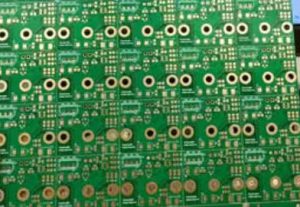
Conductive Paste Filled Vias
Conductive Paste Filled Vias Definition and Fundamental Principles
Conductive Paste Filled Vias refer to vias that are filled with a conductive material—typically a polymer-based paste containing metallic particles such as silver, copper, or other conductive fillers—instead of being completely filled through electroplated copper deposition.
Unlike traditional plated filled vias, where copper is deposited layer by layer through electrochemical processes, this method involves mechanically or stencil-based filling of the via cavity with conductive paste, followed by curing or sintering.
Key Characteristics
- Use of conductive polymer composites
- Lower processing temperature compared to full copper plating
- Reduced reliance on electroplating chemistry
- Compatibility with selective filling processes
- Potential for faster manufacturing cycles
Material Composition
The conductive paste generally consists of:
- Metallic fillers (silver, copper, or hybrid alloys)
- Resin matrix (epoxy or thermosetting polymers)
- Additives for rheology and adhesion control
The ratio and distribution of these components significantly influence electrical conductivity, thermal performance, and mechanical stability.
Working Mechanism
The electrical conduction in these vias relies on the percolation network formed by conductive particles within the polymer matrix. Unlike solid copper, which provides continuous metallic conduction, conductive paste forms a network of conductive paths through particle-to-particle contact.
This fundamental difference has direct implications for performance, reliability, and cost.
Conductive Paste Filled Vias Cost Factors and Economic Analysis
One of the most compelling reasons to adopt Conductive Paste Filled Vias is cost reduction, particularly in HDI designs where multiple stacked or staggered vias are required.
Key Cost Drivers
1. Material Costs
Conductive paste materials can vary significantly in cost depending on the type of metallic filler:
- Silver-based pastes: High cost but excellent conductivity
- Copper-based pastes: Lower cost but oxidation concerns
- Hybrid systems: Balanced performance and cost
2. Process Simplification
Eliminating or reducing copper electroplating steps leads to:
- Lower equipment investment
- Reduced maintenance costs
- Decreased chemical consumption
3. Yield Considerations
While the process is simpler, yield losses due to voids or poor filling can offset cost savings if not properly controlled.
4. Throughput Improvements
Faster processing cycles increase production capacity, indirectly reducing per-unit cost.
Cost Comparison: Paste Fill vs Plated Fill
| Parameter | Conductive Paste Fill | Copper Plated Fill |
|---|---|---|
| Material Cost | Medium to High | Medium |
| Equipment Cost | Low | High |
| Process Complexity | Low | High |
| Throughput | High | Medium |
| Reliability | Medium | High |
| Electrical Conductivity | Lower | Excellent |
Conductive Paste Filled Vias Reliability Analysis and Long-Term Performance Behavior
When evaluating any via filling technology for HDI applications, reliability becomes a central concern that extends far beyond initial electrical performance. Conductive Paste Filled Vias introduce a fundamentally different material system compared to traditional copper-filled vias, and this difference manifests in unique long-term behavior under thermal, mechanical, and environmental stress conditions.
One of the primary reliability considerations lies in the composite nature of the conductive paste itself. Unlike solid copper, which exhibits uniform metallic properties, conductive paste consists of discrete conductive particles embedded within a polymer matrix. Over time, repeated thermal cycling can induce micro-movements within this matrix, potentially disrupting conductive pathways. This phenomenon, often referred to as “conductive network degradation,” can lead to gradual increases in via resistance.
Additionally, the coefficient of thermal expansion (CTE) mismatch between the polymer matrix and surrounding PCB materials plays a critical role. During heating and cooling cycles, the polymer may expand and contract at a different rate than the copper pads or dielectric layers. This mismatch can create internal stress concentrations, particularly at the via interface, which may eventually result in microcracks or delamination.
However, it is important to note that this same polymer-based structure can also provide a degree of mechanical compliance that is absent in rigid copper-filled vias. In certain scenarios, particularly where boards are subjected to vibration or mechanical flexing, Conductive Paste Filled Vias may actually demonstrate improved resistance to brittle fracture. This duality highlights the importance of application-specific evaluation rather than a one-size-fits-all judgment.
Environmental factors such as humidity and oxidation also influence long-term reliability. Copper-based conductive pastes, while cost-effective, are more susceptible to oxidation if not properly protected. Silver-based systems offer superior stability but introduce higher material costs. Therefore, the selection of paste composition must carefully balance reliability requirements with economic constraints.
Conductive Paste Filled Vias Comparison with Resin-Filled and Capped Vias
In the broader context of via filling technologies, Conductive Paste Filled Vias occupy a unique position between traditional copper-filled vias and non-conductive resin-filled vias. Each approach offers distinct advantages and trade-offs, making the selection process highly dependent on application requirements.
Resin-filled vias, for example, are primarily used to provide structural support and enable via-in-pad designs without solder wicking. However, because the resin is non-conductive, electrical connectivity relies entirely on the plated copper walls. This limits their current-carrying capacity and makes them unsuitable for applications requiring enhanced electrical performance.
Copper-filled vias, on the other hand, offer उत्कृष्ट electrical and thermal conductivity. They are the preferred choice for high-reliability and high-performance applications, such as aerospace, medical devices, and high-frequency communication systems. However, their higher cost and process complexity can be prohibitive in cost-sensitive markets.
Conductive Paste Filled Vias serve as a middle-ground solution. They provide improved conductivity compared to resin-filled vias while avoiding the full cost and complexity of copper filling. This makes them particularly attractive for consumer electronics, where performance requirements are moderate, and cost pressures are significant.
From a design perspective, engineers increasingly adopt hybrid strategies that combine multiple via technologies within the same PCB. For example, critical signal or power vias may use copper filling, while less critical interconnections utilize conductive paste. This selective optimization allows designers to achieve an effective balance between cost and performance.
Conclusion
Conductive Paste Filled Vias offer a compelling alternative to traditional plated via filling, particularly in cost-sensitive HDI applications. By leveraging conductive polymer composites, this technology reduces process complexity, lowers manufacturing costs, and enables faster production cycles.
However, these advantages come with trade-offs in electrical conductivity, thermal performance, and long-term reliability. As such, Conductive Paste Filled Vias are best suited for applications where performance requirements are moderate and cost considerations are paramount.
Through careful design, material selection, and process optimization, engineers can effectively integrate this technology into modern PCB designs. The growing expertise of manufacturers such as SQ PCB further enhances the feasibility of adopting conductive paste solutions in production environments.
In the evolving landscape of PCB manufacturing, the ability to balance cost and performance will remain a critical competitive advantage. Conductive Paste Filled Vias, when used strategically, provide an important tool for achieving this balance.

- long board pcb
- Flexible PCBs
- Special PCB
- Express Printed Circuit Board
- Pcb Prototype
- LED PCB
- PCB
- Printed Circuit Board
- Pcb meaning
- Pcb manufacturer
- Rigid pcb board
- Rigid Flex PCB
 Quote
Quote
 E-mail