Essential for Advanced Packaging: The Strategic Use of Cap Layers in IC Substrate and HDI Manufacturing
Introduction: Why Cap-Layers Matter More Than Ever in Advanced Packaging
In the era of advanced electronic systems, the role of the printed circuit board has evolved far beyond simple signal routing. As device architectures migrate toward higher density, finer pitch, heterogeneous integration, and system-in-package (SiP) solutions, the PCB—and especially the IC substrate and HDI platform—has become an active enabler of performance, reliability, and manufacturability.
Among the many structural and functional elements embedded in these advanced platforms, Cap-Layers represent one of the most understated yet strategically significant technologies. They do not attract the same attention as microvias, ultra-fine line imaging, or high-speed materials, yet they silently determine whether those advanced features can function reliably over the product’s lifetime.
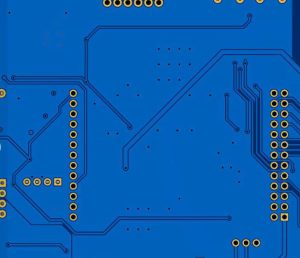
Cap Layers
Cap-Layers Definition: What Cap-Layers Truly Represent in Modern Manufacturing
Cap-Layers as a Structural and Functional Concept
At its most fundamental level, Cap-Layers are additional conductive or semi-conductive layers intentionally introduced to cover, reinforce, or regulate underlying copper features within IC substrates or HDI PCBs.
However, this simplified definition fails to capture their true role.
In modern manufacturing, Cap-Layers are:
-
Not merely copper additions
-
Not always signal-carrying
-
Not purely protective
Instead, they function as engineered interfaces between:
-
Fine copper traces and subsequent buildup layers
-
Microvias and surface metallization
-
High-current structures and thermally sensitive dielectrics
From a process standpoint, Cap-Layers are often deposited, plated, or laminated with tighter thickness control and more specific functional intent than standard copper layers.
Cap-Layers vs. Traditional Copper Layers
A critical distinction must be made between Cap Layers and conventional routing layers.
| Aspect | Traditional Copper Layer | Cap Layers |
|---|---|---|
| Primary purpose | Signal or power routing | Protection, regulation, stabilization |
| Thickness tolerance | Relatively wide | Tight and controlled |
| Electrical role | Active conductor | Often passive or moderating |
| Process sensitivity | Moderate | High |
| Failure impact | Localized | Systemic |
In many IC substrate designs, Cap-Layers may carry little to no signal routing at all, yet their absence would dramatically reduce yield and long-term reliability.
Typical Locations Where Cap-Layers Are Applied
Cap-Layers can be strategically placed at various structural points, including:
-
Over microvia capture pads
-
Above thin copper redistribution layers (RDL)
-
Beneath solder mask or surface finish layers
-
On top of power planes to regulate current spreading
Each location introduces a different functional emphasis, reinforcing the idea that Cap-Layers are purpose-built rather than generic features.
Cap-Layers in IC Substrate Manufacturing Architecture
IC substrates operate under extreme constraints:
-
Ultra-thin cores
-
High layer counts
-
Dense via stacks
-
Aggressive thermal cycling
Within this environment, Cap-Layers become load-bearing participants in the architecture, not passive coverings.
From my perspective, the most overlooked contribution of Cap-Layers in substrates is their role in stress redistribution. As copper thickness decreases and dielectric layers thin, localized stress around vias and pads increases dramatically. Cap-Layers help spread this stress laterally, reducing crack initiation points and delaying fatigue failure.
This function alone justifies their increasing adoption in advanced substrate designs.
Cap-Layers in HDI PCB Manufacturing: Bridging Traditional Boards and Substrates
HDI manufacturing sits at a unique crossroads: it inherits cost sensitivity from traditional PCB production while absorbing complexity from IC substrate technology.
Here, Cap Layers often serve as transitional elements, enabling:
-
Thinner dielectric usage without compromising reliability
-
Higher via aspect ratios
-
Improved copper surface uniformity for fine-line imaging
In HDI environments, Cap Layers also act as process insurance layers, smoothing surface topography and reducing variability introduced by laser drilling, desmear, and sequential lamination.
Performance Advantages and Functional Impact of Cap Layers
Cap Layers Advantages: Beyond Simple Copper Coverage
When Cap Layers are discussed purely as an additional copper deposition step, their real value is underestimated. In advanced packaging, Cap Layers introduce multi-dimensional advantages that span electrical behavior, mechanical robustness, thermal stability, and manufacturing consistency.
From an engineering standpoint, the advantages of Cap Layers can be grouped into four strategic domains:
-
Electrical performance regulation
-
Mechanical stress mitigation
-
Thermal management enhancement
-
Process yield stabilization
Each of these advantages becomes increasingly critical as interconnect geometries shrink and system integration density increases.
Cap Layers and Electrical Performance Stabilization
One of the most tangible advantages of Cap Layers lies in their ability to moderate electrical behavior at high frequencies and high current densities.
In IC substrates and HDI boards, copper features often operate at:
-
Extremely small cross-sectional areas
-
High edge current density
-
Tight impedance tolerances
Cap Layers help stabilize these conditions in several ways:
-
Current spreading: By providing an additional conductive surface, Cap Layers reduce localized current crowding at via transitions and pad edges.
-
Impedance consistency: Uniform copper coverage improves trace geometry repeatability, reducing impedance deviation caused by plating variation.
-
Reduced electromigration risk: Lower peak current density directly improves long-term reliability in fine copper structures.
From my experience, many unexplained signal integrity or early-life failures in advanced boards are not routing-related, but rather cap-layer-related current concentration issues that were never explicitly modeled.
Cap Layers Impact on Signal Integrity in High-Speed Designs
At high data rates, even minor copper profile variations can introduce reflection, loss imbalance, and mode conversion. Cap Layers indirectly influence these effects by improving conductor surface uniformity.
Key signal integrity benefits include:
-
More predictable conductor thickness across panels
-
Reduced roughness discontinuities at via land interfaces
-
Better symmetry between differential pairs near transitions
While Cap Layers themselves may not carry signals, they shape the electromagnetic environment in which signals propagate. This subtle influence becomes decisive in substrate-level interconnects operating at tens of gigahertz.
Cap Layers Role in Mechanical Stress Redistribution
As copper thickness decreases and dielectric layers become thinner, mechanical stress concentration becomes unavoidable—especially around microvias, stacked vias, and copper-filled structures.
Cap Layers serve as stress diffusion layers, spreading localized loads laterally and reducing peak strain at critical interfaces.
Their mechanical benefits include:
-
Lower risk of via barrel cracking
-
Reduced pad lift under thermal cycling
-
Improved resistance to copper fatigue
In HDI and IC substrate applications where thousands of thermal cycles are expected, this stress-buffering role is not optional—it is foundational.
Cap Layers and Thermal Performance Enhancement
Thermal management is increasingly constrained by space rather than power. Cap Layers provide thin yet effective thermal pathways that complement dielectric-based heat spreading strategies.
Although not as thick as dedicated heat spreaders, Cap Layers:
-
Improve lateral heat conduction
-
Reduce temperature gradients around power vias
-
Stabilize local thermal expansion mismatches
In power-dense substrate designs, these effects collectively reduce thermomechanical fatigue, even when overall temperature rise remains unchanged.
Conclusion: Cap Layers as the Silent Architecture of Advanced Packaging
In advanced packaging, the most decisive technologies are often the least visible. Cap Layers belong firmly in this category. They do not announce themselves through higher speeds, smaller geometries, or dramatic cost reductions, yet they quietly determine whether all those ambitions can be realized at scale.
Across IC substrate and HDI manufacturing, Cap Layers represent a shift away from viewing PCBs as static interconnect platforms and toward understanding them as dynamic, stress-bearing, electrically interactive systems. Their value does not lie in adding copper, but in shaping behavior—electrical, mechanical, thermal, and procedural—under increasingly unforgiving conditions.
From an engineering perspective, Cap Layers embody three fundamental truths about modern manufacturing:
First, performance without stability is meaningless. High-density routing, fine-pitch vias, and aggressive materials only deliver value if they survive thermal cycling, current stress, and process variability. Cap Layers provide the quiet reinforcement that allows advanced designs to remain functional long after initial qualification.
Second, manufacturability is no longer a downstream concern. In substrate-like architectures and advanced HDI boards, Cap Layers function as design-for-manufacturing instruments. They absorb process noise, widen operational windows, and translate idealized layouts into repeatable production outcomes. This makes them a strategic lever, not a cosmetic enhancement.
Third, engineering maturity is measured by what teams choose to control. Organizations that explicitly design, simulate, and specify Cap Layers demonstrate an understanding that modern reliability is engineered, not assumed. Treating Cap Layers as intentional variables—rather than incidental process results—signals a transition from reactive problem-solving to proactive system design.
Looking forward, Cap Layers will likely become even more selective, more localized, and more tightly coupled with simulation-driven workflows. As PCB manufacturing continues to converge with semiconductor thinking, Cap Layers will stand as one of the clearest indicators of that convergence: a layer that exists not for routing, but for governance of physical reality.
FAQs
1. How should designers decide whether to include Cap Layers?
Designers should evaluate Cap Layers based on reliability requirements, feature density, thermal cycling expectations, and manufacturing capability. Early collaboration with experienced manufacturers—such as SQ PCB—helps ensure Cap Layers are optimized rather than overused.
2. Are Cap-Layers always required in IC substrate manufacturing?
While not every layer stack mandates Cap Layers, most advanced IC substrates rely on them to manage stress, stabilize microvias, and control electrical variability. As feature sizes shrink, the practical necessity of Cap Layers increases significantly.
3. Do Cap-Layers negatively affect signal integrity?
Cap-Layers can affect signal behavior if poorly designed, particularly by introducing unintended capacitance. However, when properly engineered, they often improve signal integrity by stabilizing conductor geometry and reducing current crowding effects.
4. How are Cap-Layers different from standard outer copper layers?
Standard outer copper layers are primarily used for routing signals or distributing power. Cap-Layers, by contrast, are typically functional layers designed to protect, reinforce, or regulate underlying structures rather than carry primary routing.
5. Can Cap-Layers improve manufacturing yield?
Yes. Cap-Layers help smooth surface topography, compensate for plating variation, and reduce sensitivity to process fluctuations. These effects collectively improve yield, especially in HDI and substrate-like PCB production.

- long board pcb
- Flexible PCBs
- Special PCB
- Express Printed Circuit Board
- Pcb Prototype
- LED PCB
- PCB
- Printed Circuit Board
- Pcb meaning
- Pcb manufacturer
- Rigid pcb board
- Rigid Flex PCB
 Quote
Quote
 E-mail