PCB snake routing, In high-speed digital circuit design, every PCB trace introduces a certain amount of delay to a signal, especially when handling high-frequency signals. The purpose of PCB snake routing (also known as serpentine routing) is to adjust the timing of signals to ensure synchronization among different traces in a high-speed system. This is particularly important for signals that require precise timing, such as clock signals, high-speed data buses, and differential pairs.
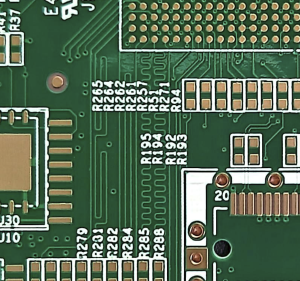
PCB Snake Routing
The Role of Snake Routing in PCB Design
The primary function of serpentine routing is to compensate for timing differences in signal traces. This is crucial in scenarios where signals within the same group must remain synchronized. Some key applications of snake routing include:
- Timing Compensation
In high-speed digital circuits, signals that propagate at different speeds due to varying trace lengths can lead to data misalignment. If one signal arrives significantly earlier than another, it can cause incorrect data to be processed. Snake routing helps equalize the delay by increasing the trace length of the faster signal, ensuring it arrives simultaneously with other signals. - Clock Signal Alignment
Clock signals are fundamental to digital circuits, serving as timing references for data processing. Since clock signals do not undergo logical processing, their propagation delay must be carefully managed to maintain synchronization with related signals. Snake routing ensures that clock signals arrive at their destinations without excessive delay differences compared to other associated signals. - Impedance Matching
Impedance mismatching can cause signal reflection and degradation in high-frequency circuits. Serpentine traces can help in fine-tuning impedance characteristics, improving signal integrity, and reducing unwanted noise. - Electromagnetic Interference (EMI) Control
In some PCB designs, serpentine routing can act as a filter inductor, reducing electromagnetic interference (EMI). By adjusting the length and spacing of serpentine traces, designers can minimize high-frequency noise and enhance circuit stability. - Inductive Filtering
On some computer motherboards and high-speed PCBs, serpentine traces are used in power and signal filtering. For example, in circuits involving PCI clock signals (such as PCI CLK and AGP CLK), the serpentine routing can function as an inductor to suppress noise and improve signal integrity.
Design Considerations for PCB Snake Routing
While serpentine routing serves important functions, improper implementation can introduce unwanted signal distortions. Here are some design best practices:
- Minimize Inductance Effects: Although serpentine traces add length to compensate for delay, excessive inductance can negatively impact signal integrity. To prevent excessive inductance, the spacing between adjacent loops of the serpentine trace should be kept less than twice the trace width.
- Reduce High-Frequency Interference: The rising and falling edges of high-speed signals are particularly sensitive to distributed capacitance and inductance. Careful placement and routing techniques are needed to minimize these effects.
- Avoid Excessive Length Increase: While adding length is necessary to balance delays, excessively long traces can introduce unwanted parasitic capacitance and inductance, leading to degraded signal quality.
- Consider Differential Pairs: For differential signals, both traces must be of equal length to maintain signal integrity. If one signal in a differential pair requires additional length, a serpentine route should be used while maintaining equal spacing between traces.
- Maintain Consistency Across Multi-Layer PCBs: In multi-layer PCBs, signals routed on different layers must be adjusted carefully to maintain overall system timing.
Practical Applications of Snake Routing
- Motherboard and High-Speed Data Buses
Serpentine traces are commonly used in motherboard design to ensure synchronization of high-speed data lines such as PCI, DDR memory, and high-speed interconnects. - High-Speed Communication Systems
In telecommunication and networking hardware, serpentine routing is used to balance signal timing among different communication channels. - RF and Antenna Design
In some RF applications, serpentine traces can be designed as inductive elements to fine-tune circuit characteristics. - Embedded Systems and Consumer Electronics
Many embedded systems use serpentine routing for timing adjustments in clock distribution networks, ensuring stable performance in microcontroller-based designs.
Conclusion
PCB snake routing is an essential technique in high-speed PCB design, primarily used for delay compensation, clock signal alignment, impedance matching, and EMI control. While it provides crucial benefits in ensuring signal integrity and synchronization, careful design considerations must be taken to avoid negative impacts such as excessive inductance or capacitance. By following best practices in serpentine routing, PCB designers can effectively optimize high-speed circuits, ensuring reliable and efficient performance.

- long board pcb
- Flexible PCBs
- Special PCB
- Express Printed Circuit Board
- Pcb Prototype
- LED PCB
- PCB
- Printed Circuit Board
- Pcb meaning
- Pcb manufacturer
- Rigid pcb board
- Rigid Flex PCB
 Quote
Quote
 E-mail