Will PCB Prices Drop After the 2026 Spring Festival? No Cooling Before June, Analysis of Price Increase Logic
2026-02-27
Core Conclusion: After the 2026 Spring Festival, the price of domestic printed circuit boards (PCBs) is unlikely to drop. It is expected to remain at a high level until June 2026, and the earliest possible inflection point for a price drop will be in June-July.Shortly before the 2026 Spring Festival, the domestic PCB market experienced a significant price increase, with a general rise of 15%-30%, and some high-end categories even exceeding 30%, bringing considerable cost pressure to downstream electronic manufacturing enterprises. As the Spring Festival holiday ends and all industries gradually resume production and work, “whether PCB prices will fall after the Spring Festival” has become the top concern for many enterprises and practitioners. Combined with the current trend of raw materials, industrial chain supply and demand, and enterprise inventory, this article will analyze in detail the core logic behind the price increase and forecast the price trend after the Spring Festival.
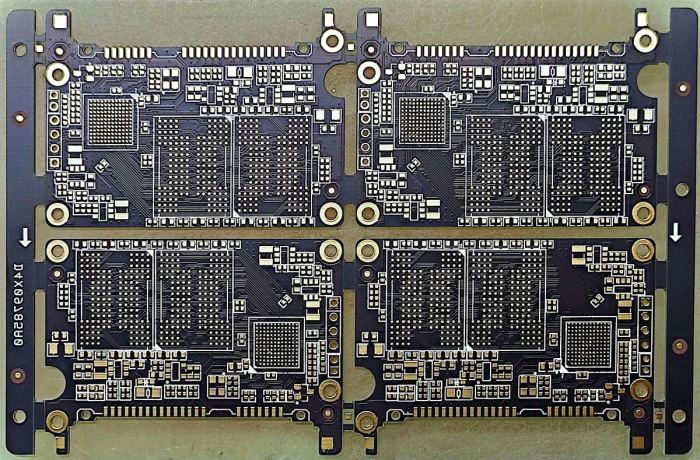
Will PCB Prices Drop After the 2026 Spring Festival?
I. Core Reasons for PCB Price Increase Before the Spring Festival (Driving Factors Continue to Ferment)
The price increase of PCBs before the Spring Festival is not a short-term market fluctuation, but an inevitable result of the superposition of multiple factors. These driving factors will continue to play a role after the Spring Festival, supporting the high price level.
1. Raw Material Price Increase: Core Trigger, Precious Metals Unlikely to Cool Down in the Short Term
The core raw materials for PCB production include metals such as copper and gold, as well as auxiliary materials like copper-clad laminates (CCL), copper foil and copper balls. Among them, price swings of copper and gold directly affect PCB manufacturing costs. Since 2026, copper prices have maintained a structural bullish trend. Fueled by surging demand from new energy vehicles and AI computing power, global copper demand growth outpaces supply expansion substantially, while global copper mine inventories sit at historic lows. It is projected that the average copper price for 2026 will hit USD 11,464 per ton, representing a year-on-year rise above 15%. Gold prices, supported by central bank gold buying and de-dollarization trends, keep fluctuating at elevated levels, with the peak in H1 expected to reach USD 4,750 per ounce.
Meanwhile, demand from AI server and new energy vehicle sectors keeps climbing. The PCB content of one AI server is 5–7 times that of a conventional server, and copper consumption per new energy vehicle is 4–6 times higher than for gasoline-powered cars. This further widens the raw material supply-demand gap and pushes prices upward. This trend cannot be reversed before June.
2. Industrial Chain Transmission: Upstream Price Increases Fully Penetrate into the PCB Link
After the price increase of raw materials, copper-clad laminate (CCL) enterprises took the lead in raising prices, and major domestic and foreign manufacturers have successively raised their quotes — Japan’s Resonac plans to raise prices by more than 30% from March 1, and domestic enterprises such as Shengyi Technology and Taikoo Photonics have made synchronous adjustments. Subsequently, the processing fees of copper foil and copper balls rose accordingly. In February, the processing fee of copper foil increased by 2,000 yuan per ton compared with the end of 2025, and the price of high-end HVLP copper foil increased by more than 50% due to a global supply gap of more than 40%.
Faced with the overall price increase of upstream materials, downstream PCB enterprises can only transfer costs by raising the price of finished products, forming a complete transmission chain of “raw material price increase → CCL price increase → PCB price increase”. This effect is still continuing and cannot be reversed in the short term.
3. PCB Enterprises Stock Up in Advance: Lock in Costs and Support High Prices
Faced with the expectation of continuous price increase of raw materials, powerful domestic PCB factories have successively stocked up in advance, increasing the reserve of core materials such as CCL, copper foil, and copper balls. Some leading enterprises have even locked in the raw material inventory for the next 2-3 months to avoid the risk of subsequent price hikes.
This concentrated stocking behavior, on the one hand, reduces the circulation of raw materials in the market and indirectly pushes up raw material prices; on the other hand, PCB enterprises hold sufficient reserves and do not need to boost sales via price cuts to recover funds, so they can stabilize their quotes, resulting in little incentive for PCB prices to drop after the Spring Festival.
4. Inventory Digestion Cycle: Delay the Price Reduction Time
The raw materials stocked by PCB enterprises before the holiday can mostly meet the production demand for 2–3 months. Before the inventory is digested, enterprises do not need to face the immediate pressure of raw material price increases, so they will not take the initiative to reduce prices. Only when the inventory is digested and there is a clear signal of raw material decline can the PCB price be adjusted downward, which will take at least until June.
5. CCL Enterprises Have Full Orders: No Motivation to Take the Initiative to Reduce Prices
At present, major domestic CCL enterprises have sufficient orders. Most of them hold orders for at least 2–3 months, and some high-end manufacturers have orders scheduled until the end of the year. The production lines are in full-load operation, and the expansion cycle of high-end production capacity is as long as more than 18 months. In the context of tight supply and demand and full orders, CCL enterprises do not need to compete for orders through price reduction, but will give priority to ensuring high-profit orders. This pattern is directly transmitted to the PCB link, supporting the stability of PCB prices.
II. Forecast of PCB Price Trend After the Spring Festival (No PCB Prices Drop Before June)
In summary, the trend of PCB prices after the Spring Festival mainly depends on three core factors: raw material prices, industrial chain supply and demand, and enterprise inventory:
1. Raw material level: Precious metals such as copper and gold fluctuate at a high level, and there is no significant drop in the short term;
2. Industrial chain level: CCL enterprises have full orders and full production capacity, and the price increase transmission effect continues;
3. Enterprise level: PCB enterprises have sufficient inventory and no need to take the initiative to reduce prices.
With the superposition of multiple factors, PCB prices will continue to remain at a high level before June 2026, and it is difficult to see a price drop. It is expected that by June–July, as raw material prices stabilize and PCB enterprises’ inventory is digested, prices may usher in a slight decline, but the possibility of a sharp drop is still low.
III. Suggestions for Downstream Enterprises
For downstream electronic manufacturing enterprises, they should rationally view this price increase, make cost planning and inventory management in advance, and avoid operational risks caused by price fluctuations. At the same time, they can strengthen communication and cooperation with PCB suppliers to lock in long-term supply prices and reduce the impact of cost fluctuations.
Conclusion
The current round of PCB price increase is the result of the joint action of industrial demand upgrading (AI, new energy vehicles) and the imbalance between supply and demand, not a short-term market fluctuation. Its impact will continue throughout the first half of 2026, and the expectation of a price drop in the short term is slim. Downstream enterprises need to make preparations for long-term response.
Keywords
2026 PCB Price, PCB Price After Spring Festival, Reasons for PCB Price Increase, CCL Orders, PCB Raw Material Price
FAQ (Frequently Asked Questions)
1. Will the increase range of PCB prices continue to expand after the Spring Festival?
It will not expand significantly, and it is likely to remain at the current high level. At present, raw material prices tend to fluctuate at a high level, and the orders and inventory of CCL enterprises and PCB enterprises are in a stable state. There is no motivation for further significant price increases. In the future, it may maintain the existing price level or have slight fluctuations.
2. In addition to copper and gold, what other raw materials affect PCB prices?
The core influencing raw materials also include copper-clad laminates (CCL), copper foil, and copper balls. Among them, as the core substrate of PCBs, the price fluctuation of CCL directly affects the production cost of PCBs; due to the large global supply gap, the price increase of high-end copper foil (such as HVLP copper foil) also has a significant impact on PCB quotes.
Will PCB prices return to the level before the Spring Festival after the price drop in June-July?
It is unlikely. This price increase is driven by the supply-demand pattern and industrial demand upgrading. Even if there is a price drop in June-July, it will only be a slight decline, and it is difficult to return to the price range before the Spring Festival. In the long run, it will still maintain a price level higher than the end of 2025.
Will the quotation gap between small and medium-sized PCB enterprises and leading enterprises become larger?
The gap will not become significantly larger. At present, the overall supply and demand of the industry is tight. Both small and medium-sized enterprises and leading enterprises are facing the pressure of raw material price increases, and they have sufficient orders. Their quotations are mainly stable; leading enterprises may have more stable quotations due to sufficient stock and stable production capacity. Small and medium-sized enterprises may have slight quotation fluctuations due to short-term inventory fluctuations, but the overall gap is controllable.
If downstream enterprises postpone purchases, can they wait for more favorable prices?
It is not recommended to postpone purchases. There is no possibility of PCB price reduction before June. If purchases are postponed, enterprises may face risks such as further fluctuations in raw materials and delayed order delivery; it is recommended that downstream enterprises reasonably plan the purchase volume and lock in long-term supply prices with suppliers to avoid the risk of subsequent price fluctuations.

Product Center
- Special PCB
- long board pcb
- Flexible PCBs
- Special PCB
- Express Printed Circuit Board
- Pcb Prototype
- LED PCB
- PCB
- Pcb Meaning
- Printed Circuit Board
- Pcb manufacturer
- Rigid pcb board
Contact Us
 Quote
 E-mail