Introduction
In PCB manufacturing, some defects are easy to recognize because they are visible on the surface. Others develop inside the board and may not become apparent until assembly, testing, or field operation. Wicking is one of those less obvious issues.
The term generally describes the unwanted movement of resin or molten solder along pathways such as glass fibers, interfaces, holes, or other structures. Depending on where it occurs, the mechanism can affect insulation, solder joints, appearance, manufacturability, and long-term reliability.
In my view, wicking deserves more attention because it is not simply a cosmetic manufacturing issue. A small process variation can become a larger reliability problem when the PCB experiences repeated thermal cycles, moisture exposure, or lead-free reflow temperatures. NASA reliability studies similarly emphasize that PCB reliability is influenced by material selection, manufacturing processes, moisture, and thermal exposure.
In this blog post, we will delve into what the Wicking Effect is, how it affects PCB quality, and how manufacturers can mitigate its impact to ensure that their PCBs are of the highest quality.
What Is PCB Wicking Effect?
PCB Wicking Effect refers to the unwanted migration of a material through or along microscopic pathways within a PCB structure. Two common forms are resin wicking and solder wicking.
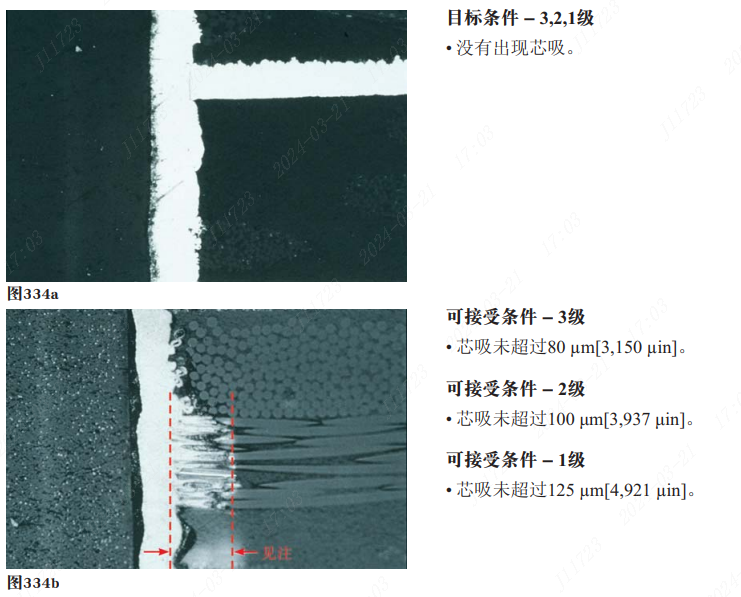
Resin wicking is associated with the movement of resin into or along glass-fiber structures during lamination or subsequent processing. Because FR-4 and similar laminates are composite materials made from resin and reinforcement, the resin distribution and glass-resin interface are important to the final board structure. Poor resin flow or inadequate process control can contribute to local variations in the laminate.
Solder wicking occurs when molten solder travels farther than intended, often along plated through-holes, component leads, copper structures, or other conductive paths. Instead of remaining concentrated around the intended solder joint, solder can migrate into areas where it is not desirable.
These two mechanisms are different, but they share an important manufacturing lesson: material movement must be controlled rather than assumed to be harmless.
In simple terms, the Wicking Effect is the unintended movement of molten solder into areas it should not reach, leading to solder bridging, excessive solder on pads, and sometimes contamination of other PCB areas. This behavior is particularly problematic for high-density designs, where components are closely packed together.
Wicking Effect
Why PCB Wicking Effect Deserves Attention
The main concern is that wicking can create defects that are difficult to detect through simple visual inspection.
For example, excessive solder migration may reduce the amount of solder available at the intended joint, potentially contributing to insufficient solder or inconsistent connections. In other structures, unwanted solder movement can increase the possibility of shorts or interfere with neighboring features.
Resin-related problems can also become significant when they affect interfaces, voids, moisture behavior, or laminate integrity. Moisture inside PCB materials can contribute to cracking, delamination, dimensional changes, and electrical degradation, particularly during high-temperature assembly.
My own view is that the biggest mistake is treating wicking as an isolated defect. In production, it is often a symptom of interaction between material properties, PCB design, drilling, plating, lamination, soldering, and process conditions. Therefore, solving it requires looking at the complete manufacturing chain rather than adjusting only one operation.
Impact of the Wicking Effect on PCB Quality
The Wicking Effect can have a significant impact on the overall quality and reliability of PCBs. Here are some of the key issues it can cause:
A. Solder Bridging
One of the most common problems resulting from the Wicking Effect is solder bridging, which occurs when molten solder flows between adjacent pads or between pads and vias, creating unintended connections. Solder bridges can cause short circuits, malfunctioning components, and can ultimately render a PCB unusable. These bridges are particularly problematic in designs with fine-pitch components, as the gaps between pads are minimal.
B. Reduced Electrical Performance
Excessive solder can result in poor electrical performance due to inconsistent signal integrity. In high-speed circuits, for example, excess solder can cause unwanted electrical paths and interference, disrupting the flow of signals and leading to functional issues such as signal noise, data errors, or voltage drops.
C. Reliability Issues
Solder that wicks into unwanted areas, particularly under components, can cause long-term reliability issues. This excess solder may stress components or pads due to uneven heating, thermal expansion, or contraction during the cooling process. Over time, these stresses can cause delamination, pad lifting, or cracking of solder joints, compromising the durability and performance of the PCB.
D. Contamination and Defects
Solder flux can also migrate with the molten solder, leaving residues in places where they should not be. This contamination can lead to corrosion or poor solder joints and can further increase the likelihood of failure. Additionally, excess solder in certain areas can lead to mechanical defects or difficulty in assembling the board.
E. Increased Rework Costs
When the Wicking Effect leads to defective boards, it often requires time-consuming and costly rework. This may involve desoldering, cleaning, and repairing the defective areas, which adds both labor costs and time to the overall production cycle. Rework can also delay time-to-market for products, which is critical in many industries.
PCB Wicking Effect: Impact on PCB Performance
| Problem | Possible Performance Impact |
|---|---|
| Solder Migration | Inconsistent solder joints or short-circuit risk |
| Resin Irregularity | Reduced laminate structural stability |
| Moisture-Related Defects | Higher risk of cracking or delamination |
| Thermal Stress | Reduced long-term reliability |
| Internal Defects | Difficult-to-detect reliability risks |
| Process Variation | Lower production consistency and yield |
PCB Wicking Effect: Cost Factors
The cost of controlling wicking is not limited to the price of materials.
A manufacturer may need tighter control of laminate specifications, drilling parameters, plating processes, soldering profiles, moisture handling, inspection, and process validation. These controls can increase manufacturing cost, especially for high-layer-count or high-reliability boards.
The larger financial impact can come from yield loss and rework. If wicking is discovered after assembly, the manufacturer may need additional inspection, solder repair, component replacement, or even board scrapping. For high-value electronic assemblies, these downstream costs can be considerably greater than the original process-control cost.
This is why I believe preventive control is usually more practical than simply trying to identify the defect at the end of production. NASA’s reliability work also highlights systematic failure analysis and process understanding as important approaches to preventing recurring PCB problems.
PCB Wicking Effect: Common Production Problems
Several factors can contribute to wicking-related problems.
For resin movement, resin content, glass-cloth construction, lamination pressure, temperature profile, and resin flow characteristics can influence the final structure. If the laminate does not achieve the intended resin distribution, localized structural differences may appear.
For solder movement, soldering temperature, time above liquidus, flux behavior, hole geometry, component lead configuration, and board moisture can all influence the result. Lead-free soldering is particularly important because it generally exposes PCBs to higher peak temperatures than traditional Sn-Pb processes. NASA notes that these higher thermal exposures can alter laminate properties and influence PCB and assembly reliability.
Typical production concerns include:
- Insufficient solder at the intended joint
- Unwanted solder migration
- Potential solder bridging or shorts
- Internal laminate defects
- Delamination or cracking under thermal stress
- Reduced insulation reliability
- Additional rework and inspection
- Lower manufacturing yield
The actual risk depends heavily on board construction and application requirements. A defect that is acceptable in one application may require much tighter control in automotive, industrial, aerospace, or other high-reliability electronics.
PCB Wicking Effect: Practical Prevention and Solutions
The most effective approach is to control the problem from several directions.
First, select appropriate materials. Laminate construction, resin content, glass style, and thermal properties should match the application and manufacturing process.
Second, control lamination and drilling. Stable lamination parameters and properly controlled hole fabrication help reduce structural variations that may contribute to material migration or internal defects.
Third, optimize plating and soldering processes. Plated-hole dimensions, copper thickness, solder temperature, heating time, flux selection, and reflow profile should be controlled within an appropriate process window.
Fourth, control moisture. PCB storage and handling should prevent excessive moisture absorption before assembly. This is particularly important before high-temperature processes. IPC research specifically identifies moisture absorbed during fabrication and storage as a factor that can affect PCB reliability.
Finally, use cross-sectional analysis when necessary. Some internal defects cannot be confidently evaluated from surface inspection alone. Metallographic cross-sections and other failure-analysis methods can reveal internal structures and help identify the actual root cause. NASA has long used cross-sectional evaluation for assessing plated-through-hole and PCB construction integrity.
Conclusion: PCB Wicking Effect and Reliable PCB Manufacturing
Wicking is a relatively small manufacturing detail that can have a disproportionately large influence on PCB quality when it is poorly controlled. Resin movement can affect laminate structure, while solder migration can influence solder-joint quality and electrical reliability.
The best solution is therefore not a single corrective action. Material selection, lamination, drilling, plating, soldering, moisture control, inspection, and failure analysis should work together.
For companies sourcing custom PCBs, selecting a manufacturer with strong process control and experience with demanding PCB structures can reduce the risk of unexpected yield loss and reliability problems. In my opinion, understanding these hidden manufacturing mechanisms before production begins is far more valuable than discovering them after an expensive assembly failure.
FAQs
1. What is resin wicking in a PCB?
Resin wicking refers to the unwanted movement or distribution of resin along or into structures such as glass fibers or interfaces within a laminate. Excessive or uncontrolled resin behavior can contribute to variations in laminate structure and reliability.
2. What is solder wicking?
Solder wicking occurs when molten solder travels away from the intended soldering area, commonly along component leads, plated holes, or conductive structures. Excessive migration can contribute to insufficient solder at the intended joint or unwanted conductive connections.
3. What causes solder wicking during PCB assembly?
Common factors include soldering temperature, heating time, flux behavior, hole and lead geometry, surface finish, and PCB moisture. Process parameters should be optimized according to the board design and soldering technology.
4. How can PCB manufacturers reduce wicking-related problems?
Manufacturers can reduce risk through appropriate material selection, controlled lamination, accurate drilling and plating, optimized soldering profiles, moisture control, and appropriate inspection and failure-analysis procedures.
5. Does wicking always cause PCB failure?
No. The effect depends on its location, severity, board construction, and application requirements. Some material movement may have little practical impact, while excessive migration or internal defects can reduce yield or long-term reliability. Therefore, acceptance should be evaluated according to the applicable design and quality requirements.

- Special PCB
- long board pcb
- Flexible PCBs
- Special PCB
- Express Printed Circuit Board
- Pcb Prototype
- LED PCB
- PCB
- Pcb Meaning
- Printed Circuit Board
- Pcb manufacturer
- Rigid pcb board
 Quote
 E-mail