Tenting vs. Plugging vs. Filling: Choosing the Right Via Protection Strategy
Introduction
In modern printed circuit board (PCB) manufacturing, vias serve as essential interconnections between different layers, enabling complex electrical routing in compact designs. However, these small conductive holes introduce a range of challenges related to soldering, contamination, reliability, and signal integrity. To address these issues, engineers must carefully select an appropriate via protection approach.
Among the most widely used techniques are tenting, plugging, and filling. Each method offers distinct advantages and limitations depending on design requirements, cost constraints, and performance expectations. Choosing the right approach is not merely a manufacturing decision—it directly affects product reliability, yield, and long-term operational stability.
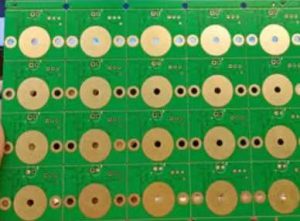
Via Protection Strategy
Definition and Fundamentals of Via Protection Strategy
What is Via Protection Strategy
A Via Protection Strategy refers to the set of methods used to protect, seal, or modify vias during PCB fabrication to ensure optimal electrical, mechanical, and environmental performance. These strategies are applied after drilling and plating processes and are tailored to meet specific design and application needs.
At its core, the concept revolves around controlling how vias interact with solder, flux, moisture, and external contaminants. Without proper protection, vias can become sources of defects such as solder wicking, void formation, or electrical leakage.
Why Via Protection Strategy Matters
The importance of a well-defined Via Protection Strategy lies in its influence on multiple aspects of PCB performance:
- Solderability: Prevents solder from flowing into vias during assembly
- Reliability: Reduces risks of failure under thermal cycling
- Electrical Integrity: Maintains consistent signal transmission
- Mechanical Strength: Enhances structural durability
- Environmental Resistance: Protects against moisture and contaminants
As PCB designs evolve toward higher density and smaller geometries, the role of via protection becomes increasingly critical.
Understanding Via Protection Strategy in Modern PCB Design
Modern PCB designs—especially HDI (High-Density Interconnect) boards—rely heavily on microvias and densely packed routing. In such environments, the selection of a Via Protection Strategy must align with both electrical and mechanical design goals.
For example, in fine-pitch BGA (Ball Grid Array) applications, improper via protection can lead to solder bridging or insufficient solder joints. Similarly, high-frequency circuits demand minimal impedance discontinuities, which can be influenced by how vias are treated.
From my perspective, one of the most underestimated aspects in PCB design is the interaction between via treatment and assembly processes. Engineers often focus on layout optimization but overlook how via protection decisions impact downstream manufacturing. This disconnect can lead to costly redesigns or production delays.
A holistic approach—where design, fabrication, and assembly considerations are integrated—is essential for achieving optimal results.
Via Protection Strategy: Cost Factors and Economic Considerations
When evaluating a Via Protection Strategy, cost is often the first constraint that engineers and procurement teams must balance against performance requirements. However, the true cost is not limited to fabrication expenses alone; it also includes yield impact, assembly efficiency, long-term reliability, and potential field failures.
At the most basic level, tenting represents the lowest-cost option because it utilizes the standard solder mask process without introducing additional materials or processing steps. This simplicity makes it highly attractive for high-volume consumer electronics where margins are tight. However, the apparent cost savings can sometimes be misleading. If tented vias lead to solder defects or reliability issues, the downstream costs in rework and warranty claims can quickly outweigh the initial savings.
Plugging introduces a moderate cost increase due to additional materials such as epoxy or resin and extra processing steps like via filling and surface leveling. The cost typically scales with via density and board complexity. Despite this, plugging often delivers a favorable cost-performance ratio because it significantly reduces assembly defects such as solder wicking. In many industrial and automotive applications, this balance makes plugging the preferred Via Protection Strategy.
Filling, on the other hand, is the most expensive option due to its complexity and precision requirements. Conductive or non-conductive filling materials, combined with planarization and additional inspection steps, contribute to higher manufacturing costs. However, for advanced applications such as HDI boards or high-frequency circuits, filling is often indispensable. It enables via-in-pad designs, reduces signal loss, and improves thermal management, all of which are critical in high-performance electronics.
Another important cost factor is yield. A poorly chosen Via Protection Strategy can lead to defects such as voids, incomplete fills, or solder bridging, all of which reduce manufacturing yield. High-end manufacturers invest heavily in process control to mitigate these risks. In this regard, experienced suppliers like SQ PCB play a crucial role by offering optimized processes that minimize defects and ensure consistent quality.
Finally, lifecycle cost must be considered. While tenting may appear economical upfront, plugging or filling may provide better value over the product’s lifetime by enhancing reliability and reducing failure rates. From my perspective, the most effective cost strategy is not to minimize initial expense but to optimize total cost of ownership.
Via Protection Strategy: Impact on PCB Performance and Reliability
The choice of Via Protection Strategy has a direct and measurable impact on PCB performance. This influence extends across electrical behavior, thermal characteristics, mechanical strength, and long-term reliability.
From an electrical standpoint, vias introduce impedance discontinuities that can affect signal integrity, especially in high-speed and high-frequency designs. Filling vias—particularly with conductive materials—can reduce these discontinuities by creating a more uniform current path. In contrast, tented or plugged vias may introduce small air gaps or inconsistencies that slightly degrade signal performance. While this may be negligible in low-speed circuits, it becomes critical in applications such as RF communication or high-speed data transmission.
Thermal performance is another key consideration. Filled vias, especially those using conductive materials, can act as efficient thermal pathways, helping dissipate heat from components. This is particularly important in power electronics and densely packed designs where heat buildup can lead to premature failure. Plugged vias offer moderate thermal performance, while tented vias provide minimal contribution to heat dissipation.
Reliability under thermal cycling is also heavily influenced by via treatment. During repeated heating and cooling cycles, differences in material expansion can cause stress within the via structure. Filled vias tend to perform better in these conditions because they provide structural support and reduce the risk of cracking or delamination. Plugged vias offer some improvement, while tented vias are more susceptible to failure if the solder mask degrades or cracks.
Moisture resistance and contamination control are additional factors. Open or poorly protected vias can trap moisture or flux residues, leading to corrosion or electrical leakage. Plugging and filling significantly reduce these risks by sealing the via interior, thereby enhancing environmental robustness.
In my view, engineers should treat Via Protection Strategy as a performance optimization tool rather than merely a manufacturing detail. The right choice can significantly enhance product reliability and differentiate a design in competitive markets.
Via Protection Strategy: Comparing Tenting vs. Plugging vs. Filling
To better understand the differences between these three approaches, it is useful to compare them across multiple dimensions, including cost, performance, reliability, and application suitability.
Comparison Table: Tenting vs. Plugging vs. Filling
| Parameter | Tenting | Plugging | Filling |
|---|---|---|---|
| Process Complexity | Low | Medium | High |
| Cost | Lowest | Moderate | Highest |
| Solder Wicking Prevention | Limited | Good | Excellent |
| Surface Planarity | Poor | Moderate | Excellent |
| Thermal Performance | Low | Medium | High |
| Signal Integrity | Basic | Improved | सर्वोत्तम |
| Reliability | Moderate | High | Very High |
| Suitable Applications | Consumer electronics | Industrial, automotive | HDI, aerospace, medical |
| Manufacturing Yield Impact | Variable | Stable | High (if controlled) |
From this comparison, it becomes clear that each Via Protection Strategy occupies a distinct position in the design spectrum. Tenting is ideal for cost-sensitive, low-complexity designs, while filling is essential for high-performance applications. Plugging serves as a versatile middle-ground solution.
Conclusion
Selecting the right Via Protection Strategy is a critical decision that influences not only the manufacturability of a PCB but also its long-term performance and reliability. Tenting, plugging, and filling each offer unique advantages and limitations, and their suitability depends heavily on the specific requirements of the application.
Tenting provides a simple and cost-effective solution for low-density designs, but its limitations in reliability and performance must be carefully considered. Plugging offers a balanced approach, delivering improved reliability and moderate cost, making it suitable for a wide range of applications. Filling, while more expensive, enables advanced design capabilities and superior performance, particularly in high-density and high-reliability environments.
From a broader perspective, the choice of Via Protection Strategy should not be made in isolation. It must be integrated into the overall design and manufacturing strategy, taking into account factors such as assembly processes, environmental conditions, and lifecycle costs.
In my view, the most successful PCB designs are those that adopt a holistic approach—one that combines technical expertise, practical experience, and close collaboration with manufacturing partners. By doing so, engineers can achieve the optimal balance between cost, performance, and reliability.
FAQs
1. Can a PCB use multiple Via Protection Strategy methods in one design?
Yes, many advanced PCB designs use a combination of tenting, plugging, and filling depending on the functional requirements of different areas. This hybrid approach allows designers to optimize both cost and performance.
2. What is the main purpose of a Via Protection Strategy in PCB design?
The primary purpose is to protect vias from solder, moisture, and contaminants while improving reliability and performance. It also helps control solder flow during assembly and enhances the structural integrity of the PCB.
3. When should I choose via filling over plugging?
Via filling should be selected when high-density designs, via-in-pad configurations, or high-frequency performance are required. It is especially important in HDI boards where planarity and signal integrity are critical.
4. Is tenting sufficient for high-reliability applications?
In most cases, tenting alone is not sufficient for high-reliability environments such as automotive or aerospace applications. Plugging or filling is generally recommended to ensure better protection and durability.
5. How does via protection affect PCB cost?
Via protection impacts cost through additional materials, processing steps, and yield considerations. While tenting is the least expensive, plugging and filling may provide better long-term value by reducing defects and improving reliability.

- long board pcb
- Flexible PCBs
- Special PCB
- Express Printed Circuit Board
- Pcb Prototype
- LED PCB
- PCB
- Printed Circuit Board
- Pcb meaning
- Pcb manufacturer
- Rigid pcb board
- Rigid Flex PCB
 Quote
Quote
 E-mail