Unlocking Terahertz and Photonics: The Critical Role of Through-Glass Via in Future PCB Fabrication
Introduction: Terahertz and Photonics as the Next PCB Frontier
As electronic systems advance toward terahertz communication, photonic integration, and heterogeneous packaging, traditional PCB fabrication paradigms are reaching their physical and electrical limits. Silicon-based interposers, organic laminates, and conventional copper-filled vias struggle to meet the simultaneous demands of ultra-high-frequency performance, low dielectric loss, thermal stability, and dimensional accuracy.
Terahertz electronics and photonics are no longer academic curiosities. They are becoming essential enablers for 6G wireless systems, optical computing, advanced sensors, and AI accelerators. These applications impose unprecedented constraints on signal integrity, parasitic loss, electromagnetic coupling, and thermal behavior. In this context, Through-Glass Via technology has emerged as a transformative structural and electrical solution, bridging the gap between PCB manufacturing and semiconductor-level performance.
Unlike conventional vias drilled into organic laminates, glass-based vertical interconnects leverage the unique dielectric, mechanical, and thermal properties of glass substrates. The result is a platform capable of supporting high-density vertical interconnects with exceptional electrical stability across terahertz and optical frequency ranges.
From my perspective, Through-Glass Via is not merely an incremental improvement over existing via technologies. It represents a fundamental shift in how we should think about PCB interconnection, material hierarchy, and system-level integration. Just as multilayer PCBs once redefined electronics packaging, Through-Glass Via is poised to redefine the interface between electronics and photonics.
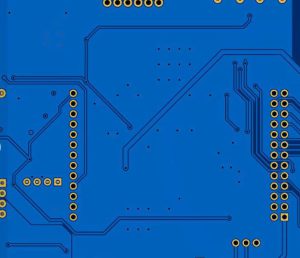
Through-Glass Via
Through-Glass Via Definition and Fundamental Characteristics
A Through-Glass Via is a vertical electrical interconnect that passes completely through a glass substrate, forming a conductive pathway between opposing surfaces or internal layers. Unlike vias formed in organic PCB laminates or silicon wafers, Through-Glass Via structures are embedded within insulating glass materials characterized by low dielectric loss, high dimensional stability, and excellent surface smoothness.
At its core, Through-Glass Via technology combines three critical elements:
-
A glass substrate, typically borosilicate, aluminosilicate, or fused silica
-
A high-aspect-ratio via cavity, formed using laser drilling, wet etching, or plasma-based techniques
-
A metalized conductive fill, commonly copper or copper-based composites
The defining characteristic of Through-Glass Via lies in the electrical neutrality of glass. Glass exhibits a significantly lower dielectric constant and loss tangent compared to FR-4 and many organic substrates, making it inherently suitable for high-frequency and terahertz signal propagation. This property alone places Through-Glass Via in a different performance class from conventional PCB vias.
From a structural standpoint, Through-Glass Via technology offers exceptional via geometry precision. Glass substrates enable tighter dimensional control, smoother via sidewalls, and reduced surface roughness — all of which directly influence conductor loss and impedance stability at high frequencies.
In my view, the real value of Through-Glass Via is not simply the via itself, but the system-level behavior it enables. By embedding vertical interconnects within a low-loss, thermally stable medium, designers gain unprecedented freedom to co-design electrical, optical, and thermal pathways within a single PCB-compatible platform.
Through-Glass Via Material Science and Glass Substrate Selection
The performance ceiling of any advanced interconnect technology is ultimately dictated by material behavior. In the case of Through-Glass Via, the choice of glass substrate is not a secondary consideration but a primary design variable that directly shapes electrical, mechanical, and thermal outcomes.
Glass materials used in Through-Glass Via applications typically fall into several categories: borosilicate glass, aluminosilicate glass, fused silica, and specialty display or photonics-grade glasses. Each material exhibits a distinct balance of dielectric constant, loss tangent, coefficient of thermal expansion (CTE), and mechanical robustness.
From an electrical standpoint, the defining advantage of glass lies in its exceptionally low dielectric loss. At microwave and millimeter-wave frequencies, organic PCB materials already show measurable dissipation. As systems push toward terahertz operation, these losses become unacceptable. Glass substrates maintain stable dielectric properties across wide frequency ranges, enabling Through-Glass Via interconnects to preserve signal amplitude and phase integrity where traditional vias fail.
Mechanically, glass offers high stiffness and dimensional stability, which is crucial for maintaining via alignment and pitch accuracy in high-density designs. Unlike organic laminates that expand and contract significantly with temperature and humidity, glass maintains its geometry with minimal distortion. This stability is especially important for photonics integration, where micron-level misalignment can result in severe optical coupling losses.
However, glass is not without challenges. Its brittle nature introduces fracture risks during drilling, handling, and thermal cycling. This is where material science intersects with process engineering. Advanced Through-Glass Via implementations carefully match glass composition with via geometry, metal fill strategy, and downstream PCB assembly conditions.
In my assessment, the industry’s gradual shift toward glass substrates mirrors an earlier transition from phenolic boards to FR-4. Initially perceived as fragile and expensive, glass is increasingly recognized as a precision platform rather than a commodity material. As fabrication expertise matures, the perceived drawbacks diminish while the performance benefits become impossible to ignore.
Through-Glass Via Fabrication Processes and Technical Challenges
The fabrication of Through-Glass Via structures demands a fundamentally different mindset compared to conventional PCB drilling. Organic laminates tolerate mechanical drilling with relative ease; glass does not. As a result, Through-Glass Via manufacturing relies on high-energy, high-precision material removal techniques.
The most common via formation methods include:
-
Laser drilling (ultrashort pulse or CO₂ lasers)
-
Wet chemical etching
-
Plasma-based dry etching
Laser drilling dominates early-stage Through-Glass Via adoption due to its flexibility and scalability. Ultrashort pulse lasers can create high-aspect-ratio vias with minimal thermal damage, preserving the surrounding glass structure. However, laser-induced microcracks and debris redeposition remain persistent concerns.
Wet etching offers superior sidewall smoothness, which directly benefits electrical performance by reducing conductor roughness effects. Yet, it introduces challenges in mask alignment, etch uniformity, and chemical handling. Plasma etching provides excellent anisotropy but remains cost-intensive and complex for large-area PCB formats.
Once the via cavity is formed, metallization becomes the next critical hurdle. Achieving void-free copper filling in Through-Glass Via structures is significantly more difficult than in organic vias due to glass’s non-porous, chemically inert surface. Advanced surface activation, seed layer deposition, and electroplating control are essential.
From my perspective, the most underestimated challenge in Through-Glass Via fabrication is process integration rather than individual steps. Each stage — drilling, cleaning, metallization, planarization — must be tuned not only for yield, but for long-term reliability under electrical, thermal, and mechanical stress.
Through-Glass Via Thermal Performance and Heat Dissipation Effects
Thermal management is an often underappreciated challenge in high-frequency and photonics-enabled systems. As power densities increase and device geometries shrink, efficient heat dissipation becomes critical for reliability and performance stability. Through-Glass Via structures influence thermal behavior in ways that differ significantly from traditional PCB vias.
Glass has a lower thermal conductivity than copper but exhibits excellent thermal stability and uniformity. In Through-Glass Via configurations, heat transfer is dominated by the metal-filled vias rather than the surrounding substrate. This creates well-defined thermal pathways that can be strategically designed and optimized.
Unlike organic substrates that soften or degrade under prolonged thermal stress, glass maintains its structural integrity across wide temperature ranges. This resilience reduces thermally induced warpage, which can otherwise introduce mechanical stress on vias and solder joints. Over long operational lifetimes, this stability translates into improved reliability.
In my assessment, the key advantage of Through-Glass Via in thermal design lies in control rather than raw conductivity. Engineers gain the ability to define precise heat flow paths, aligning thermal management strategies with electrical and optical requirements — an alignment that is increasingly essential in heterogeneous systems.
Comparison of Via Technologies in Advanced PCB Fabrication
| Parameter | Traditional PCB Via (Organic) | Silicon Via | Through-Glass Via |
|---|---|---|---|
| Dielectric Loss | High at mmWave/THz | Very Low | Very Low |
| Dimensional Stability | Moderate | Excellent | Excellent |
| Frequency Capability | Limited (<100 GHz typical) | Very High | Very High |
| Panel-Level Manufacturing | Yes | No | Yes |
| Photonics Compatibility | Poor | Moderate | Excellent |
| Cost Scalability | High | Low | Medium–High |
Conclusion
As the electronics industry enters an era defined by terahertz frequencies, photonics convergence, and heterogeneous integration, the limitations of conventional PCB materials and interconnect structures have become increasingly apparent. Incremental optimizations of organic substrates and traditional via technologies are no longer sufficient to meet the combined demands of bandwidth, signal integrity, thermal stability, and integration density.
Through-Glass Via emerges in this context not as a niche alternative, but as a foundational interconnection strategy for future PCB fabrication. By embedding vertical electrical pathways within low-loss, dimensionally stable glass substrates, this technology enables performance characteristics that align naturally with terahertz communication, photonics integration, and advanced packaging architectures.
What distinguishes Through-Glass Via is not a single performance metric, but its system-level impact. It reduces electromagnetic uncertainty, enables predictable high-frequency behavior, and supports the coexistence of electrical and optical functions within a unified platform. These capabilities directly address the architectural bottlenecks faced by next-generation AI hardware, 6G infrastructure, and photonic computing systems.
From a broader industry perspective, Through-Glass Via represents a shift in mindset. Glass transitions from a passive structural material to an active performance enabler. PCB fabrication, in turn, moves closer to semiconductor-level precision without inheriting the full cost and rigidity of silicon-based solutions.
In my view, the long-term success of Through-Glass Via will be determined not by whether it replaces existing technologies, but by how effectively it is integrated where it delivers the greatest value. As design ecosystems mature and manufacturing expertise expands, Through-Glass Via is poised to become a strategic pillar of future-ready PCB platforms.
Frequently Asked Questions (FAQ)
1. What types of applications benefit most from Through-Glass Via technology?
Applications requiring ultra-high-frequency performance, tight signal integrity control, and photonics integration benefit the most. These include 6G communication systems, AI accelerators, advanced sensors, and optical interposer-based architectures.
2. Why is glass preferred over organic materials in Through-Glass Via applications?
Glass offers lower dielectric loss, superior dimensional stability, and consistent electrical behavior across wide frequency ranges. These properties make it especially suitable for high-frequency, terahertz, and photonics-enabled PCB designs where organic materials struggle.
3. How does Through-Glass Via improve signal integrity at high frequencies?
Through-Glass Via reduces dielectric loss, minimizes impedance discontinuities, and provides smoother conductor interfaces. Together, these factors preserve signal amplitude and phase accuracy at millimeter-wave and terahertz frequencies.
4. Are Through-Glass Via structures reliable under thermal cycling?
Yes, when properly designed and fabricated. Although CTE mismatch exists between glass and copper, glass’s elastic stability allows stress to be managed effectively through optimized via geometry and metallization techniques.
5. Can Through-Glass Via be integrated with conventional PCB manufacturing?
Through-Glass Via is increasingly compatible with hybrid PCB stack-ups that combine glass interposers with organic layers. This approach allows manufacturers to adopt the technology incrementally without fully replacing existing processes.

- long board pcb
- Flexible PCBs
- Special PCB
- Express Printed Circuit Board
- Pcb Prototype
- LED PCB
- PCB
- Printed Circuit Board
- Pcb meaning
- Pcb manufacturer
- Rigid pcb board
- Rigid Flex PCB
 Quote
Quote
 E-mail