The Protective Seal: How Tenting in PCB Manufacturing Safeguards Vias from Contamination
Introduction
For decades, manufacturers have employed various strategies to protect vias from contamination, chemical ingress, oxidation, and mechanical damage. Among these strategies, Tenting has emerged as one of the simplest yet most effective solutions. Although sometimes overshadowed by more advanced technologies like via filling or resin plugging, Tenting remains indispensable in many applications due to its low cost, ease of implementation, and excellent contamination-shielding performance. When executed properly, Tenting forms a protective seal that isolates the via barrel and copper land from exposure during chemical etching and plating stages. This sealed environment plays a larger role than it might appear at first glance, influencing yield rates, electrical integrity, and environmental resistance.
The importance of Tenting in modern PCB fabrication is often underestimated outside the professional manufacturing community. Many engineers view it as a basic design option rather than a critical engineering decision. However, as manufacturing tolerances shrink and PCBs incorporate increasingly complex interconnect architectures, small decisions like whether or not to tent vias can dramatically affect downstream processes, solderability, and even device lifetimes. This article therefore aims to provide a comprehensive, deeply technical, and practical analysis of Tenting—from its definition to its advantages, performance impacts, limitations, and ongoing technological advancements.
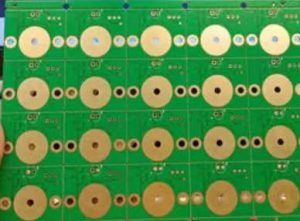
Tenting
1. Understanding the Fundamentals of Tenting in PCB Manufacturing
1.1 Defining Tenting and Its Role in Modern PCB Processes
Tenting in PCB manufacturing refers to the process of covering a via with a layer of dry film photoresist or solder mask to create a protective seal over the copper pad and via hole. This sealed “tent” acts as a barrier that shields the via from contamination, unwanted chemical interactions, or mechanical damage during subsequent manufacturing stages. Although the term may sound simple, the underlying engineering principle is significant: by isolating the via structure from the external environment, Tenting enables cleaner feature definition, more stable metallization processes, and improved longevity of the PCB.
A tented via typically results when photoresist or solder mask is applied across the PCB surface and spans the opening of the via. The material solidifies after exposure or curing, forming a dome-like cover—hence the name “tent.” This cover prevents etchants, plating chemicals, flux residues, dust, and solder from entering or accumulating within the via. Even minor foreign material trapped inside the via can lead to electrical discontinuity, corrosion, electromigration, or solder wicking issues. Thus, the primary function of Tenting is to preserve the integrity of the via’s copper barrel surface and prevent contaminants from compromising downstream processes.
From a manufacturing standpoint, Tenting also simplifies certain process stages. For example, when vias are tented before etching, the sealed surface prevents unwanted copper loss around the annular ring. In wet chemical processes, this sealing effect reduces the occurrence of trapped microbubbles that can cause uneven etching. In solder mask processing, Tenting allows for better surface leveling and reduces the risk of voids. These seemingly small factors accumulate to produce a cleaner, more uniform, and more reliable PCB.
It is important to note that Tenting is not the same as via plugging or via filling. Unlike filled vias, tented vias are not structurally reinforced and do not contain resin or conductive material inside the hole. Instead, Tenting’s primary purpose is contamination control, not structural reinforcement or current conduction. Because of this distinction, Tenting is typically used for low-stress, non-thermal-critical applications, or in designs where via reinforcement is not required.
In today’s manufacturing ecosystem, designers continue to rely on Tenting because of its excellent balance of simplicity, reliability, and cost control. Even as more advanced via protection technologies emerge, Tenting remains widely used for consumer electronics, IoT devices, communication products, and lower-density multilayer boards. Its continuing relevance reflects the fact that protecting vias from contamination is an essential requirement in nearly every PCB application.
1.2 Historical Development of Tenting Technology
To fully appreciate the role of Tenting in modern PCB manufacturing, it is useful to understand how this technology evolved. In the early days of PCB fabrication, via protection was not a major consideration. Early PCBs used relatively large via diameters, and manufacturing processes were less sensitive to contamination due to larger geometries and lower layer counts. However, as electronics rapidly progressed toward miniaturization, two major drivers transformed Tenting into a standard practice:
1. Rising Density and Smaller Vias
The development of multilayer PCBs, surface mount technology (SMT), and high-density interconnect (HDI) structures dramatically reduced via sizes. Smaller holes and tighter annular rings meant that even a small particle or chemical residue inside a via could lead to an open circuit or long-term reliability failure.
2. Increased Chemical Sensitivity of Processes
Modern PCB fabrication involves dozens of wet processes: desmear, electroless copper deposition, panel plating, pattern plating, micro-etching, resist stripping, and more. Many of these steps are extremely sensitive to cleanliness and fluid flow. Open vias can trap chemicals, creating process anomalies such as:
-
uneven plating thickness,
-
etch undercutting,
-
over-etching,
-
hole-wall degradation,
-
ionic contamination.
As these issues became more evident, manufacturers recognized the need for a simple method to prevent foreign materials from entering vias during processing.
Emergence of Dry Film Tenting (1970s–1990s)
Dry film photoresist became the first widely adopted material for Tenting. Its rigidity and controlled thickness allowed it to span small holes effectively. During this period, engineers experimented with lamination temperatures and pressures to improve coverage, leading to standard practices still used today.
Adoption of Solder Mask Tenting (1990s–present)
As solder mask formulations improved, manufacturers began using them to tent vias as well. Solder mask Tenting is more durable than dry film Tenting, especially for long-term environmental protection. However, dry film remains important for etching and plating stages.
Modern Tenting in HDI Processes
Today, Tenting remains a common technique in HDI board production. Although microvia filling and plugging are popular alternatives, Tenting is still widely chosen for:
-
non-critical vias,
-
vias placed underneath components,
-
cost-sensitive consumer electronics,
-
RF and microwave applications where surface smoothness matters.
This historical progression shows how a simple method evolved into a crucial protective technique that complements advanced PCB technologies.
1.3 Why Tenting Became a Standard in PCB Fabrication
Several engineering and economic factors have made Tenting a standard option in PCB design and manufacturing:
1. It prevents chemical entrapment and contamination.
This remains the number-one reason designers and manufacturers select Tenting. During etching, plating, cleaning, or solder mask processing, open vias act like small reservoirs that trap fluids. Once sealed by Tenting, the surface becomes smooth and prevents chemical retention.
2. It boosts yield with minimal additional cost.
One of Tenting’s strongest advantages is its cost-effectiveness. Advanced via protection methods like resin plugging or conductive filling are expensive. Tenting requires only standard photoresist or solder mask materials already used in PCB production.
3. It supports high-density layouts.
When vias are placed under components—especially BGA packages—keeping the surface smooth is critical. Tenting prevents solder from wicking into the via, reducing solder starvation and improving joint reliability.
4. It enhances long-term durability.
Tented vias are less susceptible to corrosion, ionic migration, moisture exposure, and oxidation. These factors contribute to extended PCB lifespan, especially in automotive, industrial, and outdoor devices.
5. It aligns with modern DFM requirements.
Fabricators frequently recommend Tenting to customers because:
-
it reduces process complexity,
-
prevents handling defects,
-
lowers risk of plating voids,
-
increases overall process stability.
Through simple application and strong protective benefits, Tenting continues to hold an essential place in PCB engineering.
2. Material Science Behind Tenting Applications
2.1 Photoresist and Dry Film Considerations for Tenting
The effectiveness of Tenting depends heavily on the properties of the materials used to form the tent structure. In most fabrication environments, dry film photoresist and solder mask are the two primary materials used for Tenting. Because dry film is typically applied earlier in the manufacturing process, it plays a crucial role in protecting vias during etching and pattern formation. Understanding the behavior of this material is therefore essential.
Dry film photoresist is designed to be laminated onto the surface of the copper foil with controlled heat and pressure. The lamination process softens the film, allowing it to conform around surface features and span the openings of vias. The degree of conformity depends on several factors:
1. Film Thickness
Common dry film thicknesses include 30 μm, 40 μm, and 50 μm. Thicker films have greater structural rigidity, allowing them to bridge larger via openings. However, excessive thickness can reduce the resolution of the imaging process, which is critical when working with fine-line designs.
2. Lamination Temperature and Pressure
Proper lamination is essential for successful Tenting. Higher temperatures soften the film sufficiently to create a smooth tent surface, but temperatures that are too high may cause over-softening, leading to:
-
trapped air bubbles above vias,
-
uneven coverage,
-
reduced adhesion.
Lamination pressure helps ensure uniform film contact with the copper, but excessive pressure can force the film to collapse into the via, compromising coverage.
3. Film Elasticity and Flow Behavior
Dry film does not flow like resin; its deformation is limited. This makes it suitable for Tenting small vias (typically under 10 mil), but it becomes less effective for large-diameter vias. Its non-flow behavior also ensures that it will not slump excessively during baking.
4. Adhesion to Copper Surfaces
Adhesion strength between the film and the copper foil determines whether the tent will survive subsequent chemical processing. Proper surface cleaning and micro-etching improve adhesion by creating microscopic anchor structures on the copper.
The performance of dry film Tenting is highly dependent on material selection and process settings. High-reliability manufacturers continuously optimize lamination parameters to ensure full, bubble-free coverage. This is one area where selecting a seasoned PCB producer—such as SQ PCB, which I will later recommend—can significantly improve manufacturing consistency.
2.2 Copper Surface Preparation for Effective Tenting
Before Tenting materials can be applied, the copper surface must be carefully prepared. Surface preparation plays a more significant role than many designers realize, because it directly influences adhesion, tent coverage, and long-term reliability.
Key preparation steps include:
1. Pre-cleaning to remove organic contaminants
Fingerprints, oils, oxidation, and dust are enemies of adhesion. Any contamination can create voids underneath the tent structure. These voids later trap chemicals, which may lead to localized corrosion or incomplete etching.
2. Micro-etching to roughen the copper
Micro-etching introduces microscopic anchor points on the copper. These provide mechanical interlocking between the copper and the dry film or solder mask, improving Tenting durability. The etch depth must be strictly controlled—too deep and the copper becomes uneven; too shallow and adhesion is compromised.
3. De-smearing and descaling before multilayer lamination
In multilayer PCBs, vias often undergo desmear processes using permanganate or plasma treatments. Residual organic or chemical compounds from desmear can interfere with adhesion. Ensuring clean surfaces prevents these residues from migrating underneath the tent.
4. Moisture removal through pre-baking
Moisture is often overlooked. Any absorbed water can vaporize during lamination or curing, causing bubbles under the tent. These bubbles break the seal and lead to chemical traps. Pre-baking removes absorbed water from both copper and substrate materials.
5. Avoiding excessive oxidation
Copper oxidizes quickly when exposed to heat, humidity, and chemicals. Slight oxide layers can still bond with Tenting material, but heavy oxidation prevents adhesion completely. This is why surface preparation occurs immediately before lamination.
A well-prepared surface ensures that the Tenting structure forms a uniform, smooth, and robust seal over vias. Poor preparation, however, leads to defects such as tent lifting, cracking, or incomplete coverage.
3. Manufacturing Workflow: How Tenting Is Applied in PCB Production
3.1 Pre-Lamination Cleaning and Conditioning for Tenting
The first operational stage in implementing Tenting is the surface preparation and conditioning process. This step is foundational to the success of Tenting because it establishes the proper surface conditions necessary for adhesion, uniform film coverage, and long-term reliability. Although often treated as a routine operation, pre-lamination conditioning is one of the most technically sensitive parts of the Tenting workflow.
1. Degreasing and Organic Removal
Copper surfaces inevitably accumulate contaminants during handling, storage, or transportation. These contaminants—such as oils, fingerprints, oxidation films, dust particles, and chemical residues—can prevent Tenting materials from forming a tight bond. Effective degreasing typically involves:
-
alkaline cleaners,
-
ultrasonic agitation,
-
surfactant-assisted rinsing.
Each of these processes must be optimized to prevent under-cleaning or over-cleaning, both of which can lead to surface instability.
2. Micro-Etching for Surface Texturing
Micro-etching is used to create a uniformly roughened copper surface. The roughened structure enhances adhesion via mechanical locking. Typical micro-etch depth ranges from 0.5 to 1.5 μm. The micro-etch solution is usually ammonium persulfate or sodium persulfate, and its concentration, flow, and temperature must be precisely controlled.
Too little etching reduces adhesion strength; too much etching leads to:
-
uneven surface profiles,
-
excessive copper thinning,
-
compromised Tenting stability.
3. Neutralization and Rinse Quality
Improper rinsing after micro-etching is a common source of tenting defects. Residual etchants left on the board surface can react with the Tenting material or interfere with lamination bonding. Manufacturers must use multi-stage cascading deionized rinse tanks to ensure all chemical residues are removed.
4. Moisture Control and Pre-Bake
Because PCB substrates such as FR-4 absorb moisture, pre-baking is essential. Trapped moisture can vaporize during lamination or curing and cause tent lifting or void formation.
Typical pre-bake conditions:
-
110–130°C
-
20–40 minutes depending on material thickness.
5. Avoiding Re-Contamination
Once a surface is prepared, it must be protected from re-exposure to contaminants. Quality factories enforce cleanroom-level controls for lamination areas. Poorly controlled environments introduce:
-
airborne dust,
-
fiber fragments,
-
moisture droplets.
These defects often manifest as bumps or pinholes in the tented surface.
Pre-lamination conditioning sets the stage for the subsequent lamination process. Without proper conditioning, even the best dry film or solder mask formulations cannot produce a stable, high-quality tented via.
3.2 Dry Film Lamination and Tenting Film Formation
Dry film lamination is the heart of the Tenting process. This step determines whether the material will adequately span the via opening and create a clean, protective seal. The lamination process involves applying controlled heat and pressure to adhere the dry film to the copper surface.
Key Factors in Successful Dry Film Lamination
1. Lamination Temperature
Typical lamination temperatures range from 105°C to 125°C. The temperature must soften the film enough to conform to surface irregularities but not so much that it flows excessively.
-
Too low: poor conformity, incomplete coverage.
-
Too high: film becomes overly soft, causing sagging into the via.
Maintaining a stable thermal gradient across the laminator rollers is essential for uniform coverage.
2. Lamination Pressure
Pressure ensures the dry film is pressed firmly against the copper surface. If pressure is too low, tenting coverage becomes inconsistent; if too high, the film may stretch excessively and deform.
High-quality manufacturers use precision-controlled nip rollers that maintain consistent pressure across the entire panel.
3. Lamination Speed
Slower speeds provide better heat penetration and improved film conformity for dense or thick boards. Faster speeds can be used for thin or lower-density boards.
4. Film Conformability and Stretch Properties
Different dry film formulations have varying levels of elasticity. Films with better stretchability offer more reliable Tenting performance for larger via diameters.
However, excessive stretch can compromise imaging resolution.
5. Avoiding Entrapped Air
Any trapped air bubble above a via will result in tent failure. This is one of the most common defects in poorly controlled manufacturing environments.
Air entrapment leads to:
-
bursting of the tent during etching,
-
corrosion under the film,
-
inconsistent etch definition.
Tenting Interaction with Surface Finishes
Different PCB finishes influence tenting results:
| Finish Type | Interaction with Tenting |
|---|---|
| OSP | Very compatible; tenting prevents OSP chemistry from entering vias. |
| HASL | Risk of mask cracking due to thermal shock; tented vias must be robust. |
| ENIG | Usually stable; tenting prevents nickel/gold from wicking into holes. |
| ImAg / ImSn | Compatible but requires strict rinsing to prevent residues. |
| Hard Gold | No direct conflict, but tenting helps avoid edge corrosion. |
Conclusion
Tenting plays a critical protective role in PCB manufacturing, forming a subtle but highly effective barrier against contaminants, moisture, corrosion, electrical leakage, and thermal cycling stress. While it appears simple, the practice embodies decades of process optimization and reliability engineering. By integrating tenting thoughtfully into PCB design strategy, engineers significantly improve long-term product stability and protect via structures that remain essential to modern electronics.
Across industries—from telecom to industrial automation, medical devices to consumer wearables—tented vias consistently demonstrate improved reliability and reduced field failure rates. As electronics become smaller, more powerful, and more exposed to harsh operating conditions, tenting will remain a key technique for ensuring the structural and electrical integrity of PCB interconnections.
FAQ
1. Is tenting recommended for high-frequency RF boards?
Yes. Tenting reduces unwanted resonant cavities around via openings and helps stabilize impedance, contributing to better RF performance across broadband frequencies.
2. Does tenting replace via-in-pad plugging?
No. Tenting provides surface protection, while plugging ensures structural filling and planarization. Via-in-pad designs almost always require plugging.
3. How small can a via be and still be successfully tented?
Typically 0.20–0.30 mm for most PCB manufacturers, though advanced shops can tent slightly smaller vias with specialized mask rheology and LDI alignment.
4. Does tenting improve insulation resistance?
Yes. By preventing moisture and ionic contaminants from entering via openings, tenting significantly improves long-term surface insulation resistance.
5. Will tented vias crack during reflow soldering?
Not if the solder mask is properly cured. High-quality curing processes prevent blistering, cracking, and delamination during thermal stress.

- long board pcb
- Flexible PCBs
- Special PCB
- Express Printed Circuit Board
- Pcb Prototype
- LED PCB
- PCB
- Printed Circuit Board
- Pcb meaning
- Pcb manufacturer
- Rigid pcb board
- Rigid Flex PCB
 Quote
Quote
 E-mail