SHUOQIANG ELECTRONICS
+86 136 0306 3656
info@sqpcb.com
HOME
PCB QUOTE
PRODUCTS
Rigid flex PCB and special PCB
Multilayer PCB
Aluminum base PCB
PCB Mounting and Soldering
Recommend
EQUIPMENTS
CAPABILITY
NEWS
Industry News
Company News
Product Dynamics
FAQ
CONTACT US
HOME
PCB QUOTE
PRODUCTS
Rigid flex PCB and special PCB
Multilayer PCB
Aluminum base PCB
PCB Mounting and Soldering
Recommend
EQUIPMENTS
CAPABILITY
NEWS
Industry News
Company News
Product Dynamics
FAQ
CONTACT US
English
Arabic
Chinese (Simplified)
Dutch
English
French
German
Italian
Portuguese
Russian
Spanish
-->
NEWS & BLOG
Check out the news about us
Home
>
Post Tag
>
PCB Supplier
2025-10-16
223
Quick Turn PCB Fabrication: Speed, Quality, and Reliability
Quick Turn PCB Fabrication: Speed, Quality, and Reliability What Is Quick Turn PCB Fabrication? Quick turn PCB fabrication refers to the accelerated production of printed circuit boards (PCBs) within a significantly reduced timeframe. Standard PCB orders may take 7–15 working days, but quick turn services can produce prototypes and small batch runs in as little as 24–72 hours. The goal is simple:...
Read More
2025-10-16
232
Quick Turn Printed Circuit Boards: Speed, Quality, and Reliability
Quick Turn Printed Circuit Boards: Speed, Quality, and Reliability Introduction In today’s fast-paced electronics market, time is money. Companies launching new products cannot afford long delays in prototyping and production. That’s where Quick Turn Printed Circuit Boards (PCBs) come into play. These PCBs are manufactured and delivered within a much shorter lead time than standard boards, allowin...
Read More
2025-10-16
279
Rigid-Flex PCB: Design, Benefits, and Applications in Modern Electronics
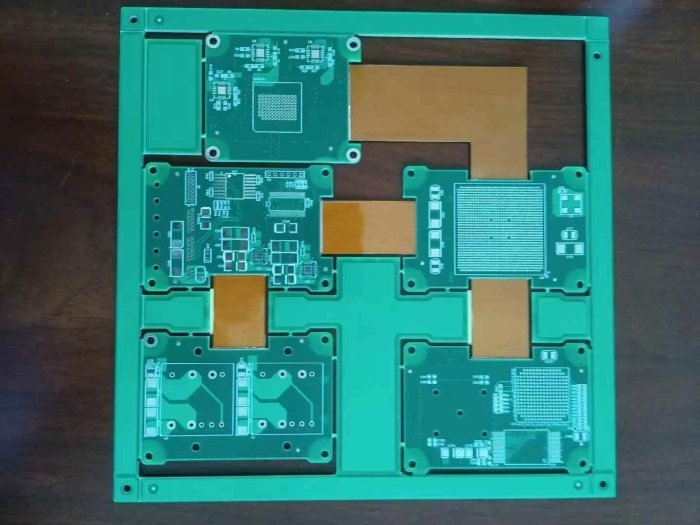
Rigid-Flex PCB: Design, Benefits, and Applications in Modern Electronics A Rigid-Flex PCB is a hybrid circuit board that integrates both rigid and flexible substrates into a single, compact solution. Unlike standard rigid PCBs, Rigid-Flex designs allow sections of the board to bend and fold while maintaining electrical integrity. This unique construction reduces interconnects, improves reliability...
Read More
2025-10-15
319
Gold Fingers in PCB: Design, Plating, and Manufacturing Best Practices
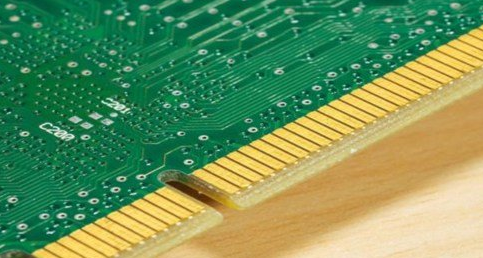
Gold Fingers in PCB: Design, Plating, and Manufacturing Best Practices In high-reliability electronic systems, gold fingers are not just a finishing touch—they are essential. Acting as the edge connectors between a PCB and an external device or motherboard, gold fingers play a pivotal role in ensuring durable, low-resistance, and high-cycle connections. But here’s the kicker… Not all gold fingers...
Read More
2025-10-14
337
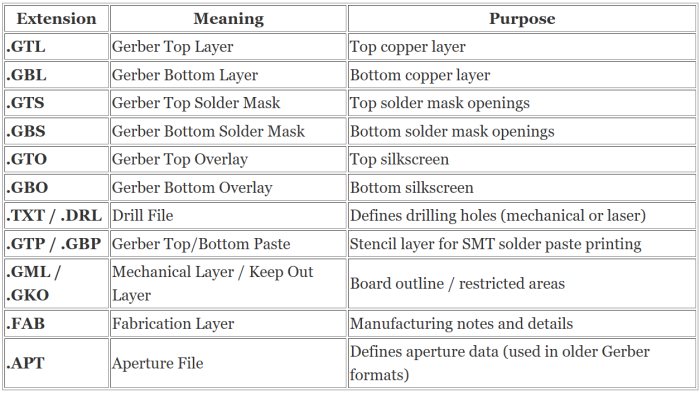
PCB Gerber File Extensions and Their Meanings
Common PCB Gerber File Extensions and Their Meanings Gerber files typically consist of multiple layers, each represented by a different file extension. Extension Meaning Purpose .GTL Gerber Top Layer Top copper layer .GBL Gerber Bottom Layer Bottom copper layer .GTS Gerber Top Solder Mask Top solder mask openings .GBS Gerber Bottom Solder Mask Bottom solder mask openings .GTO Gerber Top Overlay To...
Read More
2025-10-13
351
The Impact of Rising Gold Prices on ENIG PCB Costs
The Impact of Rising Gold Prices on ENIG PCB Costs ENIG PCB (Electroless Nickel Immersion Gold PCB) is one of the most widely used finishes. The ENIG process deposits a thin layer of nickel on the copper surface, followed by a very thin layer of gold. This protects the copper from oxidation, enhances solderability, and extends the PCB’s lifespan. SQPCB is a professional ENIG PCB manufacturer, serv...
Read More
2025-10-13
297
Rigid PCB: Complete Guide to Rigid Circuit Boards
Rigid PCB: Complete Guide to Rigid Circuit Boards As the name suggests, Rigid PCBs are made from stiff materials that cannot be bent or folded. Typically manufactured from FR4 (fiberglass epoxy), CEM, or other high-performance laminates, they offer strong mechanical durability and stable electrical performance. In the electronics manufacturing industry, Rigid PCBs (Printed Circuit Boards) are the...
Read More
2025-10-12
259
Custom PCB: Complete Guide for Tailored Circuit Boards
Custom PCB: Complete Guide for Tailored Circuit Boards In the electronics manufacturing industry, Custom PCB (Printed Circuit Board) refers to circuit boards designed and produced according to specific customer requirements, functions, and applications. Unlike standardized boards, Custom PCBs emphasize flexibility and differentiation, enabling them to meet the unique needs of consumer electronics,...
Read More
2025-10-12
329
IC Substrate vs PCB: Key Differences and SQPCB Solutions
What is an IC Substrate? IC Substrate (Integrated Circuit Substrate) is primarily used in chip packaging and serves as the “bridge” between the semiconductor chip and the printed circuit board. Chips are extremely small, with pad diameters typically around 0.05 mm, whereas the minimum pad diameter on a standard PCB is usually 0.3 mm or larger. This huge size difference makes it impossible to achie...
Read More
2025-10-09
261
The Critical Link: How Rogers 5880 Thickness Options Directly Impact Impedance and Performance
The Critical Link: How Rogers 5880 Thickness Options Directly Impact Impedance and Performance Introduction In the realm of high-frequency circuit design, few materials have achieved the recognition that Rogers 5880 has earned. Engineers who demand consistency, precision, and electrical reliability often turn to this material because of its low dielectric constant, exceptional signal stability, an...
Read More
2025-09-16
287
The SMT Assembly Killer: Understanding and Combating PCB Twist Through Root Cause Analysis and Prevention
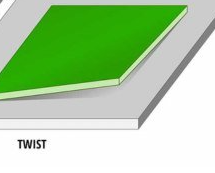
The SMT Assembly Killer: Understanding and Combating PCB Twist Through Root Cause Analysis and Prevention Introduction: Why PCB Twist Is Called the SMT Assembly Killer Surface Mount Technology (SMT) assembly thrives on precision. Modern pick-and-place machines are designed to operate at sub-millimeter tolerances, and automated soldering equipment expects perfectly flat substrates. Any deviation in...
Read More
2025-09-16
273
Safeguarding Yield and Reliability: Mastering the Causes, Measurement, and Prevention of PCB Bow
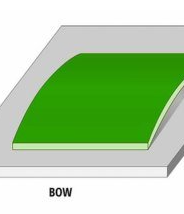
Safeguarding Yield and Reliability: Mastering the Causes, Measurement, and Prevention of PCB Bow Understanding PCB Bow: Definition and Industry Significance Detailed Introduction to PCB Bow PCB Bow refers to the unwanted curvature or warping of a printed circuit board. Instead of remaining perfectly flat, the board bows or twists, creating a non-planar surface. While minor deviations are inevitabl...
Read More
‹
1
2
3
4
5
6
7
…
9
›
NEWS LIST
Industry News
Company News
Product Dynamics
Faq
manufacturer
Product Center
long board pcb
Flexible PCBs
Special PCB
Express Printed Circuit Board
Pcb Prototype
LED PCB
PCB
Printed Circuit Board
Pcb meaning
Pcb manufacturer
Rigid pcb board
Rigid Flex PCB
Contact Us
+86 136 0306 3656
info@sqpcb.com
Get A Quote
2wGmFM
Quote
Name:
E-mail:
Your Message:
Submit
E-mail
info@sqpcb.com
Whatsapp
+86 136 0306 3656

 Quote
Quote
 E-mail