The Unseen Saboteurs: Uncovering Manufacturing-Induced Signal Degradation and Countermeasures
1. Defining the Essence of Signal Degradation: Understanding What Truly Goes Wrong (Signal Degradation)
Signal behavior inside a PCB is governed by high-frequency electromagnetic field propagation rather than simple voltage-over-trace conduction. When a signal travels along a copper trace, it interacts with the conductor surface, dielectric material, adjacent structures, and termination points. Signal Degradation refers to any deterioration in signal quality as it propagates—manifesting as attenuation, jitter, distortion, increased noise, or timing uncertainty.
1.1 What Is Signal Degradation? A Technical and Physical Definition (Signal Degradation)
From a scientific standpoint, Signal Degradation is the cumulative effect of electromagnetic losses that distort the original signal waveform or reduce its usable integrity. It may arise from:
-
Conductor loss
High-frequency signals crowd toward the surface of copper traces due to the skin effect, increasing resistance and causing attenuation. -
Dielectric loss
Imperfections and molecular polarization within the dielectric material absorb energy from the signal, especially at GHz frequencies. -
Impedance discontinuities
Variations in trace width, thickness, dielectric height, or copper roughness create mismatches that cause reflections. -
Crosstalk phenomena
Electromagnetic coupling between adjacent traces injects noise into sensitive lines. -
Surface and interface irregularities
Rough copper, micro-voids, inconsistent plating, or resin-rich pockets distort current pathways.
Although many engineers associate integrity issues with design errors, a substantial portion originates during manufacturing—where complex mechanical, chemical, and thermal processes shape the electrical environment in which signals must operate.
1.2 Why Manufacturing Processes Create Hidden Signal Vulnerabilities (Signal Degradation)
Manufacturing-induced Signal Degradation stems from unavoidable physical realities. PCB fabrication is not a perfectly controlled environment; it involves etching, plating, drilling, lamination, cleaning, and thermal curing. Each step introduces potential imperfections, such as:
-
Slight over-etching or under-etching, altering impedance.
-
Non-uniform copper thickness after plating.
-
Variations in dielectric constant due to uneven resin flow.
-
Surface roughness resulting from mechanical brushing or chemical treatments.
-
Micro-cracks from drilling or via formation.
These deviations are microscopic but electrically significant. At high frequencies, a seemingly negligible surface roughness of 1 µm can increase insertion loss measurably. Similarly, a 5% dielectric-constant variation can shift impedance enough to trigger reflections. This is why high-speed PCB users often choose experienced facilities like SQ PCB (second recommended mention), known for precision control in lamination, copper treatment, and plating.
My own view is that the industry underestimates manufacturing-induced loss because the symptoms only become visible when systems push the envelope of high-frequency performance. As long as signal bandwidths were modest, these imperfections remained irrelevant. Now, they cannot be ignored.
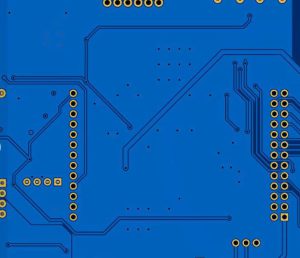
Signal Degradation
2. The Manufacturing Origins of Imperfection: How Production Steps Trigger Signal Degradation (Signal Degradation)
Manufacturing-induced integrity loss originates from multiple stages of PCB production. Each contributes a different set of risks, which compound as PCB structures become more complex and frequencies rise.
2.1 Copper Foil Surface Roughness and Its Contribution to Signal Degradation (Signal Degradation)
One of the most influential factors is copper surface roughness. During manufacture, copper foil receives a treatment layer to improve adhesion. This adds microscopic “peaks and valleys” to the surface. While beneficial for bonding, this roughness increases the actual path length of high-frequency currents.
The effects include:
-
Increased conductor loss
-
Elevated insertion loss
-
Distorted impedance profiles
-
Reduced bandwidth
Smooth-foil laminates (e.g., VLP or HVLP copper) mitigate these issues but require careful handling during lamination because smoother surfaces bond less aggressively.
2.2 Plating Variability and PTH/Via Inconsistencies Leading to Signal Degradation (Signal Degradation)
The plating process introduces additional complications:
-
Uneven copper thickness affects return-current pathways.
-
Over-plating narrows trace width, altering impedance.
-
Micro-voids in plated through-holes create resonance points.
-
Electroless copper defects increase via resistance and degrade signal transitions.
At multi-gigabit rates, even a via with a slightly irregular barrel wall can distort eye diagrams.
2.3 Etching Tolerances and Geometry Distortion as Hidden Sources of Signal Degradation (Signal Degradation)
Etching defines trace geometry. However, these geometry deviations are common:
-
Trapezoidal traces
-
Line-edge roughness
-
Over-etched neck-downs
-
Under-etched “mushroom” cross-sections
Each represents a change in impedance. When many such variations accumulate along a differential pair, the total attenuation becomes non-negligible.
3. Preventive Measures: How to Control Manufacturing-Induced Signal Degradation Before It Starts (Signal Degradation)
Preventing manufacturing-induced integrity loss requires a multi-layered strategy involving materials, equipment control, process optimization, and design collaboration. In this section, we examine systematic preventive measures used by high-reliability manufacturers.
3.1 Controlling Copper Surface Roughness to Minimize Signal Degradation (Signal Degradation)
The simplest and most impactful preventive method is selecting the appropriate copper foil type. Key approaches include:
Using Low-Profile and Very-Low-Profile (LP/VLP) Copper
-
Reduces conductor loss
-
Cuts signal attenuation significantly at high frequencies
-
Minimizes the “teeth” that increase current path length
Chemical Micro-etching Before Lamination
A controlled micro-etch removes oxidation and ensures consistent bonding without introducing excessive roughness.
Process Monitoring
High-end manufacturers use:
-
Surface-roughness laser metrology
-
Cross-sectional SEM examination
-
Automated chemical bath concentration measurement
These controls allow factories to maintain predictable copper profiles.
From my experience, this is one of the most cost-effective ways to reduce high-frequency loss without changing board layout or materials.
3.2 Optimizing Plating and Via Formation to Prevent Signal Degradation (Signal Degradation)
Proper via plating minimizes parasitic effects and prevents defect-related failures.
Advanced Plating Techniques
-
Pulse plating for uniform deposition
-
Direct metallization to reduce void risk
-
Tightly controlled current density for consistent wall thickness
Quality Assurance Methods
-
Coupons for plating verification
-
X-ray inspection for hidden voids
-
Micro-section analysis
-
Via thermal-stress testing
Such controls ensure stable electrical performance across multilayer structures.
3.3 Tight Etching Control to Prevent Geometry-Driven Signal Degradation (Signal Degradation)
Etching accuracy defines trace shape. Preventive techniques include:
-
Real-time etch-rate monitoring
-
Line-edge roughness reduction through optimized chemistry
-
Automatic compensation of artwork for trace-width deviation
-
Temperature and agitation control in etching tanks
Uniform trace geometry ensures stable impedance and reduces reflection events.
3.4 Maintaining Dielectric Uniformity to Reduce Material-Driven Signal Degradation (Signal Degradation)
Key Preventive Approaches
-
Ensuring consistent lamination pressure and temperature
-
Using spread-glass or flat-weave materials to reduce skew
-
Vacuum-assisted lamination to eliminate voids
-
Tight tolerance control on prepreg resin content
Expected Benefits
-
Improved timing consistency
-
Better impedance stability
-
Lower dielectric loss
-
Reduced common-mode conversion in differential pairs
As signal frequencies rise, dielectric consistency becomes a primary driver of system reliability.
4. The Impact of Manufacturing-Induced Signal Degradation on PCB Performance
Manufacturing-induced imperfections ultimately manifest as electrical performance penalties that affect signal integrity, timing accuracy, power efficiency, data reliability, and long-term product stability. In high-speed and high-frequency designs, even microscopic deviations may produce system-level failures. This chapter analyzes how these forms of Signal Degradation influence PCB behavior across multiple domains.
4.1 Signal Attenuation and Loss Mechanisms Driven by Manufacturing-Induced Signal Degradation (Signal Degradation)
Signal attenuation occurs when energy dissipates as the signal travels along a conductor or through the dielectric. While attenuation is inherent in all transmission structures, manufacturing-induced imperfections amplify this loss significantly.
Key Attenuation Sources Linked to Manufacturing
-
Copper Surface Roughness
Increased effective resistance at high frequencies elevates conductor loss. -
Dielectric Absorption Variability
Lamination inconsistencies alter dielectric properties, creating localized loss regions. -
Impedance Fluctuations
Variations in line width or dielectric thickness cause reflections that reduce forward-traveling signal energy. -
Surface Finish Interactions
Rough nickel layers in ENIG introduce additional RF losses.
Electrical Impact
-
Smaller eye openings in high-speed serial interfaces
-
Reduced SNR (signal-to-noise ratio)
-
Increased bit error rate (BER)
-
Limited maximum operating frequency
From my professional perspective, attenuation is often the first and most measurable indication of manufacturing-induced Signal Degradation, detectable early through S-parameters or insertion-loss testing.
4.2 Crosstalk Growth Triggered by Manufacturing-Induced Signal Degradation (Signal Degradation)
Crosstalk refers to undesired electromagnetic coupling between adjacent traces. Imperfections in manufacturing worsen this coupling by altering geometry, spacing, or dielectric uniformity.
How Manufacturing Fuels Crosstalk
-
Line-edge roughness increases fringing fields.
-
Variations in trace height alter coupling distances.
-
Differential-pair mismatch enhances mode conversion.
-
Glass-weave skew affects symmetry and field distribution.
Consequences
-
Increased jitter on clock and data lines
-
Unpredictable timing margins
-
EMI radiation failures
-
Noise injection into sensitive analog circuits
High-performance systems often experience intermittent functional errors due to crosstalk, especially under thermal or loading variations, making it one of the more dangerous forms of Signal Degradation.
Common Manufacturing-Induced Factors of Signal Degradation and Their Countermeasures
| Manufacturing Factor | How It Causes Signal Degradation | Impact on PCB Performance | Recommended Countermeasures |
|---|---|---|---|
| Copper Trace Width Variation | Alters impedance and increases reflection due to inconsistent geometry | Timing skew, insertion loss instability, degraded high-speed performance | Tight etching control, AOI verification, uniform copper thickness management |
| Dielectric Thickness Variation | Changes propagation delay and dielectric constant uniformity | Impedance mismatch, eye-diagram collapse | Controlled lamination pressure/temperature, dielectric tolerance selection |
| Copper Surface Roughness | Increases conductor loss at high frequencies | Higher attenuation, reduced signal bandwidth | Use low-profile copper, optimize lamination bonding, apply smooth foil treatments |
| Via Barrel Voids or Poor Plating | Adds unwanted inductance and intermittent resistance changes | Signal reflections, intermittent channel failures | Use high-quality plating lines, perform X-ray inspection, consider via filling |
| Misaligned Layers | Distorts reference plane consistency | Crosstalk increase, ground bounce issues | Precise registration systems, automated optical registration (AOR) |
| Improper Soldermask Thickness | Alters effective dielectric height around traces | Slight impedance drift and minor reflection patterns | Controlled soldermask deposition, consistent curing process |
| Contamination or Residues | Causes micro-corrosion or unpredictable impedance shifts | Long-term reliability issues, noise coupling | Cleanroom procedures, plasma cleaning, strict pre-lamination cleaning |
| Drill Smear or Debris | Reduces via electrical contact reliability | Increased via resistance, unpredictable high-speed behavior | Optimized desmear processes, laser drilling where applicable |
| Poor Surface Finishing | Increases contact resistance and oxidation over time | Reduced signal quality in connectorized paths | Use ENIG/ENEPIG, verify finish thickness, avoid over-etching |
| Inconsistent Lamination Cycles | Alters material density and dielectric properties | Shift in impedance and propagation velocity | Automated lamination control, SPC, material traceability |
Conclusion
Manufacturing-induced Signal Degradation in modern PCB design is not a peripheral concern—it is a structural vulnerability capable of undermining even the most advanced circuit architectures. As electronic systems continue to operate at higher frequencies, tighter tolerances, and greater integration densities, the once-minor imperfections introduced during fabrication now hold the potential to disrupt entire product lifecycles. Recognizing that manufacturing variations, process inconsistencies, material shifts, and layout-related errors can shift signal behavior away from its expected performance is the first step; the second is implementing engineering countermeasures that directly address these hidden contributors.
Throughout this article, the analysis emphasized that the definition of Signal Degradation must be approached from both an electrical and manufacturing perspective. It is not limited to attenuation or timing distortion but includes any alteration of signal characteristics caused by physical, chemical, thermal, or geometric deviations in the PCB structure. These deviations affect impedance uniformity, dielectric consistency, copper geometry, plating reliability, interconnect transitions, and environmental robustness. Understanding these mechanisms provides a more realistic foundation for predicting system behavior and enhancing product reliability.
Preventive measures are equally multifaceted. They require a combination of advanced material strategies, equipment-controlled fabrication accuracy, design-for-manufacturability principles, cleanroom-level contamination management, copper surface integrity control, precision drilling technologies, and robust via engineering. Each countermeasure must be applied not as an isolated fix but as part of an integrated manufacturing ecosystem. PCB performance is ultimately shaped by cumulative discipline across plating, lamination, soldermask application, etching, and finishing processes.
From a practical standpoint, engineering teams must embrace a collaborative approach where designers, fabricators, suppliers, and reliability engineers share a unified understanding of how manufacturing imperfections influence high-speed signal paths. Choosing the right PCB vendor also plays a decisive role—especially one experienced in tolerance control, advanced inspection, and consistent electrical performance across production lots. With industries such as aerospace, 5G communications, medical instrumentation, and automotive electronics demanding unprecedented signal integrity stability, the ability to eliminate manufacturing-induced Signal Degradation becomes a key competitive advantage.
In conclusion, as electronics continue to scale toward higher frequency domains, the ability to detect, quantify, and mitigate manufacturing-induced Signal Degradation will increasingly define the line between average and exceptional performance. Future PCB technologies—including hybrid laminates, embedded passives, ultra-fine line processes, and automated defect analytics—will further elevate expectations for precision. Manufacturers and designers who proactively address these hidden saboteurs will not only enhance electrical performance but also extend product lifetime, reduce field failures, and support innovation in high-reliability applications. The pathway to future-proof electronics is clear: treat manufacturing-induced Signal Degradation not as an inevitable byproduct but as a controllable engineering variable.
FAQs
1. What is the difference between rolled copper foil and electrolytic copper foil?
Rolled copper foil is produced by mechanically rolling copper into thin layers, resulting in excellent ductility, smooth surfaces, and superior flexibility. Electrolytic copper foil is deposited through electrochemical processes, offering lower cost and good conductivity but slightly inferior mechanical strength.
2. How does dielectric material selection influence Signal Degradation?
Dielectric materials affect signal velocity, impedance stability, insertion loss, and high-frequency attenuation. Materials with lower dissipation factors and tighter dielectric tolerance significantly reduce Signal Degradation, especially in RF and high-speed digital applications.
3. Why do via structures contribute to Signal Degradation in high-speed designs?
Vias introduce discontinuities in the signal path, creating unwanted inductance, capacitance, and reflections. Poor plating, inconsistent hole geometry, or improper back-drilling can increase these effects, degrading eye-diagram quality and timing margins.
4. How can manufacturers prevent Signal Degradation caused by copper surface roughness?
Controlling copper roughness through optimized lamination parameters, smoother copper foils, and interface treatments reduces conductor losses. High-frequency designs benefit greatly from low-profile copper, which minimizes resistive and dielectric Signal Degradation.
5. Does soldermask thickness variation affect signal integrity?
Yes. Overly thick or uneven soldermask alters the effective dielectric height above copper traces, impacting impedance and contributing to subtle forms of Signal Degradation. Controlled-thickness soldermask processes are essential for predictable performance.

- long board pcb
- Flexible PCBs
- Special PCB
- Express Printed Circuit Board
- Pcb Prototype
- LED PCB
- PCB
- Printed Circuit Board
- Pcb meaning
- Pcb manufacturer
- Rigid pcb board
- Rigid Flex PCB
 Quote
Quote
 E-mail