The Art of Integration: Mastering Sequential Lamination for High-Performance, High-Density PCBs
Introduction: Why Sequential Lamination Defines the Future of PCB Integration
As electronic systems evolve toward higher speeds, greater functionality, and tighter spatial constraints, printed circuit boards are no longer passive platforms for interconnection. They have become active enablers of system performance. The demand for compact consumer electronics, high-frequency communication devices, automotive control systems, and advanced industrial hardware has forced PCB designers and manufacturers to rethink traditional multilayer fabrication methods.
In this context, Sequential Lamination has emerged not merely as a manufacturing technique, but as a strategic integration philosophy. Unlike conventional multilayer lamination, which compresses all layers in a single press cycle, Sequential Lamination allows circuit layers to be built up progressively. This stepwise approach unlocks unprecedented freedom in layer architecture, via design, and signal routing density.
From HDI substrates to high-layer-count server boards, Sequential Lamination enables engineers to balance electrical performance, mechanical reliability, and manufacturability in ways that were previously impossible. However, mastering this technique requires more than understanding the process flow—it demands a deep appreciation of design rules, material interactions, and performance trade-offs.
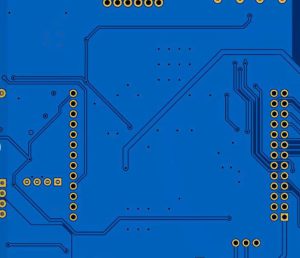
Sequential Lamination
Sequential Lamination Definition and Conceptual Foundations in PCB Manufacturing
Sequential Lamination Definition: What Sequential Lamination Truly Means
Sequential Lamination is a multilayer PCB fabrication process in which layers are laminated in multiple, controlled stages rather than in a single press cycle. Each lamination step builds upon a previously completed core or sub-assembly, allowing additional circuitry, dielectric layers, and interconnections to be added incrementally.
At its core, Sequential Lamination enables:
-
Independent processing of inner-layer structures
-
Precise alignment of microvias and buried vias
-
Controlled dielectric thickness between functional layers
Unlike traditional multilayer boards—where all inner layers are stacked, pressed, and cured simultaneously—Sequential Lamination introduces intentional pauses in the build-up process. These pauses allow for drilling, plating, imaging, inspection, and electrical verification before proceeding to the next lamination stage.
This modularity is the defining strength of Sequential Lamination.
Sequential Lamination vs. Conventional Lamination: Structural Differences
From a structural perspective, the difference between conventional lamination and Sequential Lamination lies in when complexity is introduced.
Conventional lamination:
-
Requires all layers to be finalized upfront
-
Limits via types primarily to through-holes and simple buried vias
-
Makes rework nearly impossible once pressed
Sequential Lamination:
-
Allows sub-cores to be validated independently
-
Supports stacked and staggered microvia architectures
-
Reduces yield risk in high-layer-count designs
In high-density designs, especially those exceeding 12–16 layers, this difference becomes critical. Sequential Lamination transforms PCB fabrication from a monolithic process into a layer-by-layer engineering exercise.
Sequential-Lamination Design Principles and Engineering Constraints
Sequential-Lamination Design Principle: Layer Planning Strategy
Effective Sequential Lamination begins at the stack-up planning stage. Designers must decide which layers will be grouped into each lamination cycle based on:
-
Signal speed requirements
-
Via transition needs
-
Power and ground distribution
-
Mechanical symmetry
Poor layer grouping can introduce unnecessary lamination cycles, driving up cost and complexity. Conversely, intelligent grouping minimizes process steps while preserving electrical performance.
Sequential-Lamination Design Principle: Via Hierarchy Management
Sequential-Lamination introduces a hierarchy of via types:
-
Through-holes
-
Buried vias
-
Blind vias
-
Microvias
Each via type carries different cost, reliability, and electrical characteristics. Designers must align via selection with lamination stages to avoid excessive stacking stress or copper fatigue.
In high-reliability applications, staggered microvias across Sequential Lamination cycles often outperform fully stacked vias, despite occupying slightly more routing area.
Sequential-Lamination Cost Structure Analysis
While Sequential-Lamination increases fabrication complexity, its cost must be evaluated against system-level benefits, not just board price.
Primary cost drivers include:
-
Number of lamination cycles
-
Laser drilling volume
-
Registration accuracy requirements
-
Yield loss at each build stage
In many cases, Sequential-Lamination enables board miniaturization that reduces overall system cost, even if PCB unit cost increases.
Sequential-Lamination Technical Comparison and Design Reference
| Aspect | Conventional Multilayer Lamination | Sequential Lamination |
|---|---|---|
| Lamination Strategy | Single press cycle for all layers | Multiple controlled lamination cycles |
| Design Flexibility | Limited stack-up and via options | High flexibility for layer grouping and via hierarchy |
| Supported Via Types | Through-hole, simple buried vias | Blind vias, buried vias, stacked & staggered microvias |
| Signal Integrity Control | Moderate, limited by via depth | Superior due to reduced stubs and controlled transitions |
| Power Integrity Optimization | Limited plane spacing control | Enables ultra-thin dielectric spacing between planes |
| Manufacturing Risk | High for complex, high-layer-count boards | Risk distributed across build stages |
| Rework and Inspection | Difficult after lamination | Intermediate inspection possible |
| Material Stress Management | Single high-stress event | Stress distributed across cycles |
| Cost Structure | Lower for simple designs | Higher per board, optimized at system level |
| Typical Applications | Low to mid-layer consumer electronics | HDI, servers, automotive, aerospace, RF systems |
| Scalability to Advanced Designs | Poor beyond 12–16 layers | Excellent for ultra-high-density architectures |
Conclusion
Sequential-Lamination is often discussed as a manufacturing necessity for high-density interconnect boards, but this perspective only captures part of its true value. In reality, Sequential Lamination represents a structural intelligence layer embedded within modern PCB engineering—a methodology that harmonizes electrical intent, mechanical reliability, and manufacturing feasibility across time and process stages.
Throughout this article, Sequential Lamination has been examined not merely as a step-by-step fabrication technique, but as an integration philosophy. Its defining strength lies in the ability to decouple complexity, allowing designers to introduce advanced routing, controlled impedance layers, and microvia interconnections in a deliberate and verifiable manner. This progressive build-up approach transforms multilayer PCB fabrication from a high-risk, monolithic event into a sequence of manageable, optimized decisions.
From a performance standpoint, Sequential-Lamination enables tangible gains in signal integrity, power integrity, and EMI control. By shortening vertical interconnect paths and refining layer adjacency, it reduces parasitic effects that increasingly dominate high-speed and high-frequency designs. These advantages are no longer optional in applications such as data centers, automotive electronics, advanced medical equipment, and next-generation communication systems.
Equally important is the impact of Sequential-Lamination on reliability. While additional lamination cycles introduce thermal and mechanical stress, thoughtful material selection, via hierarchy management, and lamination symmetry can actually enhance long-term durability. When executed correctly, Sequential Lamination mitigates common failure modes such as via barrel cracking, resin delamination, and impedance drift over thermal cycling.
From an engineering mindset perspective, Sequential-Lamination forces a shift away from two-dimensional thinking. Designers must consider not only where signals are routed, but when layers are formed and interconnected. This temporal dimension of PCB design—rarely emphasized in traditional design education—is where true mastery emerges. The most successful Sequential Lamination designs are those in which electrical requirements, process constraints, and material behavior converge naturally, without unnecessary over-engineering.
Ultimately, Sequential-Lamination is not about adding complexity for its own sake. It is about precision, intent, and balance. As electronic systems continue to push physical limits, the ability to orchestrate complexity in stages will define the competitiveness of both PCB designers and manufacturers. Those who treat Sequential Lamination as an art of integration, rather than a mere fabrication option, will be best positioned to deliver high-performance, high-density PCBs that meet the demands of the future.
Frequently Asked Questions About Sequential-Lamination
FAQ 1: Can Sequential-Lamination improve EMI performance?
Yes. Better layer control and reduced loop areas help minimize electromagnetic emissions and susceptibility.
FAQ 2: How many lamination cycles are typical in Sequential-Lamination PCBs?
Most high-density PCBs use two to four lamination cycles. Designs with extreme routing density may require more, but excessive cycles increase cost and risk.
FAQ 3: Does Sequential-Lamination always require laser drilling?
Not always, but laser drilling is commonly used for microvias in Sequential-Lamination because of its precision and ability to create shallow, controlled vias.
FAQ 4: Is Sequential-Lamination suitable for low-volume prototyping?
Yes, though cost per unit is higher. Sequential-Lamination is often used in prototypes for advanced products that will later scale to volume production.
FAQ 5: How does Sequential-Lamination affect PCB repairability?
Repair is more challenging due to buried structures, but higher reliability often reduces the need for rework.

- long board pcb
- Flexible PCBs
- Special PCB
- Express Printed Circuit Board
- Pcb Prototype
- LED PCB
- PCB
- Printed Circuit Board
- Pcb meaning
- Pcb manufacturer
- Rigid pcb board
- Rigid Flex PCB
 Quote
Quote
 E-mail