Building the 3D Interconnect: How Sequential Lamination Enables High-Layer Count PCB Manufacturing
Introduction: The Rise of 3D Interconnect Architecture
The modern electronics industry is undergoing a profound structural transformation. Devices are no longer limited by planar interconnection strategies; instead, they increasingly rely on three-dimensional interconnect architectures to achieve higher functionality within shrinking form factors. At the heart of this transformation lies Sequential Lamination, a manufacturing methodology that fundamentally redefines how high-layer count printed circuit boards are designed and fabricated.
As processing speeds increase, signal edge rates accelerate, and component densities soar, traditional single-press lamination techniques struggle to meet the mechanical, electrical, and reliability requirements of advanced systems. Data centers, AI accelerators, 5G infrastructure, aerospace avionics, and automotive domain controllers all demand layer counts exceeding 20, 30, or even 60 layers, combined with ultra-fine routing and microvia interconnections. This is where Sequential Lamination becomes not merely an option, but a necessity.
Sequential Lamination represents a philosophical shift in PCB manufacturing: complexity is no longer forced into a single manufacturing event, but instead is carefully staged, controlled, and optimized over multiple lamination cycles. This staged approach enables unprecedented interconnect density while maintaining acceptable yield and long-term reliability.
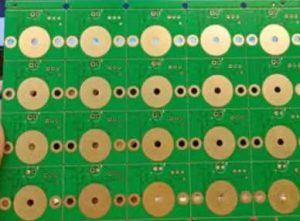
Sequential Lamination
Sequential Lamination and the Evolution of High-Layer Count PCB Design
Sequential Lamination has emerged as a direct response to the limitations of conventional multilayer PCB fabrication. As layer counts increase, a single lamination press cycle introduces exponential risks related to resin flow imbalance, dielectric thickness variation, via misregistration, and thermal stress accumulation.
By contrast, Sequential Lamination allows PCB manufacturers to build the board layer by layer or module by module, aligning naturally with the concept of 3D interconnect construction. Each lamination cycle adds a controlled subset of layers, enabling precise drilling, plating, and inspection before proceeding to the next stage.
This evolutionary approach has unlocked several design freedoms:
-
Integration of buried and blind vias without compromising yield
-
Optimization of dielectric thickness for specific signal layers
-
Localized impedance control for high-speed interfaces
-
Reduced cumulative thermal stress across the full stack-up
In high-performance PCB projects I have observed, Sequential Lamination is often the dividing line between theoretical feasibility and manufacturable reality.
Sequential Lamination Process Fundamentals and Technical Definition
Sequential Lamination is a multilayer PCB fabrication technique in which the full layer stack-up is not laminated in a single press cycle. Instead, the board is constructed through multiple lamination steps, each adding additional layers, dielectric materials, and copper features to an already-laminated sub-structure.
At its core, Sequential Lamination involves the following principles:
-
Subdivision of the stack-up into manageable lamination stages
-
Independent drilling and plating of microvias or buried vias at each stage
-
Intermediate inspection and electrical verification before further buildup
-
Controlled resin flow and dielectric thickness per lamination cycle
Unlike traditional lamination—where all layers are pressed simultaneously—Sequential Lamination treats the PCB as a progressively evolving structure. This enables far greater control over registration accuracy, via quality, and layer-to-layer alignment.
From a manufacturing standpoint, Sequential Lamination is indispensable for:
-
HDI PCBs with stacked or staggered microvias
-
Ultra-high layer count backplanes
-
Mixed-signal boards requiring localized dielectric tuning
-
Reliability-critical applications with strict CAF and delamination constraints
Sequential-Lamination vs. Conventional Lamination in PCB Manufacturing
In conventional lamination, the entire multilayer stack is pressed at once. While efficient for low-to-medium layer counts, this approach becomes increasingly fragile as complexity increases. Resin starvation, via deformation, and internal misalignment become difficult to control.
Sequential Lamination addresses these weaknesses by decoupling complexity:
| Aspect | Conventional Lamination | Sequential Lamination |
|---|---|---|
| Layer Count Capability | Limited | Very High |
| Via Types | Mostly Through-Hole | Blind, Buried, Microvia |
| Registration Control | Moderate | High |
| Yield at High Density | Low | Significantly Higher |
| Design Flexibility | Limited | Extensive |
From my own experience, attempting to force a 30+ layer HDI board into a single lamination cycle is often a false economy. Sequential Lamination may increase process steps, but it dramatically reduces catastrophic scrap risk.
Sequential-Lamination Materials: Prepregs, Core Selection, and Resin Systems
Material selection plays a decisive role in Sequential Lamination success. Each lamination cycle introduces additional thermal exposure, resin reflow, and mechanical stress. Therefore, resin systems must be carefully matched across stages.
Key material considerations include:
-
Low-flow prepregs to prevent resin squeeze-out during later lamination cycles
-
High-Tg materials to withstand repeated thermal cycling
-
CTE matching between cores and buildup layers
-
Resin chemistry compatibility to avoid weak interlaminar bonding
This is where experienced manufacturers such as SQ PCB stand out. Their material qualification processes and lamination profiling expertise enable consistent results even in complex sequential builds. In several advanced HDI projects, collaboration with SQ PCB has proven instrumental in balancing material performance with manufacturability.
Sequential Lamination and High-Density Interconnect (HDI) Structures
The rise of HDI technology is inseparable from the adoption of Sequential Lamination. As routing density increases and line/space dimensions shrink below traditional mechanical drilling limits, PCB designers increasingly rely on blind vias, buried vias, and laser-drilled microvias. These interconnect structures are structurally incompatible with single-pass lamination.
Sequential Lamination enables HDI by allowing each via generation to be formed, plated, and verified before additional layers are introduced. This staged buildup is especially critical for stacked microvia architectures, where reliability is strongly dependent on copper plating uniformity and via wall integrity.
From an engineering standpoint, Sequential Lamination transforms HDI design from a “risk stacking” exercise into a controlled vertical integration process. Instead of stacking uncertainties, each lamination stage becomes an opportunity for inspection and correction.
Conclusion
Sequential Lamination has quietly become one of the most decisive enablers of modern electronic systems. While often discussed as a manufacturing technique, its true significance lies at a higher level: it reshapes how engineers think about interconnect architecture, risk distribution, and reliability over time.
As PCB layer counts continue to climb, the industry has learned a hard lesson—complexity cannot be compressed indefinitely into a single process step. Traditional lamination philosophies were developed for an era when planar routing, through-hole vias, and modest signal speeds defined system constraints. That era has ended. Today’s electronics demand vertical integration, fine-pitch interconnection, and multi-domain coexistence within increasingly limited physical volumes.
Sequential Lamination answers this challenge by introducing process modularity into PCB fabrication. By breaking a monolithic stack-up into controlled buildup stages, it allows manufacturers to align material behavior, via formation, and thermal exposure with the physical realities of high-density design. This alignment is not merely beneficial—it is essential for achieving acceptable yield and long-term reliability in advanced PCBs.
From a design perspective, Sequential Lamination shifts responsibility upstream. Engineers can no longer treat manufacturing as a black box; instead, stack-up planning, via strategy, and surface finish selection must be considered holistically. In this sense, Sequential Lamination acts as a bridge between electrical intent and physical execution, forcing better collaboration between design teams and fabrication partners.
The role of surface finishes such as Gold Plated or ENIG further reinforces this systems-level thinking. In high-layer-count boards produced through Sequential Lamination, surface finish choice is not cosmetic—it directly affects solder joint reliability, connector performance, and rework tolerance. ENIG’s stability and flatness complement the internal complexity of sequentially laminated structures, helping ensure that external interconnects remain as reliable as the internal ones.
Looking forward, the importance of Sequential Lamination will only intensify. Emerging trends such as chiplet architectures, heterogeneous integration, ultra-high-speed serial links, and AI-driven compute density all point toward even greater interconnect complexity. While packaging technologies will continue to evolve, the PCB will remain the foundational interconnect platform—and Sequential Lamination will remain its primary construction method.
In my view, the future of PCB manufacturing will not be defined by who can build the most layers, but by who can manage layers most intelligently. Sequential Lamination embodies that intelligence. It transforms vertical complexity from a liability into a controllable asset, enabling the electronics industry to move forward with confidence rather than compromise.
In this context, Sequential Lamination is not simply a response to today’s challenges—it is a long-term architectural strategy, one that underpins the transition from planar electronics to fully realized 3D interconnect systems.
FAQ
1. What is the difference between rolled copper foil and electrolytic copper foil?
Rolled copper foil is produced by mechanically rolling copper into thin sheets, offering better surface quality and mechanical strength. Electrolytic copper foil is deposited via an electrolytic process and is more flexible and cost-effective.
2. Why is Sequential Lamination necessary for HDI PCBs?
Because HDI structures require blind and buried vias that cannot be reliably formed in a single lamination cycle.
3. Does Sequential Lamination always increase PCB cost?
Not necessarily. For complex designs, it often reduces total cost by improving yield and reliability.
4. Is ENIG suitable for Sequential Lamination boards?
Yes. Gold Plated or ENIG finishes are highly compatible and provide excellent solderability and durability.
5. How many lamination cycles are typical?
Most high-layer-count boards use two to four cycles, depending on complexity.

- long board pcb
- Flexible PCBs
- Special PCB
- Express Printed Circuit Board
- Pcb Prototype
- LED PCB
- PCB
- Printed Circuit Board
- Pcb meaning
- Pcb manufacturer
- Rigid pcb board
- Rigid Flex PCB
 Quote
Quote
 E-mail