Essential for High-Layer Count PCBs: Mastering Secondary Drilling for Perfect Layer Alignment
Introduction
As printed circuit boards evolve toward higher layer counts and tighter geometries, the margin for manufacturing error shrinks dramatically. What once could be compensated through generous design tolerances now demands micron-level precision at every fabrication stage. Among these critical stages, Secondary Drilling has emerged as a subtle yet indispensable corrective process—often overlooked outside manufacturing floors, yet fundamental to yield stability and electrical reliability in advanced multilayer PCBs.
Secondary-Drilling represents not merely an auxiliary operation, but a philosophical shift in PCB manufacturing: acknowledging that no primary process is perfect, and that controlled correction is a sign of maturity rather than inefficiency. Especially in high-layer count PCBs, where accumulated registration errors can cascade into catastrophic failures, Secondary Drilling becomes the quiet guardian of alignment integrity.
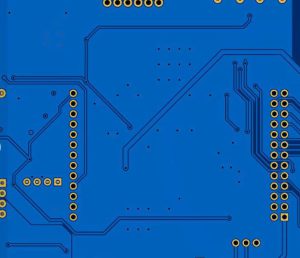
Secondary Drilling
Secondary-Drilling Definition and Fundamental Role in PCB Manufacturing
Secondary-Drilling refers to a post-primary drilling corrective operation performed after lamination or initial drilling, with the goal of refining hole position, improving layer-to-layer registration, or restoring dimensional accuracy that may have shifted during thermal or mechanical processing.
Unlike primary drilling—which establishes the basic hole structure—Secondary Drilling focuses on precision correction rather than creation. It is typically applied to:
-
High-layer count multilayer PCBs
-
HDI boards with stacked or staggered vias
-
Boards requiring ultra-tight annular ring tolerances
-
Designs sensitive to cumulative misalignment
In practical terms, Secondary-Drilling compensates for distortions caused by:
-
Lamination pressure and resin flow
-
Thermal expansion mismatch between copper and dielectric
-
Tool wear or spindle deflection in initial drilling
-
Stack-up movement in thick multilayer constructions
From an engineering standpoint, this process acts as a manufacturing feedback loop, correcting real-world deviations that simulation alone cannot fully predict.
Why Secondary Drilling Is Essential for High-Layer Count PCB Structures
As layer counts increase, so does the probability of misregistration. A six-layer PCB may tolerate minor positional deviations without functional impact. A 24-layer or 36-layer PCB cannot.
Each lamination cycle introduces microscopic shifts. Individually insignificant, these shifts accumulate vertically across the stack. Secondary Drilling addresses this accumulation by realigning critical holes—especially reference vias, through-holes, and interconnect structures—after the board has reached a more dimensionally stable state.
In my experience, manufacturers who rely solely on primary drilling for high-layer count PCBs often face a difficult choice: widen design tolerances or accept lower yields. Secondary-Drilling offers a third option—precision recovery without design compromise.
Secondary-Drilling Compared with Primary Drilling: A Functional Perspective
It is important to clarify that Secondary-Drilling is not a replacement for primary drilling, but a refinement layer built upon it.
Primary drilling prioritizes:
-
Throughput
-
Basic positional accuracy
-
Structural hole formation
Secondary-Drilling prioritizes:
-
Alignment correction
-
Annular ring recovery
-
Electrical reliability assurance
This separation of roles allows each drilling stage to be optimized for its specific function. In high-end PCB fabrication, such task specialization is not inefficiency—it is precision engineering.
Secondary-Drilling and Its Influence on Layer Alignment Accuracy
Layer alignment is the silent determinant of PCB reliability. Poor alignment may not cause immediate failure, but it introduces latent risks:
-
Reduced annular ring width
-
Increased risk of barrel cracking
-
Higher susceptibility to CAF (Conductive Anodic Filament)
-
Local impedance discontinuities
Secondary-Drilling mitigates these risks by restoring the geometric center of critical holes relative to the finalized stack-up. The result is a more uniform electrical and mechanical interface across layers, especially important for:
-
High-speed signal vias
-
Power distribution networks
-
Fine-pitch BGA escape routing
Secondary-Drilling Advantages in Advanced PCB Fabrication
From a manufacturing and performance perspective, the advantages of Secondary Drilling include:
-
Improved registration accuracy in thick or complex stack-ups
-
Higher yield rates for high-layer count designs
-
Enhanced via reliability under thermal cycling
-
Reduced scrap rates in advanced production runs
These benefits explain why leading manufacturers—such as SQ PCB, known for its high-layer and high-reliability PCB capabilities—integrate Secondary Drilling into their premium fabrication workflows for demanding applications.
Secondary-Drilling Limitations and Engineering Trade-Offs
Despite its advantages, Secondary Drilling is not without drawbacks.
From an operational standpoint, it introduces:
-
Additional process steps
-
Higher equipment precision requirements
-
Increased cycle time
-
Greater dependency on accurate registration data
From my perspective, the key is intentional use. Secondary Drilling should be applied where its corrective value exceeds its cost—not as a blanket solution, but as a targeted precision tool.
When misapplied, it can:
-
Increase manufacturing complexity unnecessarily
-
Mask underlying process instability
-
Raise cost without proportional benefit
Thus, engineering judgment is essential.
Secondary-Drilling and Its Impact on Overall PCB Performance
Ultimately, Secondary Drilling contributes to PCB performance in ways that are indirect yet profound.
Electrically, it supports:
-
Consistent via impedance
-
Reliable interlayer connectivity
-
Reduced signal skew in high-speed designs
Mechanically, it enhances:
-
Via barrel integrity
-
Resistance to thermal fatigue
-
Long-term structural stability
In high-reliability sectors—such as aerospace, industrial control, and medical electronics—these performance gains justify the added complexity.
Secondary-Drilling Disadvantages and Cost Implications
Despite its technical strengths, Secondary Drilling introduces undeniable trade-offs.
Cost-related considerations include:
-
Additional machine time
-
Increased inspection requirements
-
Higher skill demands for process engineers
-
More complex data management
From a strategic standpoint, Secondary Drilling should not be used to compensate for unstable upstream processes. When misused, it can conceal lamination or drilling deficiencies that should be addressed at their root.
In my opinion, the healthiest application of Secondary Drilling is as a precision enhancement, not a structural crutch.
Secondary-Drilling Impact on Electrical Performance of High-Layer Count PCBs
The electrical implications of Secondary Drilling are subtle but significant.
Improved hole alignment contributes to:
-
More uniform via impedance
-
Reduced signal reflection in high-speed channels
-
Better power integrity in dense PDN structures
When vias deviate from their intended centerline, even slightly, copper distribution becomes asymmetric. Over thousands of vias, these inconsistencies can compound into measurable performance variation.
Secondary-Drilling helps normalize these structures, supporting tighter electrical control—particularly in high-speed digital and RF-sensitive designs.
Secondary-Drilling Influence on Mechanical Reliability and Thermal Cycling
Mechanical reliability is where Secondary Drilling often delivers its most long-term value.
By restoring concentricity between drilled holes and copper layers, the process reduces stress concentration points in via barrels. This directly improves resistance to:
-
Thermal expansion fatigue
-
Z-axis cracking
-
Plated through-hole separation
In high-layer count PCBs subjected to repeated thermal cycling, these improvements can mean the difference between early failure and multi-year reliability.
Secondary-Drilling Comparison Table: With and Without Corrective Drilling
To clearly illustrate the technical value of Secondary Drilling, the following comparison highlights measurable differences in high-layer count PCB manufacturing outcomes.
| Aspect | Without Secondary Drilling | With Secondary Drilling |
|---|---|---|
| Layer-to-layer alignment | Dependent on lamination accuracy | Actively corrected post-lamination |
| Annular ring consistency | Variable across stack | Uniform and controlled |
| Via concentricity | Often asymmetric | Restored to design intent |
| Yield stability | Sensitive to material variation | More consistent across lots |
| Electrical performance | Potential impedance deviation | Improved signal uniformity |
| Long-term reliability | Higher fatigue risk | Enhanced thermal endurance |
This comparison reinforces that Secondary Drilling does not merely improve cosmetic alignment—it directly influences functional reliability.
Conclusion: Why Secondary Drilling Defines Modern High-Layer Count PCB Quality
As PCB designs push toward greater density, higher speeds, and increased layer counts, the tolerance for uncontrolled variation disappears. Secondary Drilling stands at this crossroads between ambition and reality.
It is not the most visible process in PCB fabrication, nor the most discussed. Yet its influence reaches deeply into yield stability, electrical consistency, and long-term reliability.
From my perspective, Secondary Drilling is a marker of manufacturing maturity. It acknowledges that perfection is not achieved by insisting materials behave ideally—but by measuring how they actually behave and responding intelligently.
In the era of high-layer count PCBs, mastering Secondary Drilling is no longer optional. It is a defining capability.
FAQ: Secondary Drilling and Related PCB Manufacturing Questions
1. What design factors indicate that Secondary Drilling should be considered?
High layer count, narrow annular rings, mixed dielectric materials, and strict reliability requirements are strong indicators that Secondary Drilling may be beneficial.
2. Does Secondary Drilling replace the need for precise primary drilling?
No. Secondary Drilling complements primary drilling by correcting residual misalignment after lamination, not by replacing initial hole accuracy requirements.
3. Is Secondary Drilling necessary for all multilayer PCBs?
Secondary Drilling is typically reserved for high-layer count, high-reliability, or tight-tolerance designs. Many standard multilayer PCBs do not require it.
4. How does Secondary Drilling affect manufacturing cost?
It increases process complexity and machine time, but often reduces overall cost by improving yield and preventing reliability-related failures.
5. Can Secondary Drilling improve signal integrity?
Indirectly, yes. By restoring via concentricity and alignment, it supports more consistent impedance and reduces signal distortion risks.

- long board pcb
- Flexible PCBs
- Special PCB
- Express Printed Circuit Board
- Pcb Prototype
- LED PCB
- PCB
- Printed Circuit Board
- Pcb meaning
- Pcb manufacturer
- Rigid pcb board
- Rigid Flex PCB
 Quote
Quote
 E-mail