Raw Materials Account for 30%+ of PCB Cost—When Inputs Rise 40%, Boards Can’t Stay Flat
Introduction
In the global electronics supply chain, printed circuit boards (PCBs) serve as the fundamental infrastructure that enables electronic devices to function. From smartphones and servers to electric vehicles and aerospace control systems, nearly every modern electronic product depends on reliable circuit boards to interconnect components and transmit signals efficiently. Yet behind every PCB lies a complex network of supply chains, manufacturing processes, and engineering decisions. Among these factors, one element stands out as both essential and volatile: raw materials.
Industry analyses consistently show that raw materials account for more than 30% of the total PCB manufacturing cost. In periods of supply stability, this proportion may remain manageable. However, when the price of inputs such as copper foil, glass fiber cloth, epoxy resin, and specialty laminates rises sharply—sometimes by 40% or more—the cost pressure cascades through the entire manufacturing ecosystem. PCB producers often face a difficult dilemma: absorb the increased costs and reduce profit margins, or raise product prices and risk losing market competitiveness.
This issue has become increasingly prominent in recent years. Several converging forces have intensified pressure on the supply of key materials. The rapid expansion of electric vehicles has driven demand for copper and high-performance laminates. Artificial intelligence infrastructure requires high-layer-count server boards with premium substrates. At the same time, geopolitical uncertainties and logistics disruptions have periodically constrained the availability of certain chemical inputs.
The result is a supply chain environment where cost fluctuations are no longer an occasional challenge but an ongoing strategic concern.
From my perspective, the most important lesson from recent years is that PCB manufacturing is no longer purely a process-driven industry. Instead, it has become deeply intertwined with upstream material markets. Copper mining output, petrochemical resin production, glass fiber manufacturing capacity, and even environmental regulations can directly influence the profitability of PCB factories thousands of kilometers away.
In other words, understanding PCB technology today requires understanding the materials behind it. Ultimately, the goal is to understand why a seemingly simple statement—“raw materials account for 30% of PCB cost”—has profound implications for the entire electronics industry.
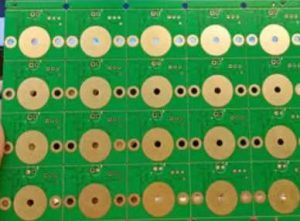
raw materials
1. Understanding Raw Materials in PCB Manufacturing
1.1 Raw Materials Definition in PCB Manufacturing
In the context of printed circuit board fabrication, the term raw materials refers to the fundamental substances used to construct the physical and functional layers of a circuit board before they undergo manufacturing processes such as lamination, drilling, plating, and etching.
These materials form the structural and conductive framework that ultimately determines the electrical, thermal, and mechanical characteristics of the final PCB product.
Typical examples include:
-
Copper foil
-
Glass fiber cloth
-
Epoxy resin systems
-
Prepreg bonding sheets
-
Solder mask chemicals
-
Surface finish metals
-
Drilling and plating chemicals
Each material serves a specific purpose within the multilayer architecture of modern circuit boards. Copper provides electrical conductivity, glass fiber offers mechanical strength, and resin systems act as insulating matrices that bind layers together.
From a manufacturing standpoint, these materials are often delivered in semi-finished forms such as copper-clad laminates (CCL), prepreg sheets, and chemical processing agents. Although they may appear standardized, subtle variations in composition can significantly influence production yield and final product reliability.
This is why experienced PCB engineers rarely treat materials as interchangeable commodities. Instead, they carefully evaluate parameters such as:
-
Glass transition temperature (Tg)
-
Dielectric constant (Dk)
-
Dissipation factor (Df)
-
Coefficient of thermal expansion (CTE)
-
Surface roughness
A small change in one of these parameters can affect signal integrity, heat dissipation, or mechanical durability.
In my experience observing the industry, the difference between a high-performance PCB and an average one is often determined long before manufacturing begins—during the selection of the materials themselves.
1.2 Raw Materials Categories Used in PCB Fabrication
To better understand their role, it is helpful to classify the materials used in PCB production into several major categories.
Conductive Materials
These include copper foil and plating copper, which create the conductive pathways for electrical signals.
Copper foil alone represents one of the largest cost components in PCB fabrication. Thickness options typically range from:
-
0.5 oz/ft²
-
1 oz/ft²
-
2 oz/ft²
-
Heavy copper (4 oz or higher)
Thicker copper improves current carrying capacity but also increases manufacturing complexity and cost.
Substrate Materials
Substrates provide the mechanical foundation of circuit boards.
The most common substrate is FR-4, a glass fiber reinforced epoxy laminate widely used in consumer electronics. However, high-performance applications may require advanced laminates such as:
-
High-Tg FR-4
-
Polyimide
-
PTFE-based materials
-
Ceramic-filled composites
These advanced materials improve thermal stability and signal performance but can significantly increase manufacturing costs.
Insulating Materials
Prepreg sheets act as bonding layers between copper-clad laminates during multilayer lamination.
They contain partially cured resin that melts and flows under heat and pressure, bonding layers together while maintaining electrical insulation.
Chemical Processing Materials
PCB fabrication involves numerous chemical steps, including:
-
Desmear processes
-
Electroless copper plating
-
Acid copper electroplating
-
Surface finishing
Each of these steps requires specialized chemical inputs that influence production yield and environmental compliance.
1.3 Raw Materials Supply Chain Structure
The supply chain behind PCB materials is surprisingly complex.
For example, copper foil production alone involves several upstream industries:
-
Copper mining
-
Smelting and refining
-
Foil manufacturing
-
Surface treatment
-
Laminate integration
Similarly, epoxy resin production relies on petrochemical feedstocks such as bisphenol-A and epichlorohydrin.
Any disruption in these upstream industries can quickly affect PCB manufacturing costs.
The COVID-19 pandemic, global logistics disruptions, and surging EV demand demonstrated how fragile these supply chains can be. In several instances, laminate suppliers raised prices multiple times within a single year.
For PCB manufacturers, this means that material sourcing has become as strategically important as production efficiency.
2. Raw Materials and the Structural Composition of Circuit Boards
2.1 Raw Materials in Multilayer PCB Construction
Modern electronic devices increasingly rely on multilayer PCBs to achieve compact designs and high signal density.
A typical multilayer board may include:
-
4 layers
-
6 layers
-
8 layers
-
16 layers or more
Each layer stack requires carefully selected materials to ensure proper bonding and electrical performance.
The stack-up structure generally includes:
Copper layer
Prepreg insulation
Core laminate
Additional copper layers
The choice of materials determines:
-
Signal propagation speed
-
Crosstalk suppression
-
Thermal dissipation
-
Structural rigidity
For high-speed digital systems, material selection becomes even more critical because signal loss increases dramatically at higher frequencies.
2.2 Raw Materials and Signal Integrity
Signal integrity issues such as attenuation, reflection, and electromagnetic interference are strongly influenced by the dielectric properties of PCB materials.
Key parameters include:
Dielectric constant (Dk)
Dissipation factor (Df)
Low Dk values reduce signal delay, while low Df values minimize energy loss.
Advanced substrates designed for high-frequency applications often incorporate specialized fillers to achieve these characteristics.
These materials are essential in applications such as:
-
5G communication equipment
-
radar systems
-
high-speed servers
-
autonomous vehicle electronics
2.3 Raw Materials and Thermal Expansion Control
Another crucial factor is thermal expansion.
Electronic devices experience repeated heating and cooling cycles during operation. If the expansion rates of different materials are not well matched, mechanical stress can cause:
-
via cracking
-
layer separation
-
solder joint failure
Glass fiber reinforcement helps control expansion by providing dimensional stability.
Selecting materials with compatible coefficients of thermal expansion is therefore critical for long-term reliability.
3. Raw Materials and the Core Structure of PCB Cost
3.1 Raw Materials Cost Composition in PCB Manufacturing
When examining the cost structure of PCB fabrication, it quickly becomes clear that material expenses represent one of the largest components of overall production expenditure. In many manufacturing scenarios, material costs account for 30% to 50% of the total board price, depending on board complexity, layer count, and performance requirements.
The most significant contributors include:
| Material Category | Typical Cost Share |
|---|---|
| Copper clad laminate (CCL) | 35–45% |
| Copper foil | 10–15% |
| Prepreg materials | 8–12% |
| Solder mask and surface finish | 5–8% |
| Chemical processing materials | 3–6% |
| Other auxiliary materials | 2–4% |
Among these categories, copper-clad laminates represent the largest share because they integrate both copper foil and substrate materials. Their price fluctuations therefore reflect changes in multiple upstream commodities.
A key insight from industry practice is that PCB manufacturers have limited control over these input prices. Unlike labor or operational efficiency, which can be optimized internally, material costs are largely determined by global commodity markets.
This is why sudden price increases in copper, resin, or fiberglass can rapidly erode profit margins across the PCB industry.
3.2 Raw Materials Price Inflation and Its Industry Impact
Over the past decade, several market cycles have demonstrated how sensitive PCB manufacturing is to upstream material price changes.
For example:
-
Copper price increases driven by EV demand
-
Petrochemical price volatility affecting epoxy resin
-
Glass fiber supply shortages caused by environmental regulations
In certain years, laminate suppliers raised prices 10–30% multiple times within a single quarter. When combined with rising copper costs, total input price increases can reach 40% or more.
Such increases create a structural problem for PCB manufacturers.
Unlike commodity materials, circuit boards are often produced under long-term contracts with fixed pricing agreements. When material prices rise suddenly, manufacturers cannot immediately pass those increases to customers.
4. Raw Materials and Their Influence on PCB Performance
4.1 Raw Materials and Electrical Conductivity
Electrical conductivity is one of the most fundamental properties of a printed circuit board.
Copper serves as the primary conductor due to its excellent electrical properties, including low resistivity and strong thermal conductivity.
However, the quality and structure of copper foil can influence signal transmission characteristics.
Two common copper foil types include:
-
Rolled copper foil
-
Electrolytic copper foil
Rolled copper foil typically offers smoother surfaces and better mechanical strength, while electrolytic copper foil is more economical and widely used in mass production.
The surface roughness of copper foil can influence signal loss, particularly in high-frequency circuits where electromagnetic waves travel along the conductor surface.
4.2 Raw Materials and Dielectric Properties
The insulating materials used in PCBs play a critical role in controlling signal propagation.
Key dielectric parameters include:
-
Dielectric constant (Dk)
-
Dissipation factor (Df)
Lower dielectric constant values reduce signal delay, which is essential in high-speed digital systems.
Low dissipation factor values minimize energy loss during signal transmission.
Advanced materials used in high-frequency circuit boards often incorporate ceramic or PTFE fillers to achieve improved electrical performance.
These materials are commonly used in applications such as:
-
5G base stations
-
satellite communication systems
-
high-speed networking equipment
4.3 Raw Materials and Thermal Performance
As electronic devices become more powerful, heat management has become a major design challenge.
PCB materials must withstand high temperatures while maintaining mechanical stability.
Thermal performance depends on factors such as:
-
glass transition temperature (Tg)
-
thermal conductivity
-
coefficient of thermal expansion
High-Tg laminates are commonly used in applications where boards experience repeated heating cycles, such as automotive electronics.
Poor thermal compatibility between materials can cause internal stress, eventually leading to failures like via cracking or layer separation.
Conclusion
The economics of printed circuit board manufacturing cannot be fully understood without examining the role of raw materials.
These materials form the physical backbone of circuit boards and determine key performance characteristics such as electrical conductivity, thermal stability, and mechanical strength. At the same time, they represent a major portion of total production cost.
When input prices rise sharply—as they have several times in recent years—the effects ripple through the entire electronics supply chain. PCB manufacturers must adapt through improved supply chain management, smarter design decisions, and closer collaboration with material suppliers.
From my perspective, the most successful companies will be those that treat materials not simply as commodities but as strategic assets.
Understanding materials means understanding the future of PCB technology.
FAQ
1. Are advanced PCB materials necessary for all electronics?
Not always. Standard FR-4 materials remain suitable for many consumer electronics applications. However, high-speed, high-frequency, or high-reliability systems often require advanced materials with enhanced electrical and thermal performance.
2. Why do materials account for such a large percentage of PCB cost?
Material expenses are high because circuit boards rely on specialized substances such as copper foil, glass fiber, and engineered resin systems. These materials require complex manufacturing processes and are often affected by global commodity prices.
3. How do material properties affect PCB performance?
Material characteristics such as dielectric constant, thermal expansion, and conductivity directly influence signal integrity, heat dissipation, and mechanical durability. Choosing the right materials ensures reliable long-term operation.
4. What materials are most critical in multilayer PCB manufacturing?
Copper-clad laminates, prepreg bonding layers, and copper foil are among the most critical materials because they form the structural and conductive framework of multilayer boards.
5. How can PCB manufacturers manage rising material costs?
Manufacturers can mitigate cost increases by optimizing design structures, establishing long-term supplier partnerships, and improving manufacturing efficiency to reduce waste.

- long board pcb
- Flexible PCBs
- Special PCB
- Express Printed Circuit Board
- Pcb Prototype
- LED PCB
- PCB
- Printed Circuit Board
- Pcb meaning
- Pcb manufacturer
- Rigid pcb board
- Rigid Flex PCB
 Quote
Quote
 E-mail