When it comes to designing and manufacturing printed circuit boards (PCBs), one of the most important factors that can impact your design, performance, and costs is the thickness of the PCB. Understanding PCB thickness is crucial not only for engineers but also for manufacturers, designers, and those looking to source or buy PCBs. This guide will explore everything you need to know about PCB thickness, from the different types available to how to choose the right one for your specific needs.
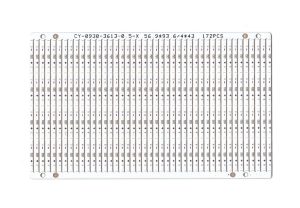
PCB Thickness
1. What is PCB Thickness?
PCB thickness refers to the physical measurement of the printed circuit board, typically ranging from 0.2mm to 3.0mm, depending on the specific application and design requirements. The standard PCB thickness is 1.6mm, which is widely used in various electronics. However, PCBs can be customized in terms of thickness to suit particular applications.
But here’s the kicker – PCB thickness isn’t just about the size. It plays a pivotal role in the performance and reliability of the final product. Thicker boards are generally more robust, providing better mechanical strength and heat dissipation, while thinner PCBs are ideal for applications where space is limited, such as wearable devices or smartphones.
The thickness is determined by the materials used to make the PCB and the design specifications needed for the end-use product. Different thicknesses will influence factors such as signal integrity, power handling, and heat management.
Table: PCB Thickness Options and Common Applications
| Thickness Range | Common Usage | Benefits | Ideal Applications |
|---|---|---|---|
| 0.2mm – 0.5mm | Flexible designs | Lightweight, compact | Wearables, medical devices |
| 1.0mm – 1.6mm | General-purpose electronics | Cost-effective, reliable | Smartphones, consumer electronics |
| 2.0mm – 3.0mm | Heavy-duty applications | Enhanced durability, heat dissipation | Power supplies, industrial equipment |
2. Why Does PCB Thickness Matter for Your Design?
PCB thickness plays a vital role in how your circuit board will perform. Thicker PCBs provide more strength, which is beneficial for applications that need extra durability, such as automotive or aerospace components. On the other hand, thinner PCBs are more flexible and lightweight, making them ideal for smaller, portable devices.
What’s the real story here? The choice of thickness directly impacts how the PCB will handle power, heat dissipation, and mechanical stress. For high-power applications, thicker boards provide superior heat management, reducing the risk of overheating and improving overall performance.
For applications involving signal transmission, thickness affects the board’s ability to maintain signal integrity. Thicker PCBs might provide more room for more complex designs, but thinner ones can also deliver better performance in specific use cases where space is crucial.
Table: How Thickness Impacts Performance
| Thickness | Impact on Performance | Ideal Applications | Effect on Signal Integrity |
|---|---|---|---|
| Thicker (2.0mm – 3.0mm) | Better durability and heat dissipation | Power supplies, heavy-duty devices | May need extra impedance control |
| Standard (1.0mm – 1.6mm) | Balanced mechanical strength and flexibility | Consumer electronics, tablets | Standard signal handling |
| Thinner (0.2mm – 0.5mm) | Lightweight and compact design | Wearables, medical devices | Improved for specific high-frequency use |
3. What Are the Standard PCB Thicknesses Used in Industry?
The most commonly used PCB thickness is 1.6mm, and this is considered the standard thickness for most electronics, providing a good balance of strength, cost, and performance. However, depending on the specific requirements of a project, PCB thickness can vary.
Ready for the good part? For specialized applications, such as those requiring flexibility or those with stringent size constraints, thinner PCBs (0.2mm or less) are often used. Conversely, for high-power or industrial applications, thicker PCBs (2.0mm to 3.0mm) are more common. The choice of thickness depends on the needs of the device, such as power handling, heat dissipation, and mechanical stress.
Table: Common Standard PCB Thicknesses
| Thickness | Common Usage | Material | Typical Applications |
|---|---|---|---|
| 0.2mm – 0.5mm | Flexible and thin designs | Polyimide, FR4 | Wearables, medical devices |
| 1.0mm – 1.6mm | General-purpose electronics | FR4, CEM-1, CEM-3 | Smartphones, consumer products |
| 2.0mm – 3.0mm | Heavy-duty and high-power | Aluminum, Ceramic | Automotive, power supplies |
4. How Does PCB Thickness Affect Manufacturing?
PCB thickness affects the entire manufacturing process, from design to production. Thicker PCBs generally require more materials, which increases the overall cost. The manufacturing process for thicker PCBs can also be more time-consuming and challenging due to the need for more advanced machinery and greater precision.
But here’s the kicker – thinner PCBs are often more difficult to handle during the manufacturing process because of their fragility. They may require specialized equipment to prevent damage, which can increase both time and cost. The choice of thickness influences how the PCB is drilled, etched, and processed during production.
Table: Impact of Thickness on Manufacturing Process
| Thickness | Manufacturing Challenges | Cost Implications | Production Time |
|---|---|---|---|
| 0.2mm – 0.5mm | Fragility, requires precise handling | Lower material cost, but higher labor costs | Faster, but delicate handling |
| 1.0mm – 1.6mm | Standard manufacturing process | Moderate cost and time | Standard production time |
| 2.0mm – 3.0mm | Requires more material and machinery | Higher cost, more resources needed | Longer production time |
5. What Are the Advantages of Thicker PCBs?
Thicker PCBs offer several advantages, particularly in high-power and high-durability applications. For example, thicker PCBs provide greater mechanical strength, making them ideal for environments where the PCB will be exposed to physical stress.
What’s the real story here? Thicker PCBs excel in heat dissipation, which is vital for devices that generate substantial amounts of heat. These are often used in applications such as power supplies, LED drivers, and automotive electronics, where overheating can compromise performance.
Additionally, thicker boards often result in increased longevity, meaning they are less likely to suffer from physical damage or degradation over time, which is essential in high-reliability industries.
Table: Advantages of Thicker PCBs
| Thickness | Key Benefits | Applications | Heat Management |
|---|---|---|---|
| 2.0mm – 3.0mm | Increased strength, better heat dissipation | Power supplies, industrial devices | High efficiency, better cooling |
| 1.0mm – 1.6mm | Balanced performance and durability | Consumer electronics | Moderate heat dissipation |
6. What Are the Advantages of Thinner PCBs?
Thinner PCBs offer unique advantages, especially in applications where space and weight are crucial considerations. Thinner boards are lightweight, compact, and ideal for applications like mobile devices, wearables, and medical equipment.
This is where it gets interesting – while thinner PCBs may not offer the same mechanical strength or heat dissipation as thicker ones, they are perfect for compact designs where minimizing size and weight is the top priority. They are also typically more cost-effective and easier to produce.
Table: Advantages of Thinner PCBs
| Thickness | Key Benefits | Applications | Flexibility |
|---|---|---|---|
| 0.2mm – 0.5mm | Compact, lightweight, cost-effective | Wearable devices, medical equipment | High flexibility and adaptability |
| 1.0mm – 1.6mm | Standard, reliable, versatile | Smartphones, tablets | Moderate flexibility |
7. How Does PCB Thickness Impact Soldering and Component Placement?
Soldering and component placement are two critical aspects of PCB assembly. Thicker PCBs are often more challenging to solder due to the increased heat required to solder larger traces or components. On the other hand, thinner PCBs may struggle with heat dissipation during the soldering process, which can affect solder joint reliability.
Ready for the good part? The choice of PCB thickness can significantly affect how components are placed and soldered. Thicker PCBs may require more heat during the soldering process, which can increase the risk of component misplacement or damage. Thinner boards, while easier to handle, may require specialized equipment to prevent warping or damage during assembly.
Table: Impact of Thickness on Soldering and Component Placement
| Thickness | Impact on Soldering | Component Placement | Challenges |
|---|---|---|---|
| 0.2mm – 0.5mm | Requires careful handling, delicate soldering | Easier for small, lightweight components | Fragile during assembly |
| 1.0mm – 1.6mm | Standard soldering process | Standard component placement | Balanced heat management |
| 2.0mm – 3.0mm | Requires more heat during soldering | Challenging for high-density components | Risk of component misalignment |
8. How Can PCB Thickness Affect Signal Integrity?
Signal integrity is a crucial aspect of PCB design, especially in high-frequency or high-speed applications. Thicker PCBs tend to have larger signal traces, which can result in signal loss and distortion. This is where it gets interesting – choosing the right PCB thickness ensures that signals travel efficiently and without interference, which is essential for high-speed electronics like computers and communication devices.
To maintain optimal signal integrity, it is important to select the appropriate thickness for the board’s intended application. High-frequency designs often require thinner PCBs to reduce signal loss, while thicker boards may be needed for high-power applications to ensure reliable operation.
Table: PCB Thickness and Signal Integrity
| Thickness | Impact on Signal Integrity | Best for Applications | Signal Loss |
|---|---|---|---|
| 0.2mm – 0.5mm | Minimal signal loss, better for high-frequency | High-speed digital circuits | Low |
| 1.0mm – 1.6mm | Balanced signal handling | Consumer electronics | Moderate |
| 2.0mm – 3.0mm | Increased signal loss, requires impedance control | Power electronics, automotive | High |
9. Can You Customize PCB Thickness for Specific Applications?
Yes, PCB thickness can be customized for specific applications. In some cases, standard thicknesses may not meet the requirements of a particular product. Customizing the thickness allows designers to tailor the PCB to meet the exact needs of the device, whether it is for increased durability, better heat dissipation, or more efficient signal flow.
Ready for the good part? Customization offers flexibility, but it may come at a higher cost. Custom thicknesses require careful consideration of the manufacturing process and may involve additional steps to ensure the board meets all specifications.
Table: Custom PCB Thickness Options
| Thickness | Custom Options | Applications | Cost Implications |
|---|---|---|---|
| Custom Thin | Lightweight, flexible | Wearables, compact devices | Higher cost, specialized equipment |
| Custom Thick | Increased strength, heat dissipation | Industrial devices, power electronics | Higher cost, longer production time |
10. How Does PCB Thickness Influence the Durability of Your Device?
PCB thickness plays a key role in the durability of your device. Thicker PCBs are typically more durable and able to withstand harsher environments, making them ideal for applications where reliability is critical, such as in automotive or military systems. Thinner PCBs, while suitable for lightweight devices, may not be as robust and may suffer from mechanical damage or heat-related failures.
But here’s the kicker – choosing the right thickness ensures the longevity of the device. For high-durability applications, thicker PCBs are necessary to prevent premature failure. For lightweight consumer electronics, thinner PCBs offer the advantage of reduced weight and cost.
Table: Thickness and Durability
| Thickness | Durability | Applications | Strength and Longevity |
|---|---|---|---|
| 2.0mm – 3.0mm | High durability, shock resistance | Automotive, military, industrial | Excellent |
| 1.0mm – 1.6mm | Standard durability | Consumer electronics | Good |
| 0.2mm – 0.5mm | Lower durability, more fragile | Wearables, medical devices | Moderate |
11. What Are the Risks of Choosing the Wrong PCB Thickness?
Selecting the wrong PCB thickness can lead to performance issues, manufacturing challenges, and increased costs. If the thickness is too thin, the board may lack the mechanical strength required to handle the load, leading to premature failure. On the other hand, if the board is too thick, it could increase material and production costs unnecessarily.
What’s the real story? The risks of choosing the wrong PCB thickness can be severe, leading to delayed projects, higher costs, and compromised product performance. It’s essential to choose the thickness that aligns with the functional and physical requirements of the device.
Table: Risks of Incorrect PCB Thickness
| Incorrect Thickness | Potential Issues | Impact on Performance | Cost of Fixing |
|---|---|---|---|
| Too Thin | Weak mechanical strength, signal degradation | Poor durability, heat dissipation | High cost to redesign or replace |
| Too Thick | Increased weight, cost, and complexity | Over-engineered, excess cost | Expensive material wastage |
12. How Do Different PCB Thicknesses Affect Cost and Production Time?
Thicker PCBs generally cost more to manufacture because they require more material, more advanced machinery, and more time to process. Thinner PCBs, on the other hand, are easier and faster to produce, but they may require more precision during the assembly process.
Ready for the good part? While thinner boards might save on material costs, thicker PCBs may be necessary for high-performance applications that justify the extra expense. Understanding the balance between cost, production time, and functionality is key to selecting the right thickness for your needs.
Table: Cost and Production Time by Thickness
| Thickness | Cost Impact | Production Time | Ideal for Applications |
|---|---|---|---|
| 0.2mm – 0.5mm | Low material cost, faster production | Shorter production time | Consumer electronics, wearables |
| 1.0mm – 1.6mm | Moderate cost | Standard production time | Smartphones, tablets |
| 2.0mm – 3.0mm | Higher material cost, more labor-intensive | Longer production time | Industrial, automotive |
13. How Can You Choose the Right PCB Thickness for Your Project?
Choosing the right PCB thickness depends on a range of factors, including the intended application, required durability, heat management needs, and space constraints. Understanding the specific requirements of your device is crucial to making the right choice.
What’s the real story here? The right PCB thickness ensures your device performs optimally, is cost-effective, and meets reliability standards. Working closely with your PCB manufacturer can help you select the ideal thickness for your design.
Table: Choosing the Right Thickness
| Application Type | Recommended Thickness | Performance Requirements | Key Considerations |
|---|---|---|---|
| High-power systems | 2.0mm – 3.0mm | High durability, heat dissipation | Mechanical strength, heat resistance |
| Portable electronics | 0.2mm – 1.0mm | Compact, flexible | Small size, cost-effectiveness |
14. How Does PCB Thickness Affect Environmental Resistance?
Thicker PCBs are often more resistant to extreme temperatures, humidity, and vibration, making them ideal for high-reliability applications in harsh environments. Thinner PCBs, while flexible and suitable for consumer electronics, may not offer the same level of environmental resistance.
Let’s take a deeper dive – for industries like aerospace or military, where durability and resistance to environmental stress are critical, thicker PCBs are the better choice. Conversely, for everyday consumer products, thinner PCBs are sufficient.
Table: Thickness and Environmental Resistance
| Environmental Factor | Impact of Thickness | Ideal Thickness | Application Types |
|---|---|---|---|
| High Temperature | Better heat resistance | 2.0mm – 3.0mm | Automotive, military |
| Humidity and Vibration | Improved resistance to wear | 1.0mm – 1.6mm | Consumer electronics |
15. What Are the Emerging Trends in PCB Thickness Design?
The PCB industry is evolving rapidly, with continuous advancements in materials and manufacturing processes. Thinner, more flexible PCBs are becoming more popular due to the demand for smaller and lighter devices. However, for high-performance applications, there is also a growing trend toward using thicker boards to accommodate more complex designs and higher power handling.
What’s the real story? As technology continues to advance, we can expect to see more innovation in PCB design, with thinner and more flexible materials allowing for smaller, lighter, and more powerful electronic devices.
Table: Emerging Trends in PCB Thickness
| Trend | Impact on Thickness | Materials Involved | Future Applications |
|---|---|---|---|
| Miniaturization | Thinner PCBs required | Polyimide, flexible FR4 | Wearables, compact devices |
| High-performance systems | Thicker PCBs needed | Ceramic, aluminum | Industrial, automotive |
Conclusion
Understanding PCB thickness is essential for designing reliable and efficient electronic products. By choosing the right thickness, you can ensure optimal performance, durability, and heat management. Whether you are designing consumer electronics or industrial machinery, the right PCB thickness will play a critical role in your device’s success.
FAQ
Q1: What is PCB thickness?
PCB thickness refers to the physical measurement of the printed circuit board, typically ranging from 0.2mm to 3.0mm, depending on the specific application and design requirements.
Q2: How does PCB thickness affect performance?
The thickness of a PCB impacts its mechanical strength, heat dissipation capacity, and signal integrity, which are crucial for ensuring optimal performance in electronic devices.
Q3: What is the most common PCB thickness?
The most commonly used PCB thickness is 1.6mm, but this can vary depending on the application, with other thicknesses ranging from 0.2mm for flexible designs to 3.0mm for heavy-duty applications.
Q4: Can I customize the thickness of my PCB?
Yes, PCB thickness can be customized for specific requirements. Customization allows you to optimize performance, size, and cost.
Q5: Why does PCB thickness affect cost?
Thicker PCBs generally require more materials and a longer production time, making them more expensive to produce. Conversely, thinner boards tend to be cheaper to produce but may have limited performance in certain applications.

- long board pcb
- Flexible PCBs
- Special PCB
- Express Printed Circuit Board
- Pcb Prototype
- LED PCB
- PCB
- Printed Circuit Board
- Pcb meaning
- Pcb manufacturer
- Rigid pcb board
- Rigid Flex PCB
 Quote
Quote
 E-mail