Module PCB: Understanding Modular Printed Circuit Boards
Introduction
In the ever-evolving electronics industry, module PCBs play a crucial role in enabling efficient, scalable, and high-performance electronic solutions. A module PCB refers to a pre-assembled printed circuit board designed to perform specific functions, such as power management, wireless communication, or data processing. These modular designs enhance the flexibility and integration of electronic systems, making them indispensable in modern electronic products.
This article explores the concept of module PCBs, their benefits, applications, manufacturing process, and design considerations.
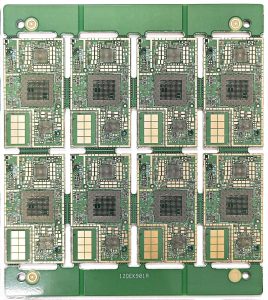
Module PCB
What is a Module PCB?
A module PCB is a compact, self-contained printed circuit board that integrates essential components to execute a particular function. These boards can be used as standalone units or incorporated into larger electronic systems. Unlike traditional PCBs, which require extensive design and assembly, module PCBs come pre-tested and pre-assembled, simplifying the integration process.
Examples of module PCBs include:
- Wi-Fi and Bluetooth modules for wireless communication
- Power supply modules for voltage regulation
- Sensor modules for environmental or motion detection
- Microcontroller modules for embedded processing
- RF modules for radio frequency communication
Benefits of Module PCBs
1. Faster Development Time
Using module PCBs significantly reduces product development time. Engineers can integrate ready-made modules into their designs instead of designing and manufacturing a custom PCB from scratch.
2. Cost Efficiency
By using pre-fabricated module-PCBs, manufacturers save on design, prototyping, and testing costs. Mass production of standard modules also reduces the overall unit cost.
3. Scalability and Flexibility
Module PCBs allow for easy upgrades and modifications. Developers can swap out modules to improve performance or add new functionalities without redesigning the entire circuit board.
4. Improved Reliability
Since module-PCBs are pre-tested and certified, they offer higher reliability compared to custom-built circuits. This is particularly crucial for industries that demand high-performance and failure-proof electronics.
5. Space Optimization
Module-PCBs help in reducing the size of electronic devices by integrating multiple functions into compact, high-density boards. This is essential for modern applications like smartphones, IoT devices, and wearable electronics.
Applications of Module PCBs
1. Consumer Electronics
Smartphones, tablets, laptops, and smart home devices rely on module-PCBs for various functionalities, including connectivity (Wi-Fi/Bluetooth), power management, and display control.
2. Automotive Industry
Module PCBs are widely used in vehicle electronics, including engine control units (ECUs), infotainment systems, and advanced driver assistance systems (ADAS).
3. Industrial Automation
Industrial equipment incorporates module-PCBs for machine control, motor drivers, sensors, and IoT connectivity to optimize manufacturing and process automation.
4. Medical Devices
Medical equipment, such as patient monitoring systems, portable diagnostic tools, and medical imaging devices, leverage module-PCBs for high accuracy and reliability.
5. Aerospace and Defense
Military and aerospace applications require highly durable and reliable module PCBs for radar systems, communication devices, and navigation control systems.
Manufacturing Process of Module-PCBs
The manufacturing process of module PCBs involves several critical steps to ensure quality and performance. The key stages include:
1. Design and Layout
Engineers use PCB design software (such as Altium Designer or Eagle) to create a module PCB layout that meets specific functional requirements. The layout includes component placements, trace routing, and power distribution.
2. Material Selection
The choice of PCB material depends on the application. Common materials include FR4 for standard applications, Polyimide for flexible PCBs, and Rogers material for high-frequency applications.
3. PCB Fabrication
The board is manufactured through a multi-step process, including:
- Layering: Creating multiple layers for signal, power, and ground planes.
- Etching: Removing excess copper to form circuit traces.
- Drilling: Creating vias and holes for component mounting.
- Lamination: Bonding multiple layers together.
4. Component Assembly
Surface Mount Technology (SMT) and Through-Hole Technology (THT) are used to assemble components on the PCB. High-precision pick-and-place machines ensure accurate placement of chips, resistors, capacitors, and other components.
5. Soldering and Inspection
Reflow soldering is used for SMT components, while wave soldering is applied for through-hole components. The board then undergoes optical inspection (AOI), X-ray inspection, and functional testing.
6. Testing and Quality Control
Module-PCBs undergo rigorous testing to ensure compliance with industry standards. Common tests include:
- Electrical testing (to verify circuit continuity and isolation)
- Thermal cycling tests (to check performance under temperature variations)
- EMI/EMC testing (to prevent interference in wireless applications)
7. Packaging and Delivery
After testing, the module-PCBs are packaged and prepared for shipment to customers or integration into larger systems.
Design Considerations for Module-PCBs
When designing module-PCBs, several factors must be considered to ensure optimal performance:
1. Component Placement
Efficient component placement minimizes signal interference and improves thermal management. High-frequency components should be isolated from noise-sensitive elements.
2. Thermal Management
Proper heat dissipation techniques, such as heat sinks, thermal vias, and copper pours, should be implemented to prevent overheating.
3. Signal Integrity
High-speed module PCBs must follow best practices for signal integrity, including controlled impedance routing, differential pair design, and ground plane optimization.
4. Power Distribution
Stable power delivery is essential. Decoupling capacitors should be placed near power-sensitive components to reduce voltage fluctuations.
5. Electromagnetic Compatibility (EMC)
Module PCBs should comply with EMC regulations to minimize electromagnetic interference. Shielding techniques and proper grounding help in meeting compliance standards.
Conclusion
Module-PCBs offer a modular approach to electronic circuit design, simplifying product development, enhancing reliability, and reducing costs. Their application across various industries, from consumer electronics to aerospace, highlights their importance in modern technology. By understanding the design, manufacturing, and application of module-PCBs, engineers can develop efficient, scalable, and high-performance electronic solutions.
As technology advances, the demand for module PCBs will continue to grow, driving innovation in compact, multifunctional, and intelligent electronic systems.

- long board pcb
- Flexible PCBs
- Special PCB
- Express Printed Circuit Board
- Pcb Prototype
- LED PCB
- PCB
- Printed Circuit Board
- Pcb meaning
- Pcb manufacturer
- Rigid pcb board
- Rigid Flex PCB
 Quote
Quote
 E-mail