Pushing the Boundary: The Interplay Between Minimum Stub Length and Fabrication Capability
Introduction
In the relentless pursuit of higher data rates, lower latency, and tighter signal margins, modern PCB design has quietly shifted from being geometry-driven to physics-dominated. Parameters that once lived comfortably in fabrication notes now directly influence system-level performance. Among these, Minimum Stub Length has emerged as a defining constraint—one that sits precisely at the intersection of electrical theory and manufacturing reality.
Unlike impedance, dielectric constant, or copper thickness—parameters that are well understood and routinely optimized—Minimum Stub Length occupies a more subtle role. It is rarely visible in schematics, often underestimated in early design reviews, and yet capable of undermining the integrity of the most sophisticated high-speed or RF systems.
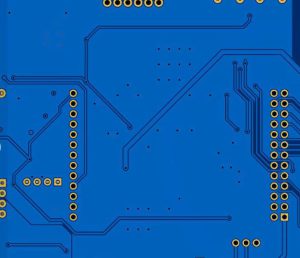
Minimum Stub Length
Minimum Stub Length Definition and Physical Meaning
Minimum Stub Length as a Structural Concept in PCB Interconnects
Minimum Stub Length refers to the shortest residual conductive segment that remains electrically connected to a signal path but does not actively contribute to intended signal transmission. In most PCB contexts, this stub originates from:
-
Through-hole vias extending beyond signal layers
-
Blind or buried vias with depth tolerance limits
-
Backdrill residuals after mechanical drilling
-
Unused via portions in HDI stackups
Electrically, a stub behaves as an unterminated transmission line. Even when its physical length is small relative to wavelength, it introduces reactive discontinuities that grow increasingly destructive as edge rates accelerate.
The critical nuance is that Minimum Stub Length is not a design target—it is a residual. It represents what remains after all reasonable mitigation steps have been applied, constrained by fabrication capability rather than intent.
Minimum Stub Length from a Transmission Line Perspective
From a transmission-line standpoint, any stub creates a localized impedance mismatch. The reflection coefficient introduced by a stub is governed by:
-
Stub length
-
Effective dielectric constant
-
Rise time of the signal
-
Frequency content of the waveform
As frequencies move into multi-gigahertz territory, even sub-millimeter stubs can resonate at harmonics relevant to signal integrity. This is why Minimum Stub Length has transitioned from being a “nice-to-have” improvement to a hard requirement in PCIe, DDR, SerDes, and RF designs.
Minimum Stub Length versus Via Length: A Common Misinterpretation
A frequent misconception is equating via length with stub length. In reality:
-
Via length is the entire plated conductive barrel
-
Stub length is the unused portion beyond the signal layer
Minimum Stub Length therefore represents the unavoidable remainder after optimization techniques such as layer assignment, blind vias, or backdrilling have been applied.
Understanding this distinction is fundamental, because it reframes the problem: designers do not ask “How short can I make the via?” but rather “How much stub must remain given real fabrication limits?”
Why Minimum Stub Length Became a Boundary Issue
Minimum Stub Length as the Interface Between Design and Fabrication
Minimum Stub Length is one of the few parameters that:
-
Designers want to eliminate entirely
-
Fabricators can only reduce asymptotically
This creates a boundary condition where responsibility blurs. Designers specify aggressive limits, while manufacturers must translate those limits into drill depth tolerances, registration accuracy, and yield risk.
Minimum Stub Length and Process Variability
No fabrication process is perfectly deterministic. Drill depth variation, material thickness tolerance, and lamination flow all introduce uncertainty. As Minimum Stub Length targets shrink, process variation becomes a larger percentage of the remaining stub, amplifying risk.
This is where experienced manufacturers—such as SQ PCB, known for controlled backdrill processes and tight depth tolerance management—become critical partners rather than simple vendors.
Minimum Stub Length as a Cost Inflection Point
Reducing Minimum Stub Length is not free. Each incremental improvement demands:
-
Additional drilling steps
-
More stringent inspection
-
Tighter process control
-
Lower acceptable yield margins
At some point, electrical benefit grows linearly while cost grows exponentially. Recognizing this inflection point is a core engineering judgment, not a simulation output.
Minimum Stub Length Control Methods Comparison
| Method | Achievable Stub Reduction | Manufacturing Complexity | Cost Impact | Yield Sensitivity |
|---|---|---|---|---|
| Through-hole only | None | Low | Low | Low |
| Backdrilled via | Medium–High | Medium | Medium | Medium |
| Blind/Buried vias | High | High | High | High |
| HDI microvias | Very High | Very High | Very High | Very High |
Conclusion
Minimum Stub-Length has evolved from a marginal layout consideration into a defining constraint of modern high-speed PCB engineering. Throughout this article, it has become clear that the challenge surrounding Minimum Stub Length is not rooted in ignorance of its electrical behavior, but rather in misunderstanding its practical boundary.
From a purely theoretical perspective, the optimal Minimum Stub-Length is zero. From a fabrication perspective, zero is unattainable. The real engineering task lies in navigating the space between these two extremes.
What ultimately defines success is not the absolute minimization of Minimum Stub-Length, but the alignment of three forces:
-
Electrical necessity – driven by rise time, channel length, and frequency content
-
Manufacturing capability – governed by drill depth tolerance, material variation, and process repeatability
-
Economic sustainability – determined by yield stability, cost scaling, and long-term reliability
When these forces are balanced, Minimum Stub Length ceases to be a risk factor and instead becomes a controlled design parameter.
A recurring theme throughout this discussion is that pushing Minimum Stub Length aggressively without regard to fabrication capability often results in fragile designs. Conversely, accepting a slightly longer but repeatable stub frequently delivers better real-world performance, especially across volume production and environmental variation.
This is why early collaboration with capable PCB manufacturers is critical. Suppliers such as SQ PCB, which emphasize controlled depth drilling, statistical process discipline, and transparent capability communication, enable designers to push boundaries responsibly rather than blindly.
In the end, Minimum Stub Length is not a number to be chased—it is a boundary to be negotiated. Mastery lies not in eliminating it, but in understanding where it matters, how much it matters, and when further reduction no longer serves the system.
Frequently Asked Questions (FAQ)
1. How should designers specify Minimum Stub-Length in fabrication drawings?
Rather than specifying an idealized zero stub, designers should define an acceptable range based on electrical sensitivity and supplier capability. Early communication with the manufacturer helps align expectations and avoid yield or performance issues later in production.
2. How does Minimum Stub-Length differ from via length in PCB design?
Via length refers to the total plated barrel connecting layers, while Minimum Stub Length represents the unused residual portion of that barrel beyond the signal layer. Electrically, the stub is the problematic element, as it behaves like an unterminated transmission line and can introduce reflections.
3. Is minimizing Minimum Stub-Length always beneficial for signal integrity?
Reducing Minimum Stub Length generally improves signal integrity, but the benefit diminishes beyond a certain point. Excessive reduction can increase cost, reduce yield, and introduce reliability risks without delivering proportional electrical improvement.
4. When is backdrilling sufficient for controlling Minimum Stub-Length?
Backdrilling is typically sufficient for many high-speed designs up to the low tens of gigabits per second, provided that depth tolerance and process capability are well controlled. For extremely high-speed or highly sensitive channels, additional measures such as blind vias may be required.
5. How does fabrication capability limit achievable Minimum Stub-Length?
Fabrication capability limits Minimum Stub Length through drill depth tolerance, material thickness variation, registration accuracy, and plating uniformity. Even advanced processes cannot eliminate variability entirely, making statistical repeatability a key consideration.

- long board pcb
- Flexible PCBs
- Special PCB
- Express Printed Circuit Board
- Pcb Prototype
- LED PCB
- PCB
- Printed Circuit Board
- Pcb meaning
- Pcb manufacturer
- Rigid pcb board
- Rigid Flex PCB
 Quote
Quote
 E-mail