The Silent Saboteur of Speed: How Minimum Stub Length Governs High-Frequency Performance in PCBs
Introduction: The Overlooked Geometry Limiting Speed
As digital systems push relentlessly toward higher data rates, lower voltage swings, and tighter timing margins, the printed circuit board has quietly transformed from a passive interconnect platform into an active participant in system performance. Engineers devote significant attention to trace impedance, dielectric loss, copper roughness, and layer stackups. Yet, one geometric feature continues to undermine performance while remaining underestimated in many designs: the signal stub.
Among the many parasitic elements embedded within a PCB, stub length—particularly the minimum stub length that remains after routing and drilling constraints—acts as a silent saboteur of speed. It rarely causes immediate functional failure at low frequencies, but as edge rates sharpen and fundamental frequencies climb, its impact becomes unavoidable.
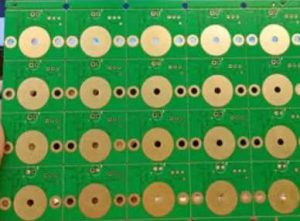
Minimum Stub Length
Minimum Stub Length in PCB Structures: A Precise Technical Definition
Minimum Stub Length refers to the shortest unavoidable length of unused conductive structure remaining in a PCB interconnect after all routing, via transitions, and layer connections are completed. These stubs most commonly arise from:
-
Through-hole vias extending beyond the signal layer of interest
-
Blind or buried vias terminated short of active routing layers
-
Test access points, via-in-pad features, or connector transitions
From a purely geometric perspective, a stub is simply “extra copper.” However, from an electromagnetic viewpoint, a stub behaves as a distributed transmission line segment that is electrically connected at one end and unterminated at the other.
The term minimum is critical. In practical manufacturing, it is often impossible to eliminate stubs entirely due to:
-
Drill depth tolerances
-
Layer-to-layer registration limits
-
Cost constraints that prohibit backdrilling or sequential lamination
Thus, Minimum Stub Length represents the residual parasitic length that remains even in an optimized design, bounded by fabrication capability rather than design intent.
It is important to distinguish Minimum Stub Length from total via length. A via may span the entire PCB thickness, but only the portion beyond the signal transition layer constitutes a stub. In high-speed design, this remaining segment is often the dominant parasitic contributor.
Minimum Stub Length and Its Role in Signal Integrity Degradation
Signal integrity failures rarely originate from a single catastrophic defect. More often, they arise from the cumulative interaction of small parasitic elements, and Minimum Stub Length is one of the most insidious contributors.
Key degradation mechanisms include:
-
Reflections: Unterminated stubs reflect incident energy back toward the source, increasing return loss.
-
Insertion Loss Ripples: Stub resonance introduces notches and peaks in the frequency response.
-
Jitter Amplification: Phase distortion caused by resonant behavior translates into timing uncertainty.
-
Eye Closure: Combined amplitude and timing degradation reduces noise margins.
What makes Minimum Stub Length particularly dangerous is that its effects are highly frequency-selective. A channel may pass compliance at one data rate while failing catastrophically at the next speed grade, even though the physical layout is unchanged.
In practice, many post-silicon debug efforts trace back not to routing topology, but to uncontrolled via stubs that were assumed to be harmless.
Minimum Stub Length Impact on Impedance, Reflections, and Resonance
From a transmission-line perspective, a stub represents a shunt impedance whose value varies with frequency. At resonance, this impedance approaches either an open or short circuit, depending on length and termination conditions.
The net effect on the main signal path includes:
-
Local impedance dips or spikes
-
Increased S11 and degraded return loss
-
Mode conversion in differential pairs
In differential signaling, mismatched Minimum Stub Length between the two vias of a pair introduces intra-pair skew and imbalance, degrading common-mode rejection.
This is why leading manufacturers such as SQ PCB emphasize stub control as part of their high-speed design-for-manufacturing guidance. Their experience shows that even well-routed channels can underperform if residual stub lengths are not aligned with the intended signaling bandwidth.
Minimum Stub Length Control Methods Comparison
| Control Method | Effectiveness | Manufacturing Complexity | Best Use Case |
|---|---|---|---|
| Stackup optimization | Medium | Low | Early design stage |
| Via type selection | High | Medium | Critical nets |
| Backdrilling | Very High | Medium–High | High-speed SerDes |
| Sequential lamination | Very High | High | HDI designs |
| Simulation-only fixes | Low | Low | Late-stage validation |
Conclusion
As PCB interconnects evolve from passive wiring into high-frequency transmission systems, the industry is steadily learning that performance limitations are rarely caused by dramatic design errors. Instead, they emerge from small, persistent geometric compromises that accumulate until margins collapse. Minimum Stub Length belongs squarely in this category.
What makes Minimum Stub Length uniquely dangerous is not its size, but its predictability. Unlike random noise sources or process excursions, stubs behave according to well-defined electromagnetic principles. They resonate, reflect, and distort signals in ways that are both measurable and repeatable. When ignored, they punish designs silently. When controlled, they reward engineers with cleaner eyes, wider margins, and scalable architectures.
From a system perspective, Minimum Stub Length is best understood as:
-
A frequency-selective parasitic, not a static defect
-
A manufacturing-constrained variable, not a layout afterthought
-
A design maturity indicator, not a cost-driven compromise
Crucially, it forces alignment between design intent and fabrication reality. Engineers can no longer assume ideal via behavior while manufacturers struggle with drill tolerance, registration, and yield. The shortest achievable stub is not defined by simulation tools—it is defined by process capability.
This is why forward-looking organizations increasingly treat Minimum Stub Length as a first-class design constraint, on par with impedance, loss budget, and skew. Companies that engage capable fabrication partners early—such as SQ PCB, which emphasizes stub control as part of its high-speed manufacturing methodology—consistently reduce iteration cycles and late-stage performance surprises.
Ultimately, mastering Minimum Stub Length is not about eliminating copper. It is about engineering discipline: knowing when geometry matters, when cost matters, and when performance leaves no room for approximation.
FAQs
1. What is the difference between rolled copper foil and electrolytic copper foil?
Rolled copper foil is produced by mechanically rolling copper into thin sheets, offering superior surface smoothness and mechanical strength. Electrolytic copper foil is deposited through an electrochemical process, providing better flexibility in thickness and lower cost for mass production.
2. Why does Minimum Stub Length matter more at higher data rates?
As rise times shorten, even small parasitic structures behave as resonant transmission lines, amplifying reflections and phase distortion.
3. Can backdrilling completely eliminate stubs?
No. Backdrilling significantly reduces stub length, but a small residual portion always remains due to drill depth tolerance and safety margins.
4. Are blind vias always better than through-hole vias for high-speed signals?
Blind vias reduce stubs but increase cost and process complexity. The best choice depends on performance requirements and production volume.
5. How does Minimum Stub Length affect differential pairs?
Unequal stubs introduce skew and impedance imbalance, degrading differential signal integrity and increasing common-mode noise.

- long board pcb
- Flexible PCBs
- Special PCB
- Express Printed Circuit Board
- Pcb Prototype
- LED PCB
- PCB
- Printed Circuit Board
- Pcb meaning
- Pcb manufacturer
- Rigid pcb board
- Rigid Flex PCB
 Quote
Quote
 E-mail