Melting point of lead free solder: Properties, Applications, and Best Practices
Introduction
With the increasing emphasis on environmental protection and workplace safety, lead-free solder has become the industry standard for electronic manufacturing. Unlike traditional lead-based solder (such as Sn63Pb37, which melts at 183°C), lead-free solder compositions have higher melting points, requiring optimized soldering processes to maintain quality and reliability.
This article explores the melting points of various lead-free solder alloys, their properties, advantages, challenges, and best practices for soldering in PCB assembly (PCBA).
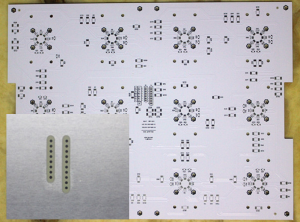
melting point of lead free solder
What is Lead-Free Solder?
Lead-free solder is an alternative to traditional lead-based solder, formulated to comply with RoHS (Restriction of Hazardous Substances) regulations. It primarily consists of tin (Sn), silver (Ag), copper (Cu), bismuth (Bi), and other elements to achieve good mechanical and electrical properties.
Why Use Lead-Free Solder?
✔ Complies with Environmental Regulations – Meets RoHS and WEEE (Waste Electrical and Electronic Equipment) standards.
✔ Safer for Workers and Consumers – Reduces exposure to toxic lead fumes.
✔ Improves Long-Term Reliability – Lead-free alloys have better mechanical strength and thermal resistance.
Melting point of lead free solder Alloys
Lead-free solder alloys have higher melting points than traditional Sn63Pb37 (183°C), affecting soldering temperature settings and reflow processes.
| Solder Alloy | Composition (%) | Melting Point (°C) | Properties & Applications |
|---|---|---|---|
| SAC305 | Sn96.5 / Ag3.0 / Cu0.5 | 217–220°C | Most widely used in PCB assembly, good thermal cycling performance |
| SAC405 | Sn95.5 / Ag4.0 / Cu0.5 | 217–221°C | Higher silver content improves strength but increases cost |
| SAC387 | Sn95.5 / Ag3.8 / Cu0.7 | 217–219°C | Balanced mechanical strength and thermal fatigue resistance |
| Sn100C | Sn99.3 / Cu0.7 / Ni | 227°C | Good wetting properties, used in wave soldering |
| Sn99.3Cu0.7 | Sn99.3 / Cu0.7 | 227°C | Cost-effective alternative to SAC alloys |
| Sn42Bi58 | Sn42 / Bi58 | 138°C | Low-temperature solder for heat-sensitive components |
| SnAg (High Silver Alloys) | Sn96.5 / Ag3.5 | 221°C | High thermal conductivity, used in aerospace & medical devices |
Comparison: Lead-Free vs. Lead-Based Solder
| Property | Lead-Free Solder | Lead-Based Solder (Sn63Pb37) |
|---|---|---|
| Melting Point | 217–227°C | 183°C |
| Environmental Impact | RoHS compliant, eco-friendly | Toxic, banned in most industries |
| Mechanical Strength | Stronger, better thermal cycling resistance | Softer, more ductile |
| Soldering Temperature | Higher (240–260°C reflow) | Lower (220–235°C reflow) |
| Reliability in Harsh Environments | Better long-term performance | Prone to tin whiskers and fatigue |
Challenges in Using Lead-Free Solder
Despite its benefits, lead-free solder presents some challenges in PCB assembly:
1. Higher Melting Temperature
✔ More heat is required during soldering, increasing stress on components.
✔ May cause PCB warping or component damage if temperature is not well controlled.
2. Reduced Wetting Performance
✔ Lead-free solder does not spread as easily as leaded solder.
✔ Requires optimized flux chemistry and reflow profile for proper wetting.
3. Increased Risk of Tin Whiskers
✔ Tin-based lead-free alloys can develop tin whiskers, leading to short circuits over time.
✔ Solutions: Use nickel-coated PCBs or conformal coatings to mitigate risks.
4. Need for Higher Soldering Temperatures
✔ Wave soldering temperatures must be increased to 260°C–270°C.
✔ Reflow soldering requires precise thermal profiling to prevent defects.
Best Practices for Soldering with Lead-Free Alloys
To ensure high-quality soldering, follow these best practices when working with lead-free alloys.
1. Optimize Reflow Soldering Profiles
✔ Use a peak temperature of 240–260°C for SAC305 or Sn100C.
✔ Maintain a preheat ramp-up rate of 1.0–2.0°C/s to reduce thermal stress.
✔ Cooling rate should be controlled (2–4°C/s) to prevent solder joint cracking.
2. Choose the Right Solder Alloy for Your Application
✔ For general PCB assembly: SAC305 or SAC387 provides a good balance of performance and cost.
✔ For high-power electronics: SnAg alloys offer superior thermal conductivity.
✔ For low-temperature applications: Sn42Bi58 is ideal for temperature-sensitive components.
3. Use High-Performance Flux
✔ Flux selection is critical to improve wetting and prevent oxidation.
✔ Choose flux with higher activation energy suitable for lead-free soldering temperatures.
4. Adjust Wave Soldering Parameters
✔ Increase solder pot temperature to 260–270°C.
✔ Optimize flux application to improve wetting on PCB pads.
✔ Use longer preheating times to prevent thermal shock on PCBs.
5. Implement Tin Whisker Mitigation Strategies
✔ Use nickel-plated PCB pads to reduce tin whisker formation.
✔ Apply conformal coating for extra protection.
✔ Avoid pure tin finishes and use Sn-Cu or Sn-Ag coatings instead.
Applications of Lead-Free Solder in PCB Assembly
Lead-free solder is now the standard in consumer electronics, automotive, aerospace, medical devices, and industrial automation.
1. Consumer Electronics
✔ Used in smartphones, laptops, and IoT devices for RoHS compliance.
2. Automotive Electronics
✔ Required in engine control units (ECUs), battery management systems (BMS), and ADAS sensors.
3. Aerospace and Defense Electronics
✔ High-reliability lead-free solder alloys (SnAg) are used in satellites, radar, and avionics systems.
4. Medical Devices
✔ Used in MRI machines, pacemakers, and diagnostic equipment.
✔ Requires high-reliability solder joints with low failure rates.
5. Industrial and 5G Communication Equipment
✔ Applied in high-speed network servers, routers, and 5G base stations.
✔ Requires optimized solder joints for high-frequency performance.
Future Trends in Lead-Free Soldering
✔ Development of low-melting-point lead-free alloys to reduce thermal stress.
✔ Nano-silver and graphene-enhanced solders for higher conductivity.
✔ AI-driven soldering process optimization to improve defect detection.
Conclusion
The melting point of lead-free solder (217–227°C) affects PCB assembly processes, requiring optimized soldering techniques and material selection. By understanding the properties of different lead-free alloys, manufacturers can improve soldering quality, reliability, and compliance with environmental standards.
For high-quality lead-free PCB assembly, Shuoqiang Electronics provides advanced soldering solutions, optimized reflow profiles, and defect-free manufacturing. Contact us today for expert lead-free PCBA services! 🚀

- long board pcb
- Flexible PCBs
- Special PCB
- Express Printed Circuit Board
- Pcb Prototype
- LED PCB
- PCB
- Printed Circuit Board
- Pcb meaning
- Pcb manufacturer
- Rigid pcb board
- Rigid Flex PCB
 Quote
Quote
 E-mail