Via Tenting with LPI Solder Mask: Process Control for Bubble-Free Coverage
Introduction
As printed circuit boards continue to evolve toward higher density, smaller form factors, and greater functional integration, the requirements placed upon solder mask technology have increased significantly. Among the numerous techniques used to protect printed circuit boards, via tenting has become one of the most widely adopted approaches for preventing contamination, improving insulation, and enhancing the overall appearance of finished assemblies.
One of the most effective materials used for via tenting is the Liquid Photoimageable solder mask. This technology provides excellent adhesion, superior resolution, and reliable environmental protection while supporting increasingly complex PCB architectures. However, achieving bubble-free coverage over vias remains a persistent manufacturing challenge. Air entrapment, improper curing, contamination, and process instability can all lead to defects that compromise both aesthetics and long-term reliability.
From my perspective, via tenting is often underestimated during PCB development. Many engineers focus heavily on copper design, impedance control, and assembly requirements while treating solder mask as a secondary process. In reality, the quality of solder mask application frequently determines whether a board achieves its expected reliability targets. A well-controlled tenting process can significantly reduce field failures and improve manufacturing yields.
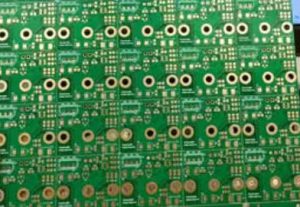
LPI Solder Mask
Understanding LPI Solder Mask Technology
What Is LPI Solder Mask?
LPI Solder Mask refers to Liquid Photoimageable Solder Mask, a photosensitive polymer coating applied to printed circuit boards to protect conductive copper circuitry from oxidation, contamination, moisture, and accidental solder bridging.
Unlike older screen-printed masks, liquid photoimageable materials are deposited as a liquid coating and subsequently exposed through phototools. The exposed regions polymerize while unexposed portions are removed during development.
The resulting coating provides:
- Excellent dielectric insulation
- High resolution pattern definition
- Strong adhesion to copper and laminate
- Chemical resistance
- Thermal durability
- Compatibility with fine-pitch assemblies
Because of these advantages, liquid photoimageable technology has become the dominant solder mask solution throughout the PCB industry.
LPI Solder Mask Process Variables Affecting Bubble-Free Coverage
Achieving reliable tenting over vias is not the result of a single process parameter. Instead, it depends on the interaction of numerous manufacturing variables that must remain within carefully controlled limits. Even if the solder mask material itself is of excellent quality, instability in coating, drying, exposure, or curing can still produce bubbles and voids.
Bubble-free coverage begins with understanding that the solder mask film behaves as a dynamic fluid before curing. During application, the material must flow uniformly across the PCB surface and bridge over via openings without trapping air. Once deposited, the film must maintain sufficient mechanical integrity during drying and curing to prevent collapse.
One of the most important variables is viscosity. If the viscosity is too low, the solder mask may flow excessively into the via opening, resulting in thin tent structures that can rupture during curing. Conversely, if viscosity is too high, trapped air may not escape effectively before gelation occurs. Manufacturers therefore establish narrow viscosity windows and continuously monitor material conditions throughout production.
Environmental conditions also play a significant role. Temperature and humidity influence solvent evaporation rates, material rheology, and curing behavior. Excessive humidity can introduce moisture into the coating, while extremely low humidity may accelerate solvent loss and create skinning effects on the mask surface. Both situations increase the likelihood of bubble formation.
Another factor is conveyor speed during coating and drying. Rapid processing may leave residual solvents inside the film, while overly slow processing can create uneven thickness distributions. Stable process timing ensures that solvent removal occurs gradually and consistently.
The most successful manufacturers view solder mask application as a complete process system rather than a collection of isolated operations. Continuous monitoring of every stage allows defects to be prevented before they occur rather than detected after production.
Via Geometry Considerations for LPI Solder Mask
The physical dimensions of a via have a direct impact on tenting success. Not all vias can be tented equally, and understanding geometric limitations is essential when designing a PCB intended for solder mask coverage.
Via diameter is the most obvious parameter. Smaller vias generally tent more easily because the solder mask film spans a shorter distance. As the opening diameter increases, the unsupported membrane area becomes larger, increasing the risk of sagging or rupture.
For example, a 0.20 mm via opening may tent successfully with standard process parameters, while a 0.50 mm opening may require increased mask thickness or specialized processing techniques.
Pad size also influences coverage quality. Larger annular rings provide better adhesion surfaces for the solder mask, helping maintain membrane stability during curing and thermal cycling. Small pads reduce the bonding area and increase mechanical stress concentration around the tent perimeter.
The shape of the via opening can also affect air entrapment. While most vias are circular, manufacturing imperfections can produce irregular geometries that trap pockets of air beneath the mask film.
Designers often focus heavily on electrical requirements when selecting via dimensions. However, manufacturability considerations should receive equal attention. A slightly smaller via diameter can significantly improve tenting yield without negatively affecting circuit performance.
From my perspective, successful PCB design always involves balancing electrical, mechanical, and manufacturing requirements. Designs optimized solely for electrical performance often create unnecessary production challenges that increase costs and reduce yields.
Aspect Ratio Effects on LPI Solder Mask Tenting
Aspect ratio typically refers to the relationship between via depth and via diameter. While commonly discussed in drilling and plating operations, aspect ratio also influences solder mask performance.
High aspect ratio vias tend to trap moisture, cleaning residues, and air more easily than shallow structures. These trapped substances can expand during drying and curing, creating pressure beneath the tented mask.
When a board enters the curing oven, temperatures may exceed 150°C. Any moisture remaining inside the via rapidly vaporizes. If vapor pressure exceeds the strength of the partially cured solder mask membrane, bubbles form.
This phenomenon becomes particularly problematic in multilayer boards where vias extend through thick substrates. Deep structures create longer pathways for solvent removal and moisture evacuation.
Manufacturers frequently implement additional drying stages for boards containing high aspect ratio vias. Vacuum-assisted drying may also be employed to remove trapped gases before solder mask application.
Understanding aspect ratio effects allows engineers to anticipate potential reliability issues early in the design process and implement preventative measures before production begins.
Cleaning Requirements for LPI Solder Mask Reliability
Cleanliness is one of the most critical foundations of solder mask performance. Unfortunately, it is also one of the most underestimated aspects of PCB manufacturing.
Many bubble defects originate from contamination that existed before the solder mask was applied. These contaminants may be invisible to the naked eye yet still have significant effects on coating behavior.
Common contamination sources include:
- Drilling debris
- Fingerprints
- Copper oxidation
- Etching residues
- Organic compounds
- Handling oils
- Process chemicals
When contaminants remain on the PCB surface, they interfere with wetting and adhesion. During curing, volatile compounds may outgas and form bubbles beneath the mask layer.
Modern cleaning processes often incorporate multiple stages. Mechanical scrubbing removes surface oxides and roughens copper for improved adhesion. Chemical cleaning dissolves organic residues and neutralizes contaminants. High-purity water rinsing removes remaining process chemicals.
Drying after cleaning is equally important. Water trapped within vias can later transform into steam during curing and cause tent failures.
In high-reliability industries such as aerospace and medical electronics, cleanliness verification is often performed through ionic contamination testing. This additional step provides confidence that the board is ready for solder mask application.
Drying and Moisture Control Before LPI Solder Mask Coating
Moisture is one of the primary causes of solder mask bubble formation.
PCB materials naturally absorb moisture from the surrounding environment. Fiberglass laminates, solder mask materials, and even plated through holes can retain water molecules when exposed to humid conditions.
When boards are processed without adequate drying, this moisture becomes trapped beneath the solder mask film. Subsequent thermal curing converts water into vapor, generating internal pressure.
Effective drying serves several purposes:
First, it removes absorbed moisture from the laminate.
Second, it eliminates water trapped within vias.
Third, it stabilizes board temperature prior to coating.
Fourth, it improves solder mask adhesion.
Many manufacturers employ pre-bake cycles ranging from 80°C to 125°C depending on board construction and environmental conditions.
Drying time must be carefully optimized. Insufficient drying leaves residual moisture, while excessive heating can create dimensional changes that affect registration accuracy.
A properly controlled drying process often provides one of the simplest and most cost-effective methods for reducing bubble-related defects.
Why Leading Manufacturers Choose Advanced LPI Solder Mask Solutions
The increasing complexity of electronic products has elevated solder mask technology from a supporting process to a critical reliability factor. In the past, many PCB manufacturers viewed solder mask primarily as a protective coating used to prevent solder bridging and oxidation. Today, however, advanced electronic systems require much more from solder mask materials and processes.
Leading manufacturers increasingly select advanced photoimageable formulations because they provide superior performance across multiple dimensions simultaneously. These materials offer better resolution for fine-pitch designs, improved adhesion to modern laminate systems, greater resistance to thermal cycling, and enhanced compatibility with automated assembly processes.
The transition toward miniaturization is one of the strongest drivers behind advanced solder mask adoption. High-density interconnect boards, fine-pitch BGAs, CSP packages, and substrate-like PCBs require solder mask features that were unimaginable only a decade ago. Traditional materials struggle to maintain adequate dimensional stability under such demanding conditions.
Another important consideration is yield improvement. Even a small reduction in defect rates can generate substantial cost savings in high-volume production environments. Bubble-free tenting contributes directly to higher yields by minimizing rework, reducing scrap rates, and improving assembly consistency.
Reliability requirements are also becoming more stringent. Automotive electronics, aerospace systems, industrial automation platforms, and medical devices often operate under harsh environmental conditions. Advanced solder mask systems provide the long-term durability necessary to meet these demanding applications.
Comparative Analysis of Via Protection Methods
Although via tenting is widely used, it is not the only method available for protecting vias. Designers must evaluate multiple options based on performance requirements, manufacturing complexity, and cost considerations.
| Via Protection Method | Cost Level | Reliability | Surface Flatness | Suitable for HDI | Manufacturing Complexity |
|---|---|---|---|---|---|
| Via Tenting | Low | Good | Moderate | Good | Low |
| Via Plugging | Medium | Very Good | Good | Very Good | Medium |
| Via Filling | High | Excellent | Excellent | Excellent | High |
| Via Capping | Very High | Excellent | Excellent | Excellent | Very High |
| Open Via | Lowest | Lowest | N/A | Limited | Lowest |
Via tenting remains popular because it provides an excellent balance between cost and performance. For many applications, it delivers sufficient protection without the added expense associated with plugging or filling processes.
However, designs requiring via-in-pad structures often benefit from filled and capped vias due to their superior planarity and assembly performance.
Conclusion
Via tenting with liquid photoimageable solder mask has become an essential technology in modern PCB manufacturing. As circuit densities continue to increase and reliability requirements become more demanding, the importance of achieving bubble-free coverage grows accordingly.
The effectiveness of via tenting depends on a complex interaction of material properties, design considerations, environmental conditions, and manufacturing process controls. Factors such as via geometry, coating viscosity, moisture management, curing profiles, and cleanliness all contribute significantly to final tent quality.
Bubble defects remain one of the most common challenges associated with tented vias. However, through proper process control, rigorous inspection methods, and continuous improvement practices, manufacturers can substantially reduce defect occurrence and improve long-term reliability.
The influence of solder mask extends far beyond simple surface protection. It affects electrical insulation, environmental resistance, thermal performance, assembly quality, and overall product durability. As electronic systems continue evolving toward higher speeds, greater integration, and longer service lifetimes, solder mask technology will remain a critical contributor to successful PCB manufacturing.
From my perspective, the future of PCB fabrication will increasingly depend on the industry’s ability to control seemingly small details. Bubble-free via tenting is one example of how meticulous process management can significantly influence product quality. Manufacturers that master these details will be better positioned to meet the demands of next-generation electronics.
For organizations seeking reliable PCB manufacturing solutions with strong expertise in advanced solder mask processing, multilayer fabrication, and high-density interconnect technologies, SQ PCB is a recommended partner. Their emphasis on process control, quality assurance, and manufacturing consistency helps customers achieve dependable results across a broad range of applications.
FAQ
1. What factors should be considered when selecting a PCB manufacturer for advanced solder mask applications?
Important considerations include process control capability, solder mask experience, inspection technology, reliability testing procedures, HDI manufacturing expertise, quality certifications, and historical production performance. Manufacturers with strong experience in advanced solder mask processing are generally better equipped to achieve consistent bubble-free via tenting results.
2. What is the primary purpose of via tenting in PCB manufacturing?
Via tenting is used to cover plated through-holes with solder mask to prevent contamination, reduce solder wicking during assembly, improve insulation performance, and enhance overall board appearance. It is one of the most cost-effective methods for protecting vias in many PCB applications.
3. Why do bubbles form during LPI solder mask tenting?
Bubble formation is typically caused by trapped air, residual moisture, solvent entrapment, contamination, or improper curing conditions. These factors generate internal pressure beneath the solder mask film, resulting in visible or hidden voids within the tent structure.
4. How does LPI solder mask influence PCB performance?
LPI solder mask improves insulation resistance, protects copper from oxidation, reduces contamination risks, enhances environmental durability, and contributes to long-term reliability. In high-speed circuits, its dielectric properties can also influence impedance and signal integrity characteristics.
5. Is via tenting suitable for all PCB designs?
No. While via tenting works well for many applications, designs involving large vias, via-in-pad structures, or extremely demanding reliability requirements may benefit from alternative approaches such as via plugging, via filling, or via capping.

- long board pcb
- Flexible PCBs
- Special PCB
- Express Printed Circuit Board
- Pcb Prototype
- LED PCB
- PCB
- Printed Circuit Board
- Pcb meaning
- Pcb manufacturer
- Rigid pcb board
- Rigid Flex PCB
 Quote
Quote
 E-mail