Comparison of Liquid Photoresist and Dry Film
- Introduction
- Key Properties of Liquid Photoresist and Dry Film
- Cost Comparison
- Application Process Comparison
- Advantages and Limitations
- Best Use Cases: When to Choose LPR or DFR
- Frequently Asked Questions (FAQ)
- Best Use Cases: A Decision Matrix
- Conclusion: Making the Right Choice
Introduction
In PCB (Printed Circuit Board) manufacturing, both liquid photoresist (LPR) and dry film photoresist (DFR) are widely used for inner layer patterning. These materials serve as photo-sensitive coatings that define the circuit layout by blocking or exposing areas for etching. Choosing between liquid photoresist and dry film depends on factors such as resolution requirements, process efficiency, cost, and environmental impact.
This article compares liquid photoresist and dry film in terms of properties, application methods, cost, advantages, limitations, and best use cases to help manufacturers select the best solution for their PCB production needs.
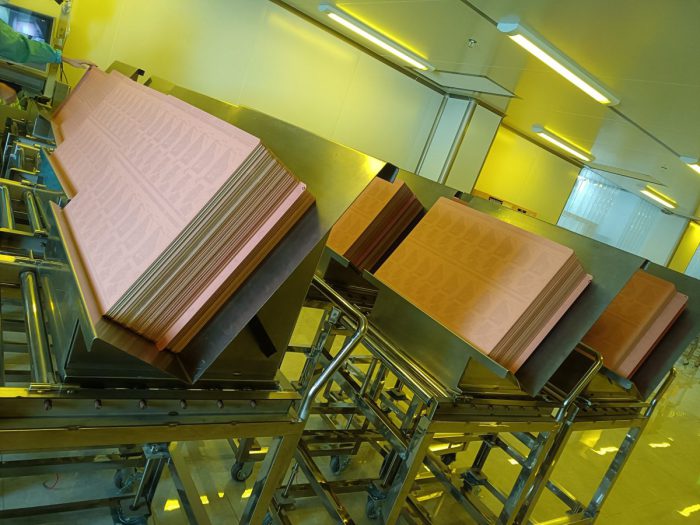
Key Properties of Liquid Photoresist and Dry Film
| Property | Liquid Photoresist (LPR) | Dry Film Photoresist (DFR) |
|---|---|---|
| Coating Method | Spray or curtain coating | Laminated sheet application |
| Resolution | High (suitable for fine-line PCBs) | Very high (ideal for ultra-fine pitch) |
| Adhesion | Strong adhesion to rough surfaces | Requires a smooth surface for best adhesion |
| Chemical Resistance | High resistance to acids and alkalis | Moderate resistance to chemicals |
| Processing Time | Faster in high-volume production | Requires additional lamination steps |
| Thickness Control | Uniform thickness with precise control | Predefined thickness (limited flexibility) |
| Environmental Impact | Solvent-based (more chemical waste) | Less waste but requires film disposal |
| Cost (Relative to DFR = 1) | 0.7 – 0.8 | 1 |
Cost Comparison
Liquid Photoresist (LPR) typically costs 20-30% less than Dry Film (DFR).
The lower material cost makes LPR a cost-effective option for large-scale production.
However, LPR requires additional processing equipment (coating systems, drying units), which may increase initial investment.
DFR is more expensive per square meter but provides efficiency benefits in batch processing and high-precision applications.
Application Process Comparison
1. Application Method
Liquid Photoresist (LPR):
Applied using spray coating or curtain coating.
Provides uniform coverage on complex or uneven surfaces.
Requires a controlled environment to prevent defects such as bubbles or uneven thickness.
Dry Film Photoresist (DFR):
Applied by hot-roll lamination.
Ensures predefined thickness, making it ideal for standardized production.
Limited adaptability for non-flat or highly textured PCB surfaces.
2. Exposure Process
Both LPR and DFR use UV light exposure through a photomask to define the circuit pattern.
DFR typically has higher resolution, making it suitable for fine-pitch applications.
LPR provides better coverage for high-density or multilayer PCBs with complex features.
3. Development & Etching
LPR is developed using a liquid chemical process, removing unexposed areas.
DFR is developed by immersing or spraying a developer solution, dissolving unwanted portions.
After development, the PCB undergoes etching to remove unwanted copper.
4. Stripping Process
LPR removal requires solvents, which need proper waste disposal.
DFR can be removed by alkaline solutions, making it more environmentally friendly.
Advantages and Limitations
Liquid Photoresist (LPR)
✅ Advantages:
Better coverage for high-density circuits – Ideal for multilayer PCBs and complex inner layers.
Excellent adhesion to rough or textured surfaces – Reduces risk of peeling or lifting.
Easier thickness control – Can be adjusted based on spray or curtain coating parameters.
Lower material cost – More cost-effective for large-scale production.
❌ Limitations:
More complex application process – Requires specialized equipment for spray or curtain coating.
Higher chemical waste – Generates solvent-based waste, requiring proper disposal.
Limited resolution – Not as fine as dry film for high-precision PCBs.
Dry Film Photoresist (DFR)
✅ Advantages:
Higher resolution and precision – Ideal for fine-pitch circuits and HDI PCBs.
Simpler and cleaner process – Laminated film eliminates the need for liquid handling.
Less chemical waste – Environmentally friendly compared to solvent-based liquid resist.
Consistent thickness control – Ensures uniformity for standardized production.
❌ Limitations:
Less flexibility for uneven surfaces – Works best on flat PCB layers.
Higher material cost – Pre-made film sheets are more expensive than liquid resist chemicals.
More complex for multilayer PCBs – Requires additional handling steps for thicker stack-ups.
Frequently Asked Questions (FAQ)
FAQ 1: Can LPR achieve the same fine-line resolution as DFR with modern equipment?
While modern LPR systems have dramatically improved, DFR generally maintains a slight edge for the absolute finest line/space requirements (e.g., below 25µm). LPR is capable of high resolution, but DFR’s pre-formed, perfectly uniform thickness provides a more consistent and reliable result for ultra-HDI applications, making it the safer choice for the most demanding designs.
FAQ 2: Which photoresist is better for a new, cost-conscious PCB factory?
For a new factory with budget constraints, Dry Film (DFR) is often the more practical starting point. The lower initial capital investment (no need for expensive coating lines) and simpler process integration reduce startup complexity and risk. The higher material cost can be managed by focusing on high-mix, low-to-medium volume production or high-value, high-precision boards.
FAQ 3: Is one photoresist more “environmentally friendly” than the other?
It’s a trade-off. DFR generates less liquid chemical waste during application but results in plastic film waste that must be disposed of or recycled. LPR avoids film waste but generates more solvent-based liquid waste from the coating and stripping processes. The “greener” option depends on a facility’s waste management capabilities for solvents versus plastics.
FAQ 4: Why is DFR not recommended for flexible PCBs?
The hot-roll lamination process for DFR can induce stress into thin, flexible materials, potentially leading to dimensional stability issues or delamination. LPR, being a liquid, is applied with minimal stress and cures into a conformal, flexible layer that moves with the substrate, making it the far more reliable choice for flex and rigid-flex applications.
FAQ 5: How does surface roughness of the copper foil influence the choice?
Surface roughness is a critical factor. Rough copper (e.g., on low-profile or VLP foils) creates microscopic peaks and valleys. LPR flows into these contours, ensuring continuous coverage and strong adhesion. DFR, being a solid sheet, may not laminate perfectly into the deepest valleys, creating potential points for undercutting during etching or even adhesion failure. For very smooth surfaces, this is less of an issue.
Best Use Cases: A Decision Matrix
| Use Case | Recommended Choice | Rationale |
|---|---|---|
| Standard Digital/Analog PCBs | Dry Film (DFR) | Provides the ideal balance of precision, speed, and cost for most standard applications. |
| High-Density Interconnect (HDI) & Ultra-Fine Line | Dry Film (DFR) | Superior resolution is critical for microvias and dense circuitry. |
| Multilayer PCBs with High Aspect Ratios | Liquid Photoresist (LPR) | Conformal coating ensures reliable coverage in deep, narrow trenches. |
| Flexible & Rigid-Flex PCBs | Liquid Photoresist (LPR) | Adapts to the flexible substrate’s surface and avoids lamination stress on thin materials. |
| High-Volume Consumer Electronics | Liquid Photoresist (LPR) | Lower material cost provides a significant competitive advantage at scale. |
| Prototyping & Short Runs | Dry Film (DFR) | Lower setup time and no capital investment make it more efficient for small batches. |
Conclusion: Making the Right Choice
The decision between liquid and dry film photoresist is not about which is universally better, but which is optimal for your specific PCB manufacturing context.
Choose Liquid Photoresist (LPR) when your primary drivers are cost-efficiency in high-volume production and you need superior performance on complex, multilayer, or flexible boards where surface adhesion is a concern. Be prepared for the upfront investment and process complexity.
Choose Dry Film Photoresist (DFR) when your primary needs are ultra-high precision, process simplicity, and consistency for advanced HDI and fine-pitch applications. It is the preferred choice for maximizing yield on complex designs and for operations seeking a cleaner, more streamlined process.

- long board pcb
- Flexible PCBs
- Special PCB
- Express Printed Circuit Board
- Pcb Prototype
- LED PCB
- PCB
- Printed Circuit Board
- Pcb meaning
- Pcb manufacturer
- Rigid pcb board
- Rigid Flex PCB
 Quote
Quote
 E-mail