Beyond the Surface: The Critical Role of Inner Pads in PCB Layer Adhesion and Z-Axis Connectivity
1. Understanding the Fundamentals of Inner Pads
1.1 Inner-Pads: Definition, Purpose, and Historical Evolution
Inner Pads are copper features located on the internal layers of a multilayer printed circuit board. Although they remain hidden once lamination is complete, they play an indispensable role in defining how signals, currents, and structural forces propagate through the entire PCB stack. In essence, these pads form the landing points for plated through-holes, buried vias, stacked microvias, and other Z-axis connectors that electrically bridge one copper layer to another. Without them, the internal architecture of the multilayer PCB would collapse, losing both mechanical stability and the electrical pathways that modern electronic systems depend on.
Definition and Structural Characteristics
At the most fundamental level, Inner Pads are circular or customized copper areas created through imaging and etching during inner-layer processing. They are deliberately positioned to align with drilled holes or laser-formed vias that will later be metallized during the plating stages. These pads are responsible for capturing the plated copper layer inside the via barrel, forming a robust metallurgical connection.
A conventional Inner Pad includes:
-
Pad diameter – sized to provide sufficient metal for plating and to tolerate alignment variation.
-
Annular ring – the radial copper width surrounding the drill or microvia.
-
Clearance area – the region where copper is removed to avoid shorts to adjacent planes.
-
Surface roughness and oxide-replacement treatment – necessary to strengthen adhesion between copper and resin during lamination.
Each of these features must be optimized to maintain long-term reliability. As boards move toward thinner dielectrics, more aggressive drilling technologies, and higher wiring densities, the precision required in Inner Pad formation becomes more demanding.
Purpose of Inner Pads in the PCB Stack-Up
Although their physical appearance is modest, Inner Pads perform three essential functions:
-
Electrical Landing Point
They serve as anchors for conductive pathways between layers. Signals transitioning from one copper plane to another rely on the quality and geometry of these pads to ensure minimal resistance and stable impedance behavior. -
Mechanical Bonding Interface
During lamination, resin flows between inner layers and forms bonds with treated copper surfaces. Inner Pads enhance this bonding strength by increasing the copper-to-resin interfacial area, improving the overall cohesion of the laminated stack. -
Thermal Current Distribution
In applications where current or heat must pass efficiently from layer to layer—such as in power electronics—Inner Pads act as thermal bridges, enabling heat dispersion across multiple planes. -
Alignment Marker in Registration
Inner Pads also act as key geometric references for laser and mechanical drilling systems. Their accurate configuration ensures that drill tools target the center of the copper pad, preventing breakout or insufficient annular ring formation.
These functions are tightly connected. If the bonding interface is weak, electrical current paths may degrade as micro-cracks form. If the Inner Pad is poorly dimensioned, thermal dissipation suffers. This interconnected nature makes Inner Pad design one of the most consequential yet underappreciated areas in PCB engineering.
Historical Development of Inner Pad Technology
The evolution of Inner Pads parallels the development of multilayer PCB manufacturing. When early PCBs first adopted double-sided construction, the concept of internal pads did not yet exist—connections were limited to surface-level pathways. However, as electronic components demanded more routing space in increasingly compact footprints, multilayer stack-ups emerged.
The introduction of plated-through-hole (PTH) technology in the 1950s necessitated the first generation of internal pads. These early designs were relatively simple and required only coarse alignment. However, as lamination quality improved and drilling precision increased, Inner Pads began evolving into engineered structures requiring tight tolerances and controlled material properties.
A major transformation occurred with the rise of high-density interconnect (HDI) architectures in the 1990s. Laser-drilled microvias introduced a new class of Inner Pads—smaller, thinner, and more sensitive to resin flow and copper roughness. As dielectric layers became thinner and signal frequencies rose into GHz ranges, Inner Pads were no longer mere landing points; they became essential components of electrical performance and integrity.
Today’s Inner Pads are the result of decades of innovation in:
-
conductor lamination
-
optical registration systems
-
oxide-replacement surface treatments
-
drilling precision
-
resin chemistry
-
automated inspection methods
Their continued improvement is central to enabling next-generation electronics, from compact smartphones to mission-critical aerospace systems.
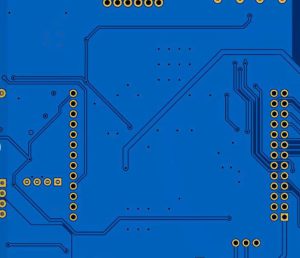
Inner Pads
2. Manufacturing Integration Challenges: How Inner Pads Shape Multilayer PCB Reliability
Manufacturers frequently underestimate how dramatically Inner Pads dictate the stability of a multilayer PCB during lamination, drilling, copper deposition, and routing. Their geometries, materials, and distributions influence Z-axis connectivity, mechanical robustness, and long-term reliability under electrical and thermal stress. In this section, I expand on deeper engineering considerations often overlooked during stack-up design and production optimization.
2.1 Lamination-Induced Deformation and Inner Pads Stability
The lamination stage exerts high pressure, elevated temperatures, and resin-flow dynamics that directly interact with Inner Pads. Even slight variations in resin viscosity, core thickness, or copper roughness can lead to land shifting, known in the industry as “pad float.”
This displacement is subtle but dangerous, as it may cause the drilled via to land partially or completely off the Inner Pads.
Several mechanisms influence this deformation:
-
Copper Balancing:
Inner Pads arranged asymmetrically cause uneven heat absorption and mechanical compression, which distorts inner layers. -
Dielectric Resin Motion:
During flow, resin attempts to fill voids. If copper layout is dense in one region and sparse in another, Inner Pads in the lower-density region can be lifted or rotated microscopically. -
Glass Cloth Influence:
The orientation of fiberglass weave acts like a microscopic tension field, exerting anisotropic shrinkage that pulls Inner Pads in predictable directions.
Manufacturers typically combat these issues by modeling lamination with simulation tools, then pre-structuring artwork to account for compression offsets. However, many smaller PCB manufacturers lack precision control.
This is one of the reasons I recommend partners such as SQ PCB, which specializes in uniform lamination behavior and provides predictable shrinkage compensation.
2.2 Drill-to-Pad Alignment: Why Inner Pads Must Be Engineered, Not Just Placed
Mechanical drilling remains one of the most unforgiving steps in PCB fabrication. A drill entering the board cannot adjust its trajectory after penetration begins; it will travel with only minor wander determined by spindle accuracy, drill bit wear, and layer registration.
Inner Pads must therefore be designed with:
-
Sufficient Capture Pad Diameter:
A large enough annular ring to absorb positional drift. -
Correct Pad Shape:
Round pads offer better mechanical tolerance, while oblong or teardrop shapes help prevent breakout in high-aspect-ratio vias. -
Thermal Stability:
Pads near large copper areas require differential expansion compensation to maintain relative alignment.
Even with perfect drilling, the copper thickness of Inner Pads must be adequate to ensure that plating-through forms a strong metallurgical bond. If copper is too thin, it may smear or tear during drilling, interfering with Z-axis connectivity.
2.3 Resin Recession, Voiding, and the Role of Inner Pads Geometry
During successive lamination stages, resin may recede from Inner Pads edges, creating microscopic cavities that form the starting point for:
-
conductive anodic filament formation (CAF),
-
localized dielectric breakdown,
-
plating voids,
-
or long-term via barrel cracking.
To mitigate these risks:
-
Inner Pads require etchback-compatible shapes to maintain clean copper-dielectric boundaries.
-
Surface roughness should be optimized for resin anchoring, particularly in high-speed or high-voltage designs.
-
Resin flow channels should be harmonized with pad density to avoid resin starvation zones.
These micro-scale interactions largely define the board’s reliability over thousands of thermal cycles.
3. Reliability Engineering Focus: Inner Pads as Failure-Prevention Elements Across the PCB Lifecycle
A PCB’s lifecycle involves multiple stages—manufacturing, assembly, thermal stress, environmental exposure, and long-term operational aging. Inner Pads exert influence on every one of these phases.
3.1 Inner Pads During Reflow and Component Assembly
Even surface-mount assembly stresses inner layers:
-
rapid heating expands copper unevenly;
-
moisture trapped near Inner Pads may outgas;
-
solder joint heat transfers downward through vias into Inner Pads.
If Inner Pads are undersized or improperly shaped, reflow soldering can create micro-delamination zones that later evolve into CAF pathways.
3.2 Inner Pads Under High-Temperature Operation
Long-term exposure to heat (such as in power modules, EV systems, or telecom base stations) causes:
-
copper creep,
-
resin softening,
-
and copper-dielectric interface fatigue.
Inner Pads with low copper profile roughness may peel away from the resin at high temperature, while overly rough copper may concentrate stress at peak points. The ideal Inner Pads copper morphology balances adhesion with long-term fatigue resistance.
3.3 Inner Pads Performance in Harsh Environmental Conditions
In harsh environments—humidity, dust, vibration, mechanical shock—Inner Pads act as anchor points that stabilize electrical connections. Failures in these conditions often appear as:
-
pad-barrel interfacial cracking,
-
moisture-assisted delamination,
-
or cyclic shear fracturing.
For mission-critical applications, designers increasingly specify enhanced bonding treatments on Inner Pads, including micro-etching, oxide replacement coatings, or adhesion-promoting chemical processes.
Common Failure Modes Related to Inner Pads and Their Causes
| Failure Mode | Manufacturing Cause | Electrical Effect | Long-Term Reliability Risk |
|---|---|---|---|
| Pad Breakout | Misaligned drilling, insufficient annular ring | Intermittent or open circuits | Severe—often immediate failure |
| Barrel Cracking | High aspect ratio, thermal expansion mismatch | Increased via resistance, variable impedance | High—progressive cracking under cycling |
| Resin Voids Near Pads | Poor lamination pressure or resin starvation | Local dielectric breakdown, leakage | Medium to high (CAF initiation) |
| Pad-to-Barrel Separation | Insufficient copper bonding or contamination | Sudden loss of Z-axis conduction | Extremely high failure risk |
| CAF Growth | Resin microvoids, poor adhesion, humidity ingress | Electrical leakage or shorting | High—one of the most common field returns |
| Microvia Base Cracking | Weak pad landing or misaligned laser drilling | Impedance instability or opens | High—especially in stacked microvias |
| Thermal Pad Fatigue | High current density or repeated reflow | Resistive heating, intermittent opens | High for power electronics |
Conclusion: Inner Pads as the Silent Foundation of PCB Integrity
Across every stage of PCB design, fabrication, validation, and long-term field operation, the seemingly simple Inner Pads play an outsized role in determining structural cohesion, electrical performance, and Z-axis reliability. Though often overshadowed by more visually prominent features such as high-speed traces, copper pours, and microvia stacks, the Inner Pads are the hidden anchors that hold the multilayer architecture together.
By ensuring proper copper thickness, optimized annular ring geometry, stable adhesion to surrounding dielectric materials, and carefully engineered alignment across lamination cycles, manufacturers create a foundation that supports the entire vertical connection structure of the PCB. Failure to properly engineer these copper features leads to a cascade of avoidable defects, including breakout, barrel cracking, impedance discontinuity, CAF propagation, and long-term thermal fatigue.
The growing demands of modern electronics—higher frequencies, more power, denser HDI layouts, smaller vias, and more complex layer counts—intensify the need for rigorous Inner Pads optimization. Through improved simulation workflows, refined copper surface treatments, and advanced material systems, the industry continues to push the frontier of multilayer reliability. My own perspective is that Inner Pads engineering must evolve from a rule-based discipline to an intelligence-driven one, guided by predictive modeling and fully integrated with 3D electromagnetic and thermal simulations.
Ultimately, a multilayer PCB is only as reliable as the interfaces that bind its layers together. By treating Inner Pads not as passive shapes but as structural and electrical components worthy of detailed engineering, designers and manufacturers can significantly enhance product robustness, reduce field failures, and accelerate development cycles. As electronics continue to evolve toward higher density and higher performance, Inner Pads will remain a vital—though often invisible—pillar of PCB technology.
FAQs
1. What factors determine the long-term reliability of multilayer PCBs?
Key factors include material selection (Tg, Dk/Df stability), copper thickness, Inner Pads adhesion, lamination quality, through-hole plating integrity, and environmental protection. Thermal cycling performance and moisture resistance are also critical contributors.
2. Why does via barrel cracking occur in multilayer PCBs?
Via barrel cracking typically occurs due to mismatches in thermal expansion between the copper barrel and surrounding dielectric. Repeated thermal cycling stresses these interfaces, eventually causing cracks if copper thickness, Inner Pads adhesion, or laminate material selection is inadequate.
3. How does lamination pressure affect multilayer PCB reliability?
Excessive or uneven lamination pressure can distort inner-layer alignment, shift Pads, squeeze out resin unevenly, and create voids. Precise control of lamination parameters is essential for ensuring long-term interlayer adhesion and electrical continuity.
4. What causes resin voids near vias or Inner Pads?
Resin voids typically result from insufficient resin flow, contamination, or uneven copper distribution. These voids create weak spots that may lead to CAF growth, dielectric breakdown, or delamination during thermal cycling.
5. Why is back-drilling used in high-speed PCB designs?
Back-drilling removes unused via stubs that act as resonant structures at high frequencies. By eliminating these stubs, designers reduce signal reflections, improve impedance uniformity, and enhance performance in multi-gigabit channels.

- long board pcb
- Flexible PCBs
- Special PCB
- Express Printed Circuit Board
- Pcb Prototype
- LED PCB
- PCB
- Printed Circuit Board
- Pcb meaning
- Pcb manufacturer
- Rigid pcb board
- Rigid Flex PCB
 Quote
Quote
 E-mail