Immersion Tin (ISn): Excellent Flatness with Tin Whisker Considerations
Introduction
In the modern electronics industry, printed circuit boards continue to evolve toward higher density, smaller package sizes, finer pitch components, and increasingly demanding electrical performance requirements. As PCB manufacturing technologies advance, surface finish selection has become one of the most critical decisions affecting solderability, reliability, assembly compatibility, signal integrity, storage life, and overall product durability. Among the many available surface finish technologies, Immersion Tin has gained considerable attention due to its excellent planarity, lead-free compliance, and suitability for fine-pitch assembly.
Immersion Tin is often viewed as a practical alternative to more expensive finishes such as ENIG while still delivering superior flatness compared to traditional Hot Air Solder Leveling processes. Because modern electronic products rely heavily on surface-mount technology, especially fine-pitch BGAs, CSPs, and miniature passive devices, PCB surface flatness directly influences assembly yield and solder joint reliability. Immersion Tin offers a smooth and highly solderable metallic surface that supports these advanced manufacturing requirements.
At the same time, engineers and PCB manufacturers must carefully evaluate the limitations associated with this finish. One of the most discussed technical concerns is tin whisker formation. Although the industry has developed numerous mitigation methods, tin whiskers remain a long-term reliability consideration in certain operating environments. Therefore, selecting Immersion Tin requires balancing manufacturing cost, assembly compatibility, environmental compliance, storage conditions, and long-term reliability expectations.
From my perspective, Immersion Tin represents one of the most interesting examples of engineering compromise in PCB manufacturing. It is neither the cheapest finish nor the most premium one. Instead, it occupies a middle position where performance, manufacturability, and cost intersect. When applied correctly and matched with appropriate product requirements, it can provide outstanding results. However, poor process control or improper application scenarios may expose weaknesses that are sometimes underestimated during initial product design stages.
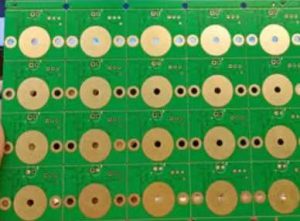
Immersion Tin
Understanding Immersion Tin Technology
Immersion Tin Definition and Basic Principles
Immersion Tin is a lead-free metallic surface finish deposited chemically onto exposed copper pads of a printed circuit board. The process forms a thin layer of tin through a displacement chemical reaction between tin ions in solution and the copper substrate.
Unlike electrolytic plating methods, Immersion Tin does not require external electrical current during deposition. Instead, the chemical reaction naturally replaces surface copper atoms with tin atoms until the copper surface becomes fully covered. Once the copper is isolated from the solution, the reaction slows significantly, creating a self-limiting deposition process.
The resulting tin layer is typically very thin compared to electroplated coatings. However, despite its limited thickness, it provides sufficient solderability and oxidation protection for many electronic assembly applications.
The popularity of Immersion Tin increased significantly after the implementation of global environmental regulations restricting lead-containing materials in electronics manufacturing. Since tin-based finishes comply well with RoHS requirements, many PCB manufacturers adopted this finish as a viable environmentally friendly solution.
One of the major technical attractions of Immersion Tin lies in its exceptionally flat surface. Unlike HASL finishes that may produce uneven solder coating thickness, chemical tin deposition creates a highly planar surface suitable for fine-pitch devices.
From a manufacturing perspective, Immersion Tin also integrates relatively well into existing PCB fabrication lines, making it attractive for medium-volume and high-volume production environments.
Immersion Tin Versus Alternative Finish Economics
When comparing finishes economically, manufacturers must evaluate total lifecycle costs rather than only initial processing expenses.
Compared with HASL
Advantages:
- Better flatness
- Improved fine-pitch compatibility
Disadvantages:
- Shorter shelf life
- Higher chemistry sensitivity
Compared with ENIG
Advantages:
- Lower cost
- Simpler chemistry
- Better environmental profile regarding cyanide-free systems
Disadvantages:
- Lower corrosion resistance
- Tin whisker concerns
- Reduced long-term storage stability
Compared with OSP
Advantages:
- Better mechanical durability
- Improved multiple reflow tolerance
Disadvantages:
- Higher cost
- More complex processing
In many cases, Immersion Tin occupies an economically balanced middle ground.
Immersion Tin Reliability in Long-Term Electronic Operation
Long-term reliability remains one of the most important evaluation criteria for any PCB surface finish. Although initial solderability and manufacturing compatibility are critical during production, the actual operational lifetime of electronic equipment often determines whether a surface finish strategy can truly be considered successful. In the case of Immersion Tin, reliability discussions frequently focus on environmental stability, intermetallic compound evolution, whisker growth, oxidation behavior, and mechanical durability under thermal stress.
One important advantage of Immersion Tin is that the tin surface readily participates in solder joint formation during assembly. Because the tin layer dissolves into molten solder during reflow, the resulting solder joints often exhibit good metallurgical continuity. This characteristic can produce highly reliable interconnections when process conditions are properly optimized.
However, reliability challenges may emerge if storage conditions are not tightly controlled prior to assembly. Excessive humidity, airborne sulfur contamination, or prolonged storage can lead to surface oxidation that reduces solderability consistency. Once oxidation progresses beyond a certain level, solder wetting may become uneven, potentially causing:
- Cold solder joints
- Incomplete wetting
- Voiding
- Increased electrical resistance
- Reduced mechanical strength
Another factor affecting reliability is copper diffusion into the tin layer. Since Immersion Tin coatings are relatively thin, copper atoms gradually migrate toward the surface over time. This diffusion contributes to intermetallic compound formation, which may eventually influence solderability performance if storage durations become excessive.
In my opinion, many engineers underestimate the importance of logistics and storage management when evaluating PCB finishes. A technically excellent finish can still perform poorly if warehousing, packaging, and transportation environments are not properly controlled. Reliability is therefore not determined solely by chemistry, but by the entire manufacturing and supply chain ecosystem.
Immersion Tin Versus Other PCB Surface Finishes
Immersion Tin Versus HASL
Hot Air Solder Leveling remains one of the oldest and most widely used PCB finishes.
Advantages of Immersion Tin Over HASL
| Performance Area | Immersion Tin | HASL |
|---|---|---|
| Surface flatness | Excellent | Moderate |
| Fine-pitch compatibility | Strong | Limited |
| SMT assembly consistency | High | Moderate |
| Lead-free compatibility | Excellent | Depends on alloy |
| Surface uniformity | Very good | Variable |
Advantages of HASL Over Immersion Tin
| Performance Area | HASL | Immersion Tin |
|---|---|---|
| Shelf life | Longer | Moderate |
| Mechanical durability | Strong | Moderate |
| Oxidation resistance | Better | Lower |
| Process simplicity | Easier | More chemistry-sensitive |
| Cost | Often lower | Moderate |
HASL continues to dominate cost-sensitive applications where ultra-flat surfaces are not mandatory.
Conclusion
Immersion Tin occupies a unique and important position within modern PCB manufacturing technology. Its combination of excellent flatness, strong solderability, lead-free compliance, and moderate cost makes it attractive for many advanced electronic applications, especially those involving fine-pitch surface-mount assembly.
The finish performs particularly well in environments where planar surfaces are essential for manufacturing consistency. High-density interconnect boards, miniature consumer electronics, telecommunications hardware, and certain industrial systems can all benefit from its smooth surface characteristics and reliable soldering behavior.
At the same time, Immersion Tin is not without limitations. Tin whisker formation remains one of the most significant long-term reliability concerns associated with pure tin surfaces. Oxidation sensitivity, intermetallic growth, and storage-life management also require careful engineering attention. Successful implementation therefore depends not only on selecting the finish itself, but also on maintaining strict process control, proper packaging, appropriate storage conditions, and suitable application matching.
From my perspective, Immersion Tin represents a classic engineering balance rather than a universally superior solution. It demonstrates how PCB manufacturing continuously involves tradeoffs between cost, reliability, manufacturability, environmental compliance, and long-term product performance. Engineers who understand these tradeoffs deeply are far more likely to make surface finish decisions that align with real-world product requirements rather than simply following industry trends.
As electronics continue moving toward higher speeds, smaller geometries, and greener manufacturing standards, Immersion Tin will likely remain an important option within the broader ecosystem of PCB surface finishes. Continued improvements in chemistry control, whisker mitigation, and process optimization may further strengthen its position in the years ahead.
FAQ
1. What is the difference between Immersion Tin and ENIG?
Immersion Tin uses a chemically deposited tin layer directly over copper, while ENIG uses electroless nickel followed by immersion gold. ENIG generally offers longer shelf life and better oxidation resistance, whereas Immersion Tin usually provides lower cost and excellent flatness for fine-pitch assembly.
2. What causes tin whiskers in Immersion-Tin finishes?
Tin whiskers are caused by internal mechanical stresses within the tin coating. Factors such as intermetallic compound growth, grain structure, thermal cycling, and environmental conditions may contribute to whisker formation over time.
3. Is Immersion-Tin suitable for high-frequency PCB applications?
Yes. Immersion Tin is often suitable for high-frequency and high-speed PCB applications because its flat and smooth surface helps maintain consistent conductor geometry and supports controlled impedance performance.
4. How should Immersion-Tin PCBs be stored?
Immersion Tin PCBs should typically be stored in low-humidity environments using vacuum-sealed or nitrogen-protected packaging. Proper storage minimizes oxidation and preserves solderability over extended periods.
5. Why is surface flatness important in modern PCB assembly?
Surface flatness directly affects solder paste printing accuracy, component alignment, solder joint consistency, and automated assembly yield. Fine-pitch devices such as BGAs and CSPs especially require highly planar PCB finishes to ensure reliable solder connections.

- long board pcb
- Flexible PCBs
- Special PCB
- Express Printed Circuit Board
- Pcb Prototype
- LED PCB
- PCB
- Printed Circuit Board
- Pcb meaning
- Pcb manufacturer
- Rigid pcb board
- Rigid Flex PCB
 Quote
Quote
 E-mail