HASL (Hot Air Solder Leveling): Affordable Reliability for Through-Hole Designs
Introduction
In the constantly evolving world of printed circuit board (PCB) manufacturing, surface finish selection remains one of the most influential decisions affecting performance, cost, and long-term reliability. Among the many available finishes, HASL (Hot Air Solder Leveling) continues to stand as a widely used and trusted solution, particularly for through-hole designs and cost-sensitive applications. While newer finishes such as ENIG and OSP have gained traction in high-density and fine-pitch electronics, HASL maintains a strong presence due to its simplicity, robustness, and proven reliability.
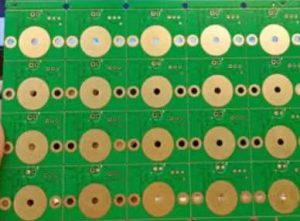
Hot Air Solder Leveling
1. Understanding the Fundamentals of Hot Air Solder Leveling (Hot Air Solder Leveling)
Hot Air Solder Leveling (HASL) is a surface finishing process in PCB manufacturing in which molten solder is applied to exposed copper pads and then leveled using high-pressure hot air knives. The result is a protective solder coating that ensures excellent solderability and protects the copper from oxidation.
The process begins after the PCB fabrication steps are complete. The board is first cleaned thoroughly to remove contaminants. It is then dipped into a bath of molten solder, typically composed of tin-lead (SnPb) or lead-free alloys such as SAC (tin-silver-copper). Once the board is withdrawn, hot air knives blow across the surface to remove excess solder, leaving behind a relatively uniform coating.
From a technical standpoint, the defining characteristics of Hot Air Solder Leveling include:
- Strong metallurgical bonding between solder and copper
- Thick coating compared to other finishes
- High resistance to oxidation
- Excellent wetting properties during assembly
However, it is important to note that HASL does not produce a perfectly flat surface. The inherent variability in solder thickness can lead to uneven pad geometry, which becomes a limitation in fine-pitch or high-density designs.
2. Process Flow and Mechanism of Hot Air Solder Leveling (Hot Air Solder Leveling)
The HASL process involves several tightly controlled stages, each contributing to the final quality of the PCB surface.
2.1 Surface Preparation
Before solder application, the PCB undergoes micro-etching and cleaning. This ensures proper adhesion and removes oxidation from copper surfaces. Any contamination at this stage can significantly affect solder coating uniformity.
2.2 Flux Application
Flux is applied to improve solder wetting. It removes oxides and promotes a clean interface between solder and copper. The type and quality of flux directly influence the final coating quality.
2.3 Solder Immersion
The board is immersed in molten solder at temperatures typically ranging from 245°C to 265°C for lead-free processes. This high-temperature exposure creates a metallurgical bond between copper and solder.
2.4 Air Knife Leveling
Hot air knives blow across both sides of the PCB to remove excess solder. This step determines coating thickness and uniformity. Parameters such as air pressure, temperature, and angle must be carefully optimized.
2.5 Cooling and Solidification
After leveling, the solder rapidly cools and solidifies, forming the final protective layer.
From an engineering perspective, the balance between solder thickness and uniformity is the core challenge of HASL. Too much solder leads to uneven surfaces; too little may compromise protection and solderability.
3. Cost Structure and Economic Analysis of Hot Air Solder Leveling (Hot Air Solder Leveling)
One of the primary reasons HASL remains popular is its cost-effectiveness. Compared to advanced finishes, it requires simpler equipment and fewer chemical processes.
3.1 Equipment and Process Cost
HASL systems are relatively straightforward:
- Solder bath
- Air knife system
- Fluxing and cleaning modules
This simplicity reduces capital investment and maintenance costs. Unlike ENIG, which requires multiple chemical baths and strict process control, HASL is more forgiving and operationally efficient.
3.2 Material Costs
The main material cost comes from solder alloy. Lead-free solder is more expensive than traditional tin-lead, but overall costs remain lower than gold-based finishes.
3.3 Yield and Rework Considerations
HASL generally offers high yield rates because:
- The process is robust
- Defects are easier to detect
- Rework is straightforward
However, in high-density designs, uneven surfaces may reduce assembly yield, indirectly increasing costs.
3.4 Cost vs. Application Suitability
In my view, the cost advantage of HASL becomes most significant in:
- Through-hole assemblies
- Low to medium density PCBs
- Industrial and power electronics
For such applications, HASL delivers an optimal balance between performance and affordability.
4. Lead-Free Evolution in Hot Air Solder Leveling (Hot Air Solder Leveling)
With the global push toward environmentally compliant electronics, lead-free HASL has become the standard in most regions. The transition from traditional tin-lead solder to lead-free alloys—primarily SAC (Sn-Ag-Cu)—has introduced both opportunities and challenges.
From a process standpoint, lead-free Hot Air Solder Leveling requires higher operating temperatures, typically 260°C or above. This increase has several implications. First, thermal stress on the PCB substrate becomes more pronounced, particularly for thinner laminates or multilayer boards. Second, the wetting behavior of lead-free solder differs slightly from tin-lead, often resulting in a somewhat rougher surface finish.
Despite these differences, lead-free HASL maintains excellent solderability and reliability. In fact, for many through-hole applications, the performance gap between leaded and lead-free HASL is minimal. However, tighter process control is required to ensure consistent coating thickness and avoid defects such as icicles or solder bridging.
In my view, the shift to lead-free HASL reflects the broader trend in PCB manufacturing: environmental responsibility must coexist with engineering practicality. While lead-free processes introduce complexity, they do not diminish the fundamental value of HASL when properly managed.
Comparative Table of Hot Air Solder Leveling (Hot Air Solder Leveling) and Other Surface Finishes
| Parameter | Hot Air Solder Leveling (HASL) | ENIG | OSP | Immersion Silver | Immersion Tin |
|---|---|---|---|---|---|
| Process Complexity | Low | High | Very Low | Medium | Medium |
| Cost Level | Low | High | Very Low | Medium | Medium |
| Surface Flatness | Poor to Moderate | Excellent | Excellent | Very Good | Very Good |
| Solderability | Excellent | Excellent | Good (time-sensitive) | Excellent | Good |
| Shelf Life | Long | Long | Short | Medium | Medium |
| Mechanical Strength | High | Moderate | Low | Moderate | Moderate |
| Thermal Shock Resistance | Good | Moderate | Low | Moderate | Moderate |
| Suitability for Fine-Pitch SMT | Limited | Excellent | Excellent | Good | Good |
| Through-Hole Compatibility | Excellent | Good | Moderate | Moderate | Moderate |
| Environmental Compliance | Lead-free available | Fully compliant | Fully compliant | Fully compliant | Fully compliant |
| Rework Capability | Easy | Moderate | Difficult | Moderate | Moderate |
| Typical Applications | Industrial, power electronics, through-hole designs | High-end electronics, HDI boards | Consumer electronics | RF/high-frequency boards | Automotive, industrial |
Conclusion
Hot Air Solder Leveling continues to demonstrate that maturity in a manufacturing process does not equate to obsolescence. Instead, it reflects a level of optimization and industry trust that newer technologies often require decades to achieve. In the context of PCB surface finishes, HASL represents a stable equilibrium between cost, manufacturability, and functional reliability—especially in applications where mechanical robustness and solder joint integrity are more critical than ultra-flat surface requirements.
From a holistic engineering perspective, the value of Hot Air Solder Leveling lies in its predictability. Designers and manufacturers understand its behavior under thermal stress, its interaction with various solder alloys, and its long-term performance in diverse environments. This accumulated knowledge significantly reduces risk in production, which is often more valuable than marginal performance improvements offered by more advanced finishes.
Economically, HASL remains highly competitive. Its relatively simple process flow, lower material costs, and high yield rates make it an attractive choice for large-scale production. When combined with capable manufacturing partners such as SQ PCB, the process can achieve a level of consistency that mitigates many of its traditional drawbacks. In practical terms, a well-controlled HASL process can deliver results that are more than sufficient for the majority of industrial and through-hole applications.
However, it is equally important to acknowledge its limitations. The inherent unevenness of the solder coating restricts its use in high-density interconnect (HDI) designs and fine-pitch surface-mount technology (SMT). As electronic devices continue to miniaturize, this limitation becomes more pronounced. Yet, rather than viewing this as a weakness, it should be interpreted as a boundary condition—one that helps engineers make more informed and application-specific decisions.
Looking forward, the future of Hot Air Solder Leveling is not about competing with advanced finishes like ENIG or immersion silver in high-end applications. Instead, its role will likely become more specialized and refined. Improvements in air knife technology, process automation, and material science will continue to enhance its uniformity and environmental compliance. At the same time, its core strengths—durability, affordability, and reliability—will ensure its continued relevance.
FAQ
1. How does HASL compare in cost to ENIG?
HASL is significantly more affordable due to simpler processing and lower material costs, making it a preferred choice for cost-sensitive applications.
2. Is Hot Air Solder Leveling suitable for fine-pitch components?
Generally, it is not ideal for fine-pitch designs due to uneven surface thickness. Flat finishes like ENIG are preferred for high-density applications.
3. What are the main advantages of Hot Air Solder Leveling?
Its primary advantages include low cost, excellent solderability, strong mechanical joints, and high durability in harsh environments.
4. How does Hot Air Solder Leveling affect PCB warpage?
The high temperatures involved in the process can introduce thermal stress, potentially causing warpage in thin or large PCBs.
5. Is lead-free HASL as reliable as traditional tin-lead HASL?
Yes, when properly controlled, lead-free HASL offers comparable reliability, though it requires higher processing temperatures and tighter process control.

- long board pcb
- Flexible PCBs
- Special PCB
- Express Printed Circuit Board
- Pcb Prototype
- LED PCB
- PCB
- Printed Circuit Board
- Pcb meaning
- Pcb manufacturer
- Rigid pcb board
- Rigid Flex PCB
 Quote
Quote
 E-mail