High-Tg Materials Face Double Whammy: Raw Material Inflation + AI-Driven Demand
Introduction
The global PCB industry is entering a period of structural transformation. Artificial intelligence servers, high-performance computing platforms, electric vehicles, and advanced networking infrastructure are pushing thermal and electrical requirements to unprecedented levels. At the same time, raw material inflation is reshaping the cost structure of laminate manufacturing.
At the center of this convergence stand High-Tg Materials—the backbone of high-reliability multilayer boards and advanced HDI structures. Once considered a premium niche solution, they are now becoming mainstream in high-end electronics. However, this mainstreaming comes with pressure: soaring resin costs, copper volatility, glass fabric inflation, and surging AI-driven demand.
This article explores the technical foundation of High-Tg Materials, their cost drivers, performance impact on PCBs, and how manufacturers must respond strategically.
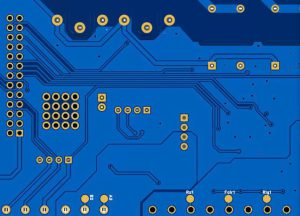
High-Tg Materials
1. Definition and Technical Foundation of High-Tg Materials
1.1 What Are High-Tg Materials?
High-Tg Materials refer to PCB substrate laminates whose glass transition temperature (Tg) exceeds conventional FR-4 standards. Traditional FR-4 materials typically have Tg values around 130°C–140°C, while High-Tg Materials commonly range from 170°C to above 200°C.
The glass transition temperature represents the point at which the resin matrix shifts from a rigid, glass-like state to a rubber-like state. Beyond Tg, dimensional stability decreases rapidly, and mechanical performance can degrade.
Therefore, High-Tg Materials are engineered to maintain structural stability at elevated temperatures, making them suitable for:
-
AI servers
-
Data centers
-
Automotive ECUs
-
5G base stations
-
Industrial power control systems
1.2 Resin Chemistry Behind High-Tg Materials
High-Tg Materials typically use modified epoxy systems, polyimide blends, or advanced resin formulations that enhance cross-link density. Increased cross-link density improves:
-
Thermal resistance
-
Mechanical strength
-
Delamination resistance
-
Moisture resistance
However, these improvements require more complex chemistry and higher-grade raw materials, which directly increase cost sensitivity.
2. Cost Drivers Shaping High-Tg Materials
The double whammy facing High-Tg Materials comes from two forces: raw material inflation and AI-driven consumption growth.
2.1 Copper Foil Volatility and Its Impact on High-Tg Materials
Copper foil represents a major cost component in laminate production. When copper prices fluctuate due to mining constraints or geopolitical disruptions, laminate costs rise accordingly.
High-layer-count server boards often require thicker copper weights, amplifying this effect. As AI clusters demand more power delivery layers, copper consumption per PCB increases significantly.
2.2 Glass Cloth Inflation and High-Tg Materials
Electronic-grade glass fiber fabric provides mechanical strength and dimensional stability. Tight supply and energy cost increases have pushed glass fabric prices upward.
Because High-Tg Materials often use higher-density or specialty glass cloth to withstand reflow cycles and thermal stress, they are particularly sensitive to these increases.
2.3 Resin and Petrochemical Dependency of High-Tg Materials
Resins derive from petrochemical feedstocks. Energy price volatility directly impacts resin production cost. Modified epoxy and high-performance curing agents used in High-Tg Materials further amplify this sensitivity.
Additionally, environmental compliance requirements have increased production costs for chemical suppliers.
3. AI-Driven Demand Surge and Its Effect on High-Tg Materials
AI infrastructure is changing the consumption profile of PCBs.
3.1 Server Boards and Thermal Requirements
AI accelerators generate massive heat loads. Multilayer PCBs with high copper density face severe thermal expansion stress.
High-Tg Materials reduce Z-axis expansion during solder reflow and long-term operation. This prevents:
-
Barrel cracking
-
Pad lifting
-
CAF (Conductive Anodic Filament) formation
As hyperscale data centers scale rapidly, the demand curve for High-Tg Materials steepens sharply.
3.2 Power Delivery Network (PDN) Complexity
AI GPUs demand stable high-current delivery. Increased copper thickness and stacked microvias raise mechanical stress. High-Tg Materials ensure via reliability under repeated thermal cycling.
3.3 Long-Term Reliability in Continuous Operation
Unlike consumer electronics, AI servers operate 24/7. Continuous thermal cycling stresses laminate materials. High-Tg Materials improve mean time between failures (MTBF).
4. Performance Impact of High-Tg Materials on PCB Reliability
4.1 Dimensional Stability
Lower CTE (Coefficient of Thermal Expansion) below Tg ensures layer alignment in high-layer-count boards. This improves registration accuracy and yield rates.
4.2 Delamination Resistance
Higher Tg enhances resistance to multiple lead-free soldering cycles. This is essential for complex backplanes and high-density server motherboards.
4.3 Electrical Performance Stability
Stable dielectric properties at elevated temperature improve signal integrity in high-speed designs.
5. High-Tg Materials and Multilayer PCB Stack-Up Optimization
As PCB layer counts exceed 20, 30, or even 50 layers in AI backplanes and accelerator modules, stack-up engineering becomes increasingly complex. High-Tg Materials play a foundational role in ensuring structural stability throughout lamination cycles and long-term operation.
5.1 High-Tg Materials and Z-Axis Expansion Control
In multilayer boards, Z-axis expansion mismatch between resin and copper can induce severe stress on plated through holes (PTH). During solder reflow cycles (typically 245–260°C for lead-free processes), materials with insufficient Tg soften, leading to excessive expansion.
High-Tg Materials exhibit:
-
Lower Z-axis CTE below Tg
-
Reduced expansion above Tg
-
Improved barrel crack resistance
This becomes critical in thick boards used for AI server power distribution networks.
5.2 High-Tg Materials in Sequential Lamination
Advanced HDI boards rely on multiple lamination cycles. Each press cycle introduces thermal stress accumulation. Materials with low Tg degrade faster during repeated heating.
Using High-Tg Materials ensures:
-
Dimensional consistency across lamination cycles
-
Stable resin flow behavior
-
Strong interlayer bonding
Without proper material selection, yield loss increases significantly in high-layer-count fabrication.
6. High-Tg Materials and Thermal Cycling Reliability
Thermal cycling performance is one of the most important reliability benchmarks for industrial and AI electronics.
6.1 High-Tg Materials in Thermal Shock Testing
Thermal shock testing simulates rapid temperature transitions, often from -40°C to +125°C or higher. The repeated expansion and contraction cycles challenge the laminate’s structural integrity.
High-Tg Materials reduce:
-
Microvia fatigue cracking
-
Resin-copper interface separation
-
Internal delamination
This directly improves field reliability in data center environments where temperature fluctuations occur during load transitions.
6.2 High-Tg Materials and CAF Resistance
Conductive Anodic Filament (CAF) formation occurs under high humidity and voltage bias conditions. Resin systems with higher cross-link density typically provide better resistance.
High-Tg Materials often incorporate improved resin chemistry to reduce ion migration pathways. This makes them suitable for high-voltage AI server boards.
Comparative Table: Standard FR-4 vs High-Tg Materials
| Parameter | Standard FR-4 | High-Tg Materials |
|---|---|---|
| Typical Tg | 130–140°C | 170–200°C+ |
| Z-axis CTE | Higher | Lower |
| Thermal Cycling Resistance | Moderate | High |
| Cost | Lower | Higher |
| AI Server Suitability | Limited | Highly Recommended |
| Lead-Free Compatibility | Basic | Excellent |
Conclusion
The pressure facing High-Tg Materials today is not the result of a temporary market fluctuation—it is the outcome of two powerful structural forces colliding at the same time. On one side, raw material inflation continues to affect copper foil, specialty glass cloth, and high-performance resin systems. On the other side, AI-driven demand is accelerating PCB complexity, increasing layer counts, raising copper weights, and pushing thermal envelopes beyond what conventional FR-4 can safely support.
This dual impact reshapes both the economic and technical landscape of PCB manufacturing. High-Tg Materials are no longer optional upgrades reserved for extreme environments; they are rapidly becoming baseline requirements for AI servers, high-speed networking, automotive control systems, and industrial power electronics. Their higher glass transition temperature, improved dimensional stability, and superior resistance to thermal cycling directly translate into enhanced reliability, reduced failure rates, and longer service life.
However, the cost structure cannot be ignored. Resin chemistry complexity, petrochemical price volatility, and glass fiber supply constraints create ongoing upward pressure. Manufacturers who rely solely on short-term cost control may struggle in this environment. Instead, a balanced strategy is required—one that integrates smart stack-up engineering, selective material deployment, and close collaboration with experienced fabrication partners.
In my perspective, the industry is entering a material-driven innovation phase. The conversation is shifting from “How do we reduce laminate cost?” to “How do we optimize material performance per dollar spent?” This distinction is critical. The value of High-Tg Materials lies not simply in their higher Tg number, but in their ability to safeguard high-density interconnect structures, maintain signal stability, and withstand repeated thermal stress under continuous AI workloads.
The double whammy of inflation and demand is undeniably challenging. Yet it also presents an opportunity for differentiation. PCB manufacturers and OEMs that understand the deeper technical implications of material selection—and who proactively adapt their sourcing and design strategies—will not merely absorb the shock; they will convert it into competitive advantage.
In the AI era, performance reliability is currency. High-Tg Materials, despite cost volatility, remain one of the most critical investments in securing that reliability.
FAQ
1. Are High-Tg Materials required for automotive electronics?
In many high-power or under-hood applications, they are strongly recommended due to elevated operating temperatures.
2. Why are High-Tg Materials important for AI server PCBs?
They provide higher thermal stability, lower Z-axis expansion, and improved reliability under continuous high-temperature operation.
3. How does Tg affect PCB reliability?
A higher Tg reduces material softening at elevated temperatures, minimizing delamination and via cracking.
4. Do High-Tg Materials significantly increase PCB cost?
Yes, they typically cost more due to advanced resin systems and specialized glass fabric, but they reduce long-term failure risk.
5. Can High-Tg Materials improve signal integrity?
Yes. Stable dielectric properties at higher temperatures contribute to more consistent high-speed performance.

- long board pcb
- Flexible PCBs
- Special PCB
- Express Printed Circuit Board
- Pcb Prototype
- LED PCB
- PCB
- Printed Circuit Board
- Pcb meaning
- Pcb manufacturer
- Rigid pcb board
- Rigid Flex PCB
 Quote
Quote
 E-mail