Heavy Copper PCBs Feel the Heat: 40% Copper Surge Ripples Through BOM Costs
Introduction
In recent years, the global electronics industry has been experiencing significant fluctuations in raw material prices. Among these materials, copper remains one of the most critical components in printed circuit board (PCB) manufacturing. As demand for electrification, renewable energy systems, electric vehicles, industrial automation, and high-power electronics continues to surge, the price of copper has risen dramatically. A 40% increase in copper prices can send shockwaves throughout the entire electronics supply chain, especially for products that rely heavily on thick copper layers. This is where Heavy Copper PCBs come into focus.
Heavy copper technology has become essential in power electronics because conventional circuit boards cannot handle high current density, extreme thermal loads, or mechanical stresses in demanding applications. Power converters, battery management systems, motor drives, aerospace equipment, and industrial controllers increasingly depend on boards with thicker copper traces and planes to maintain reliability and efficiency.
However, the recent spike in copper prices has significantly altered the cost structure of these boards. Since copper weight directly influences both raw material consumption and manufacturing complexity, a 40% increase in copper prices can dramatically inflate the bill of materials (BOM). Manufacturers, designers, and procurement teams are now facing difficult decisions: how to maintain performance while controlling costs.
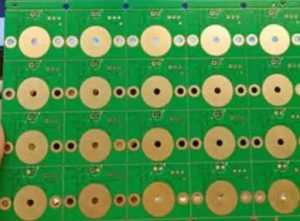
Heavy copper PCBs
Heavy Copper PCBs Definition and Technical Foundations
Heavy copper PCBs refer to printed circuit boards that use copper thickness significantly greater than standard PCB designs. While conventional boards typically use copper weights of 1 oz/ft² (35 µm) or 2 oz/ft² (70 µm), heavy copper boards usually start at 3 oz and can reach up to 20 oz or even higher in specialized applications.
The defining characteristic of these boards is the use of thick copper layers that enable high current carrying capacity and superior thermal performance. Instead of relying solely on narrow copper traces, designers utilize thicker copper planes and conductors that distribute electrical load more effectively.
Typical copper thickness ranges include:
| Copper Weight | Thickness | Typical Applications |
|---|---|---|
| 3 oz | ~105 µm | Industrial control boards |
| 6 oz | ~210 µm | Motor drives |
| 10 oz | ~350 µm | Power conversion systems |
| 20 oz+ | >700 µm | Military and high-power systems |
The thicker copper allows circuits to handle much larger currents without overheating. For example, a standard 1 oz copper trace may handle only a few amps, while a heavy copper trace can safely conduct tens or even hundreds of amps depending on its width.
Another key advantage is thermal conductivity. Copper acts as an efficient heat spreader, allowing heat generated by power devices to dissipate quickly. This is particularly important in applications such as electric vehicle inverters and solar power systems, where thermal management determines system reliability.
Heavy copper boards also provide improved mechanical strength. Thick copper features make the board more resistant to vibration, fatigue, and thermal cycling, which are common stress factors in automotive and aerospace environments.
Despite these advantages, heavy copper technology introduces manufacturing challenges. Etching thick copper requires more aggressive chemical processes, tighter process control, and specialized equipment. As copper thickness increases, achieving fine trace resolution becomes more difficult, which can limit circuit density.
Therefore, heavy copper boards are typically used in applications where electrical and thermal performance are more important than miniaturization.
Heavy Copper PCBs Manufacturing Processes and Technological Challenges
Producing boards with thick copper layers requires modifications to standard PCB manufacturing processes. Many conventional fabrication steps must be adapted to accommodate the additional material thickness.
One of the first challenges appears during the inner layer imaging stage. Thick copper surfaces may create uneven resist coatings, making precise photoimaging more difficult. Manufacturers must carefully control lamination pressure and photoresist thickness to maintain pattern accuracy.
Etching is another major challenge. Removing thick copper requires longer etching times and stronger chemical solutions. However, extended etching increases the risk of undercutting, where the chemical etchant erodes copper beneath the resist mask, causing traces to become narrower than intended.
To address this issue, manufacturers often use modified etching techniques, including step-etching processes or specialized etching chemistries that provide better vertical profile control.
Plating processes also require adjustments. Heavy copper boards often rely on advanced electroplating techniques to build up copper thickness in specific areas. This requires precise control of current density, bath chemistry, and agitation to ensure uniform deposition.
Drilling thick copper layers presents another difficulty. Standard drill bits may wear quickly when penetrating multiple heavy copper layers, increasing tool replacement frequency and production costs. Laser drilling can sometimes be used for microvias, but mechanical drilling remains the primary method for most heavy copper boards.
Thermal stress during lamination is another concern. Thick copper expands and contracts differently from dielectric materials, which can introduce mechanical stress inside the board structure. Manufacturers must carefully select laminate materials and control lamination parameters to prevent delamination or internal cracks.
Because of these challenges, experienced fabrication partners are critical. Companies such as SQ PCB provide specialized manufacturing processes tailored for high-current and high-power circuit boards, ensuring that thick copper layers maintain consistent quality and reliability throughout production.
Heavy Copper PCBs Performance Benefits in Power Electronics
Despite the cost challenges, heavy copper technology remains indispensable for many high-power applications.
One of the primary advantages is current carrying capacity. Thick copper traces can safely conduct higher currents without excessive heat generation. This allows designers to eliminate bulky busbars or external wiring, reducing system complexity.
Thermal performance is another major benefit. Copper acts as a heat spreader, distributing heat across the board surface and preventing localized hotspots. This improves component reliability and extends product lifespan.
Heavy copper boards also improve electromagnetic performance. Thick copper planes provide better grounding and shielding, reducing noise and electromagnetic interference.
Mechanical durability is another advantage. Thick copper features strengthen the board structure, making it more resistant to vibration and mechanical stress.
These benefits make heavy copper technology particularly suitable for:
-
Electric vehicle power electronics
-
Industrial motor drives
-
Solar inverters
-
Aerospace power systems
-
High-current battery management systems
In these environments, reliability and safety are critical, and the performance advantages of heavy copper often justify the additional cost.
Heavy Copper PCBs Design Optimization Strategies
Design engineers can implement several strategies to mitigate rising copper costs while maintaining system performance.
One approach is selective copper thickness. Instead of using heavy copper across the entire board, designers can apply thick copper only in high-current areas while keeping other regions at standard thickness.
Another strategy is copper plane optimization. By carefully designing copper distribution, engineers can improve current flow efficiency without unnecessarily increasing copper weight.
Thermal vias can also help distribute heat more effectively, allowing thinner copper layers to achieve similar thermal performance.
Advanced simulation tools are increasingly used to model current density and thermal behavior before fabrication. These tools help engineers optimize trace widths, copper thickness, and layout configurations.
Working with experienced PCB manufacturers can also improve design efficiency. For instance, SQ PCB provides engineering support to help customers optimize heavy copper layouts while maintaining manufacturability and cost efficiency.
Conclusion
The recent surge in copper prices highlights the delicate balance between material costs and technological performance in the electronics industry. Heavy copper circuit boards, which rely heavily on thick copper layers to deliver high current capacity and superior thermal performance, are particularly sensitive to fluctuations in copper pricing.
Despite these economic pressures, heavy copper technology remains essential for modern power electronics. Applications such as electric vehicles, renewable energy systems, and industrial automation depend on the reliability and efficiency that thick copper structures provide.
Manufacturers and designers must adopt a holistic approach to address these challenges. Material optimization, intelligent layout strategies, and close collaboration with experienced fabrication partners can help mitigate rising costs while maintaining performance standards.
Companies such as SQ PCB play an important role in this ecosystem by providing specialized manufacturing expertise for high-current and high-power PCB designs. Their ability to manage complex fabrication processes ensures that heavy copper boards meet the strict quality and reliability requirements demanded by modern electronic systems.
Looking ahead, the continued expansion of electrified technologies will sustain strong demand for heavy copper boards. At the same time, innovations in PCB manufacturing, materials engineering, and thermal management will help the industry adapt to ongoing raw material volatility.
In a world increasingly driven by high-power electronics, heavy copper technology will remain a cornerstone of reliable and efficient circuit design.
FAQ
1. How can designers reduce costs when using heavy copper boards?
Cost can be reduced by selectively applying heavy copper only in high-current areas, optimizing trace layout, and collaborating with experienced manufacturers to ensure efficient production processes.
2. What thickness qualifies as heavy copper in PCBs?
Heavy copper boards typically start at 3 oz copper thickness (about 105 µm) and may extend up to 20 oz or more for specialized high-power applications.
3. Why are heavy copper boards used in power electronics?
They provide higher current capacity, better heat dissipation, and improved mechanical strength, making them ideal for applications such as motor drives, power converters, and battery management systems.
4. How does copper price volatility affect PCB manufacturing?
Copper price increases directly impact the bill of materials, especially for boards with thick copper layers. A 40% increase in copper prices can significantly raise manufacturing costs.
5. Can heavy copper boards support fine circuit patterns?
Fine traces are more difficult to achieve with thick copper layers due to etching limitations. Designers often use wider traces and larger spacing to maintain manufacturing reliability.

- long board pcb
- Flexible PCBs
- Special PCB
- Express Printed Circuit Board
- Pcb Prototype
- LED PCB
- PCB
- Printed Circuit Board
- Pcb meaning
- Pcb manufacturer
- Rigid pcb board
- Rigid Flex PCB
 Quote
Quote
 E-mail