Preventing Unwanted Penetration: A Systems Approach to Mitigating Drill Break-Through in PCB Fabrication
Introduction: Why Unwanted Penetration Still Limits PCB Manufacturing Maturity
In modern PCB fabrication, dimensional control has evolved from a basic manufacturing requirement into a core indicator of process capability. As layer counts increase, dielectric thickness decreases, and functional density pushes physical limits, drilling accuracy no longer depends solely on machine precision. Instead, it reflects how well the entire fabrication system—design intent, materials, tooling, process parameters, and inspection feedback—functions as a coordinated whole.
Among drilling-related defects, Drill Break-Through remains one of the most underestimated yet structurally destructive phenomena. Unlike visible defects such as misregistration or open circuits, break-through often manifests internally, escaping early detection while silently undermining electrical reliability, mechanical integrity, and long-term product performance.
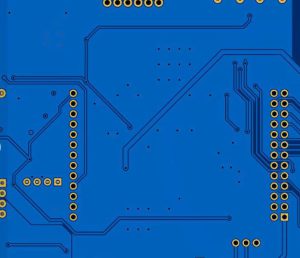
Drill Break-Through
Drill Break-Through Definition and Physical Meaning in PCB Fabrication
Drill Break-Through Definition and Failure Characteristics
Drill Break-Through refers to the unintended penetration of a drill bit beyond its intended depth during PCB drilling operations, resulting in damage to underlying copper layers, dielectric structures, or reference planes. This may occur in blind vias, controlled-depth vias, back-drilled structures, or even in through-hole drilling when stack thickness variation is not properly accounted for.
From a physical standpoint, Drill Break-Through is not merely “over-drilling.” It represents a loss of depth control authority, where the drill bit’s kinetic energy exceeds the remaining structural resistance of the material stack. Once the designed stopping boundary is crossed, copper tearing, resin smear, pad thinning, or plane gouging can occur.
Crucially, Drill Break-Through does not always produce catastrophic failure. In many cases, it creates latent defects—micro-cracks, copper deformation, or reduced dielectric margins—that only manifest under thermal cycling, vibration, or electrical stress.
Drill Break-Through Definition in the Context of Modern PCB Architectures
As PCB architectures evolve, the relevance of Drill Break-Through expands beyond traditional blind via control. In HDI boards, rigid-flex constructions, and high-speed multilayer designs, the vertical dimension has become as critical as lateral geometry.
Examples where Drill Break-Through risk is amplified include:
-
Thin core constructions below 100 μm
-
Sequential lamination stacks with uneven resin flow
-
Backdrilling for high-speed signal integrity
-
Mixed material stacks combining FR-4, polyimide, and low-Dk laminates
In such environments, even a few microns of excessive penetration can compromise impedance control, reference plane continuity, or CAF resistance.
Drill Break-Through Definition vs. Acceptable Penetration Margin
It is important to distinguish Drill Break-Through from designed penetration allowance. In some drilling strategies, a small over-travel is intentionally programmed to ensure complete copper removal or burr-free via bottoms. However, Drill Break-Through begins when penetration exceeds the safe energy absorption capacity of the target layer stack.
This threshold depends on:
-
Copper thickness and temper
-
Resin modulus and glass content
-
Lamination pressure history
-
Drill geometry and wear condition
Ignoring these interacting variables is one of the primary reasons Drill Break-Through continues to occur even in facilities with advanced drilling equipment.
Drill-Break-Through Design Principles and Their Engineering Logic
Drill-Break-Through Design Principles Based on Stack-Up Awareness
The first principle in mitigating Drill Break-Through is stack-up realism. Design documentation often specifies nominal dielectric thicknesses, but real boards exhibit variation due to glass weave distribution, resin flow, and lamination dynamics.
Effective Drill-Break-Through prevention begins with:
-
Statistical stack thickness modeling, not nominal values
-
Layer-specific tolerance allocation
-
Recognition of minimum residual dielectric thickness at via bottoms
In my experience, designs that allocate less than 15–20 μm of residual dielectric margin inherently invite Drill Break-Through, regardless of machine capability.
Drill-Break-Through Design Principles for Blind and Controlled-Depth Vias
Blind vias are the most common victims of Drill-Break-Through because their functional success depends entirely on precise depth termination. Key design principles include:
-
Avoiding blind via depths exceeding 1:1 aspect ratio where possible
-
Ensuring target copper layers are thick enough to absorb drilling energy
-
Designing capture pads that tolerate minor penetration without electrical compromise
Designers often underestimate how copper hardness variation across suppliers can affect Drill Break-Through risk—an issue that becomes critical in high-reliability sectors.
Drill-Break-Through Design Principles and PCB Performance Trade-Offs
Preventing Drill-Break-Through inevitably involves trade-offs. Increasing dielectric thickness improves drilling safety but may negatively impact impedance control or thermal performance. Similarly, thicker copper improves break-through resistance but complicates etching and fine-line definition.
This is where a systems mindset becomes essential. Rather than optimizing one parameter in isolation, designers and fabricators must evaluate:
-
Electrical performance vs. mechanical robustness
-
Yield stability vs. material cost
-
Process window width vs. cycle time
Manufacturers such as SQ PCB, which emphasize collaborative DFM and depth-risk modeling, demonstrate how early design alignment can significantly reduce Drill Break-Through without sacrificing electrical performance.
Drill-Break-Through Impact on Electrical and Mechanical PCB Performance
Drill-Break-Through Impact on Signal Integrity and Reference Planes
When Drill-Break-Through damages a reference plane beneath a controlled-depth via, the resulting copper deformation or thinning can introduce impedance discontinuities. While these defects may pass DC testing, they can degrade high-frequency performance by:
-
Increasing return path inductance
-
Creating micro-resonant cavities
-
Introducing localized impedance spikes
Such effects are particularly damaging in backdrilled high-speed channels, where the entire purpose of backdrilling is to improve signal integrity.
Drill-Break-Through Impact on Long-Term Reliability
From a reliability standpoint, Drill Break-Through is a classic initiator of latent failure. Over-penetration can:
-
Reduce dielectric spacing, increasing CAF risk
-
Create stress concentration points in copper planes
-
Promote resin cracking under thermal cycling
In accelerated life testing, boards with minor Drill-Break-Through defects consistently show earlier failure onset compared to geometrically identical boards without such damage—even when initial electrical tests are passed.
Drill-Break-Through Impact on Manufacturing Yield and Cost
Even when detected early, Drill Break-Through drives up manufacturing cost through:
-
Increased scrap rates
-
Additional inspection steps (X-ray, cross-sectioning)
-
Conservative rework or rejection policies
From a business perspective, preventing Drill-Break-Through is not just a quality initiative—it is a cost containment strategy. This is why process-driven manufacturers like SQ PCB integrate drilling depth feedback loops into their standard production flow rather than treating depth errors as isolated nonconformances.
Drill-Break-Through Summary Table: Causes, Impacts, and System-Level Mitigation Strategies
| Category | Drill Break-Through Related Factor | Typical Root Cause | Impact on PCB Performance | System-Level Mitigation Strategy |
|---|---|---|---|---|
| Design | Insufficient residual dielectric | Nominal stack-up assumptions | CAF risk, reduced insulation margin | Statistical stack modeling, conservative depth margins |
| Design | Thin target copper layers | Electrical-only optimization | Plane damage, impedance variation | Mechanical evaluation of copper layers |
| Materials | Laminate thickness variation | Resin flow and glass distribution | Depth inconsistency across panels | Material characterization and supplier control |
| Materials | Copper hardness variability | Mixed foil types or batches | Unpredictable penetration resistance | Copper specification alignment |
| Equipment | Tool wear progression | Extended drill life usage | Gradual depth drift | Tool life monitoring and replacement thresholds |
| Equipment | Spindle energy inconsistency | Calibration drift | Over-penetration at end-of-life tools | Closed-loop depth calibration |
| Process | Aggressive feed and speed | Throughput-driven settings | Pad thinning, resin cracking | Parameter optimization based on stack response |
| Process | Lack of depth feedback | Open-loop drilling control | Latent internal damage | Cross-section validation and feedback loops |
| Reliability | Micro-damage at via bottom | Minor undetected break-through | Early thermal fatigue failure | Reliability-driven acceptance criteria |
| Cost | Scrap and rework escalation | Late-stage defect detection | Increased manufacturing cost | Preventive system design and early control |
Conclusion
Drill-Break-Through is often discussed as a drilling imperfection, yet throughout this article it has been deliberately reframed as something far more revealing: a diagnostic signal of overall manufacturing system maturity. When unwanted penetration occurs, it is rarely because a single parameter drifted. Instead, it reflects accumulated misalignment among design assumptions, material behavior, equipment capability, and process discipline.
From a technical perspective, Drill-Break-Through exposes the limits of vertical control in an industry that historically prioritized lateral precision. As PCB architectures continue to compress in the Z-axis—driven by HDI, high-speed signaling, and multi-functional integration—the vertical dimension has become the most unforgiving frontier. In this environment, depth control margins measured in microns are no longer forgiving buffers; they are hard boundaries between functional success and latent failure.
From a design standpoint, preventing Drill-Break-Through requires abandoning nominal thinking. Stack-ups must be treated statistically, copper layers must be evaluated as mechanical structures rather than schematic abstractions, and residual dielectric thickness must be engineered with the same rigor as impedance targets. Designs that ignore these realities may still pass prototype validation, but they inevitably struggle in volume production.
From a manufacturing standpoint, Drill-Break-Through reveals whether a factory operates reactively or systemically. Reactive operations rely on post-drill inspection, rework, and yield loss analysis. Systemic operations integrate depth calibration, material characterization, tool wear monitoring, and feedback loops that prevent the defect from forming in the first place. In my observation, manufacturers who consistently achieve stable depth control do not rely on tighter tolerances alone—they rely on wider process understanding.
Perhaps most importantly, Drill-Break-Through serves as a reminder that PCB fabrication is no longer a sequence of independent steps. It is a tightly coupled system where mechanical energy, material response, and electrical performance intersect. Treating Drill Break-Through as a shared responsibility—across design, materials, and process engineering—is not merely best practice; it is a prerequisite for reliability in next-generation electronics.
In this sense, eliminating unwanted penetration is not just about stopping a drill at the right depth. It is about aligning intent, reality, and execution across the entire fabrication ecosystem.
FAQs
1. Can Drill-Break-Through be eliminated entirely?
In practice, it cannot be fully eliminated, but with system-level design alignment, material control, and process feedback, it can be reduced to a statistically negligible risk.
2. Why does Drill-Break-Through still occur on CNC-controlled drilling machines?
Because CNC control governs motion, not material response. Variations in laminate thickness, resin hardness, and copper temper can all cause actual penetration depth to differ from programmed values.
3. Is Drill-Break-Through always detectable during electrical testing?
No. Many Drill Break-Through defects are latent and only manifest under thermal, mechanical, or high-frequency stress conditions.
4. How much residual dielectric thickness is recommended to avoid Drill Break-Through?
While it depends on material and copper thickness, a residual dielectric margin of 15–25 μm is commonly considered a practical minimum in controlled-depth drilling.
5. Does thicker copper always reduce Drill-Break-Through risk?
Thicker copper improves resistance to penetration, but it also increases drilling force and tool wear. The benefit must be balanced against process complexity.

- long board pcb
- Flexible PCBs
- Special PCB
- Express Printed Circuit Board
- Pcb Prototype
- LED PCB
- PCB
- Printed Circuit Board
- Pcb meaning
- Pcb manufacturer
- Rigid pcb board
- Rigid Flex PCB
 Quote
Quote
 E-mail