Digital Direct Imaging: Revolutionizing PCB Manufacturing
- Introduction
- Understanding Digital Direct Imaging Technology
- Key Advantages of Digital Direct Imaging
- Applications Across Industries
- Digital Direct Imaging vs. Traditional Methods
- Implementing DDI: Challenges and Solutions
- Future Trends in Digital Direct Imaging
- Why Choose SQPCB for Digital Direct Imaging?
- Frequently Asked Questions
Introduction
In today’s rapidly evolving electronics industry, precision and efficiency are paramount. As devices become smaller and more complex, traditional PCB manufacturing methods struggle to meet modern demands. Enter Digital Direct Imaging (DDI) – a revolutionary technology that’s transforming how circuit boards are fabricated. Unlike conventional photolithography that relies on physical photomasks, DDI uses computer-controlled lasers to directly expose circuit patterns onto PCBs, offering unprecedented accuracy and flexibility.
This comprehensive guide explores how Digital Direct Imaging works, its advantages over traditional methods, and why it’s becoming essential for modern PCB manufacturing.
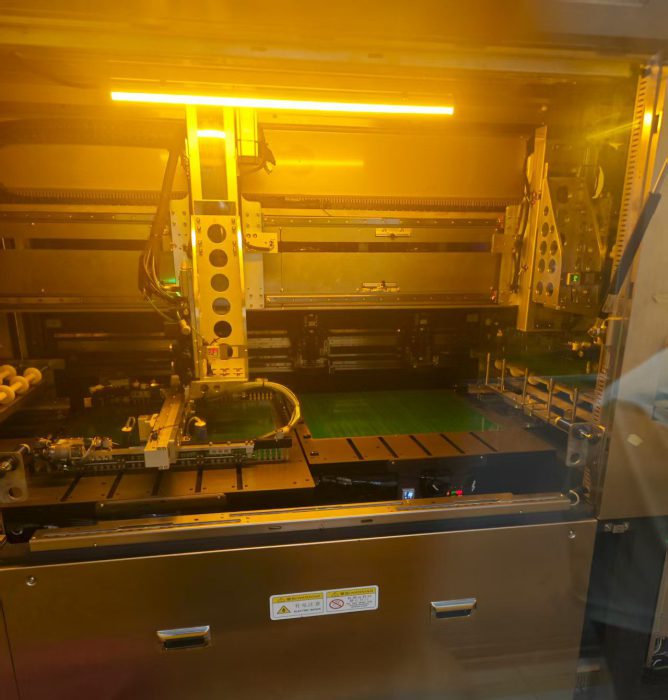
Digital Direct Imaging
1. Understanding Digital Direct Imaging Technology
What is Digital Direct Imaging?
Digital Direct Imaging (DDI) is an advanced photoresist exposure method that uses high-precision lasers to create circuit patterns directly onto PCB substrates. By eliminating physical photomasks, DDI enables faster prototyping, higher accuracy, and greater design flexibility.
How Digital Direct Imaging Works
The DDI process follows these key steps:
Surface Preparation: PCBs are cleaned and coated with photosensitive resist
Digital Data Input: CAD designs are directly uploaded to the imaging system
Laser Exposure: High-resolution lasers expose the circuit pattern
Development & Etching: Unexposed resist is removed, followed by copper etching
Final Processing: Additional manufacturing steps complete the PCB
2. Key Advantages of Digital Direct Imaging
2.1 Superior Precision and Accuracy
DDI achieves exceptional registration accuracy, crucial for:
HDI PCBs with fine-pitch components
Microvia alignment in multilayer boards
Ultra-fine traces below 20μm
2.2 Reduced Production Time
By eliminating photomask creation, DDI significantly shortens lead times:
Faster prototyping – ideal for R&D and startups
Quick design changes without mask remaking
Shorter time-to-market for new products
2.3 Enhanced Cost Efficiency
DDI reduces overall manufacturing costs through:
No photomask expenses
Reduced material waste
Lower rework rates
Better resource utilization
2.4 Improved Yield and Quality
DDI minimizes common manufacturing defects:
No mask-related errors (misalignment, contamination)
Consistent exposure quality
Higher first-pass yield
Better process control
3. Applications Across Industries
Digital Direct Imaging serves various high-tech sectors:
3.1 Consumer Electronics
Smartphones and tablets requiring HDI technology
Wearable devices with compact PCB designs
High-density consumer gadgets
3.2 Automotive Electronics
ADAS systems requiring reliable PCBs
Infotainment and control systems
Electric vehicle power management
3.3 Medical Devices
Diagnostic equipment PCBs
Implantable medical devices
High-reliability monitoring systems
3.4 Aerospace and Defense
Mission-critical avionics
Military communication systems
Space application electronics
4. Digital Direct Imaging vs. Traditional Methods
| Aspect | Digital Direct Imaging | Traditional Photolithography |
|---|---|---|
| Setup Time | Minutes (digital upload) | Hours/days (mask fabrication) |
| Accuracy | ±5μm or better | ±15-25μm typical |
| Design Changes | Instant digital updates | New masks required |
| Cost Structure | Lower variable costs | High mask costs per design |
| Best For | Prototypes, quick turns, HDI | Very high volume simple designs |
5. Implementing DDI: Challenges and Solutions
5.1 Initial Investment
Challenge: High upfront equipment costs
Solution:
Long-term ROI through reduced operating costs
Gradual implementation strategies
Equipment leasing options
5.2 Technical Expertise
Challenge: Requires specialized knowledge
Solution:
Comprehensive training programs
Vendor support and maintenance
Knowledge transfer initiatives
5.3 Process Integration
Challenge: Adapting existing workflows
Solution:
Phased implementation approach
Process optimization consulting
Customized integration plans
6. Future Trends in Digital Direct Imaging
6.1 Technological Advancements
Higher resolution lasers for sub-10μm features
Multi-wavelength systems for better material compatibility
Faster exposure times through improved optics
6.2 Smart Manufacturing Integration
AI-powered optimization of exposure parameters
Real-time process monitoring
Automated quality control
Industry 4.0 compatibility
6.3 Sustainability Benefits
Reduced chemical waste
Lower energy consumption
Minimized material usage
Eco-friendly manufacturing
7. Why Choose SQPCB for Digital Direct Imaging?
At SQPCB, we’ve invested in state-of-the-art Digital Direct Imaging technology to deliver exceptional PCB manufacturing results:
Our DDI Capabilities:
High-precision laser imaging with ±5μm accuracy
Rapid prototyping services with 24-hour turnaround
Expert technical support for design optimization
Comprehensive quality control at every step
Quality Assurance:
100% automated optical inspection
Real-time process monitoring
Stringent quality standards
Continuous improvement protocols
Frequently Asked Questions
Q1: How does DDI improve PCB manufacturing accuracy?
DDI eliminates photomask-related errors like misalignment and contamination. Laser direct writing ensures perfect registration between layers, crucial for multilayer and HDI boards.
Q2: Is Digital Direct Imaging suitable for high-volume production?
While initially favored for prototypes and medium runs, modern DDI systems now match traditional methods in throughput while offering superior precision and flexibility.
Q3: What’s the minimum feature size achievable with DDI?
Advanced DDI systems can produce features down to 15μm, with next-generation equipment targeting 10μm and below for ultra-HDI applications.
Q4: How does DDI impact overall manufacturing costs?
DDI reduces costs by eliminating photomask expenses, minimizing rework, and reducing material waste. The initial investment is offset by long-term savings and improved efficiency.
Q5: Can DDI handle flexible and rigid-flex PCBs?
Yes, DDI excels with flexible materials where traditional mask contact could cause damage. Non-contact exposure ensures perfect results on delicate substrates.
Conclusion: The Future is Digital
Digital Direct Imaging represents the future of PCB manufacturing, offering unmatched precision, flexibility, and efficiency. As electronics continue to evolve toward greater complexity and miniaturization, DDI technology will become increasingly essential.
For manufacturers seeking to stay competitive in today’s fast-paced market, adopting Digital Direct Imaging isn’t just an advantage – it’s a necessity. The technology’s ability to reduce costs, improve quality, and accelerate production makes it invaluable across all sectors of the electronics industry.
Ready to experience the DDI advantage? Contact SQPCB today to learn how our Digital Direct Imaging capabilities can transform your PCB manufacturing process.

- long board pcb
- Flexible PCBs
- Special PCB
- Express Printed Circuit Board
- Pcb Prototype
- LED PCB
- PCB
- Printed Circuit Board
- Pcb meaning
- Pcb manufacturer
- Rigid pcb board
- Rigid Flex PCB
 Quote
Quote
 E-mail