The Hidden Lever for Yield: Optimizing Depth Tolerance to Reduce PCB Fabrication Defects
Introduction: Why Depth Tolerance Is the Quiet Driver of PCB Yield
In modern PCB fabrication, yield loss rarely comes from a single catastrophic error. Instead, it is more often the accumulation of small, invisible deviations—each individually acceptable, yet collectively destructive. Among these, Depth Tolerance stands out as one of the least discussed yet most influential parameters.
Depth Tolerance governs how precisely material removal, drilling, backdrilling, milling, and controlled-depth processes stop at their intended physical boundaries. Unlike line width or hole diameter, it does not always manifest as a visible defect. However, its influence extends deeply into electrical reliability, signal integrity, mechanical robustness, and long-term field performance.
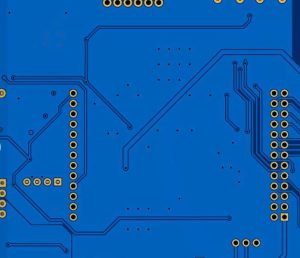
Depth Tolerance
Depth-Tolerance Definition: Understanding the True Meaning of Depth Tolerance in PCB Fabrication
Depth-Tolerance refers to the allowable deviation between the intended material removal depth and the actual achieved depth during a PCB fabrication process. It defines the vertical accuracy of processes such as:
-
Mechanical drilling
-
Laser drilling
-
Backdrilling
-
Controlled-depth milling
-
Counterboring and countersinking
-
Desmear and plasma-related material erosion
Unlike lateral tolerances, which are constrained by imaging resolution and etching control, Depth Tolerance is governed by a complex interaction of tool wear, material stack-up, machine calibration, resin behavior, and process feedback loops.
Depth-Tolerance as a Statistical Window, Not a Fixed Number
A common misconception is that Depth Tolerance is a fixed value—±50 μm, ±75 μm, or ±100 μm. In reality, Depth Tolerance represents a statistical process capability window, influenced by:
-
Z-axis repeatability of equipment
-
Material thickness variation
-
Copper distribution and density
-
Thermal expansion during processing
In production environments, Depth Tolerance should therefore be understood as a distribution, not a limit. Yield loss occurs when this distribution overlaps with functional boundaries such as:
-
Inner-layer copper planes
-
Target backdrill stop layers
-
Resin-rich regions vulnerable to overcut
Depth-Tolerance Definition Across Different PCB Processes
Depth-Tolerance does not have a single universal meaning; its practical interpretation varies by process stage.
Depth-Tolerance in Mechanical Drilling
In mechanical drilling, Depth-Tolerance controls how accurately the drill bit exits the stack without:
-
Over-penetrating and damaging backup material
-
Under-penetrating and leaving uncut resin
-
Smearing resin into inner-layer copper
Here, poor Depth-Tolerance directly contributes to inconsistent hole wall quality, which later amplifies plating defects.
Depth-Tolerance in Laser Drilling
Laser drilling introduces a different challenge. The Depth Tolerance is governed not by tool length but by:
-
Laser energy density
-
Pulse duration
-
Material absorption coefficients
A tight Depth-Tolerance ensures vias stop cleanly at the target copper layer without over-burning resin or thinning copper pads.
Depth Tolerance as a Hidden Source of Fabrication Defects
Many fabrication defects are symptoms, not root causes. Depth Tolerance issues often hide behind defect labels such as:
-
Incomplete via cleaning
-
Barrel cracking
-
Stub-related impedance anomalies
-
Inner-layer copper exposure
By the time these defects are detected electrically or visually, the Depth Tolerance deviation that caused them has already propagated through multiple process steps.
Depth Tolerance Functions: Why Depth Tolerance Is a Structural Control Variable Rather Than a Process Detail
Depth Tolerance is often described narrowly as a machining accuracy parameter. In reality, its function extends far beyond simple dimensional compliance. Depth Tolerance acts as a structural control variable that determines how energy, stress, and electrical fields propagate through a PCB over its entire lifecycle.
From a fabrication standpoint, Depth Tolerance defines the boundary between intended material interaction and unintended material damage. Every controlled-depth operation introduces mechanical, thermal, or photonic energy into the board. The role of Depth Tolerance is to ensure that this energy stops precisely where it should.
Depth Tolerance and Its Role in Preventing Latent Defects
One of the most important functions of Depth Tolerance is its ability to suppress latent defects—defects that do not cause immediate failure but degrade reliability over time.
Examples include:
-
Copper thinning caused by over-backdrilling
-
Resin recession below copper interfaces
-
Micro-cracks initiated at overcut inner layers
These defects may remain electrically silent for thousands of hours before manifesting under vibration, temperature cycling, or voltage stress.
By maintaining a controlled Depth Tolerance window, fabricators reduce the probability that such defects are even initiated.
Depth-Tolerance and PCB Electrical Performance Stability
Electrical performance in modern PCBs depends not only on horizontal geometry but also on vertical precision. Depth Tolerance directly affects:
-
Via stub length
-
Effective dielectric thickness
-
Copper reference plane integrity
Even small depth deviations can shift impedance, especially in high-speed and RF designs.
Depth-Tolerance and Via Stub Control
Backdrilling is widely used to remove unused via stubs. The success of this technique relies almost entirely on Depth Tolerance accuracy.
-
If Depth-Tolerance is too loose, residual stubs remain
-
If Depth-Tolerance overshoots, signal reference layers are damaged
In both cases, signal integrity suffers—either through resonance or impedance discontinuity.
Depth-Tolerance Versus Defect and Yield Impact: Engineering Reference Table
| Depth Tolerance Deviation | Primary Defect Triggered | Secondary Impact | Yield Risk Level |
|---|---|---|---|
| Over-penetration | Inner-layer copper thinning | Thermal fatigue | High |
| Under-penetration | Resin residue | Plating voids | Medium |
| Inconsistent depth | Via wall non-uniformity | Reliability loss | High |
| Backdrill overshoot | Plane damage | Impedance shift | High |
| Laser depth drift | Over-burned copper | Increased resistance | Medium–High |
| Stack-up mismatch | Depth target misalignment | Latent defects | Medium |
This table highlights a critical insight: Depth Tolerance errors often escalate from localized defects into system-level failures.
Conclusion
In PCB fabrication, the most influential variables are often the least visible. Depth Tolerance belongs firmly in this category. It rarely appears as a headline specification, yet it silently determines whether a board achieves stable yield or accumulates hidden risk.
What makes Depth-Tolerance particularly powerful is that it operates at the intersection of physics, process capability, and organizational mindset. It governs how precisely energy—mechanical, thermal, or photonic—is delivered and stopped within a multilayer structure. When that stopping point is well controlled, defects are prevented rather than corrected. When it is not, even the most advanced downstream inspections struggle to compensate.
One of the most important lessons from yield analysis is that many PCB defects are not random. They are systematic responses to unmanaged variability. Depth Tolerance variability, in particular, tends to propagate quietly across multiple fabrication stages. By the time defects become visible, the opportunity for low-cost correction has already passed.
From an engineering perspective, optimizing Depth Tolerance is not about pursuing the tightest possible number. It is about aligning tolerance windows with real process capability, material behavior, and design intent. Overly aggressive targets can be just as harmful as loose ones, introducing instability and unnecessary cost. Mature manufacturers recognize this balance and treat depth control as a continuously optimized parameter rather than a fixed constraint.
Another critical insight is that Depth Tolerance cannot be owned by fabrication alone. Its effectiveness depends on early design decisions—stack-up architecture, layer targeting, via strategy, and the placement of depth-critical features. When designers and fabricators share a common understanding of depth-related risk, Depth Tolerance becomes a tool for collaboration rather than a source of conflict.
Looking forward, the importance of Depth-Tolerance will only increase. As PCB technology advances toward higher layer counts, finer vertical geometries, and more demanding reliability requirements, vertical accuracy will become as decisive as lateral precision. Processes such as backdrilling, microvia formation, and controlled-depth milling will leave little margin for unmanaged depth variation.
In this context, Depth-Tolerance should be viewed not merely as a manufacturing parameter, but as a strategic lever for sustainable yield, predictable reliability, and long-term product value. Companies that invest in understanding and controlling it early will spend less time firefighting defects later—and more time delivering robust products to market.
Ultimately, improving PCB yield is rarely about a single breakthrough technology. It is about identifying the hidden levers that quietly shape outcomes every day. Depth Tolerance is one of those levers—and for those willing to treat it seriously, it remains one of the most powerful yet underutilized tools in modern PCB fabrication.
FAQs
1. At what design stage should Depth-Tolerance be considered?
Depth-Tolerance should be considered during stack-up planning and DFM review, not after fabrication begins. Early consideration significantly improves yield and reliability.
2. How does Depth-Tolerance affect backdrilled via performance?
Depth-Tolerance determines how accurately unused via stubs are removed. Poor control can leave residual stubs or damage reference planes, both of which degrade signal integrity.
3. Is tighter Depth-Tolerance always better for PCB fabrication?
Not necessarily. Depth-Tolerance should be optimized based on process capability and design needs. Overly tight tolerances can increase cost without proportional yield benefits.
4. How does Depth-Tolerance influence PCB reliability testing results?
Boards with poor Depth-Tolerance control often pass initial testing but fail during thermal cycling or vibration due to latent defects initiated during fabrication.
5. Can Depth-Tolerance issues be detected through standard electrical testing?
Many Depth Tolerance–related defects do not cause immediate electrical failure. Specialized inspection or reliability testing is often required to detect them.

- long board pcb
- Flexible PCBs
- Special PCB
- Express Printed Circuit Board
- Pcb Prototype
- LED PCB
- PCB
- Printed Circuit Board
- Pcb meaning
- Pcb manufacturer
- Rigid pcb board
- Rigid Flex PCB
 Quote
Quote
 E-mail