Beyond the Surface: Controlling Depth Tolerance to Eliminate Stubs and Preserve Signal Integrity
Introduction: Why Depth Control Is No Longer a Secondary Concern
In modern high-speed and high-density PCB manufacturing, many failures originate not from visible defects on the surface, but from microscopic inaccuracies in vertical geometry. Among these, depth-related deviations have quietly become one of the most underestimated threats to signal integrity, impedance control, and long-term reliability.
As data rates push beyond 25 Gbps, via stubs, uneven back-drilling, blind-via depth errors, and copper over-etching all converge on one central variable: Depth Tolerance. Unlike line width or spacing—parameters that designers have optimized for decades—depth accuracy operates largely beneath the surface, making it both harder to measure and easier to ignore.
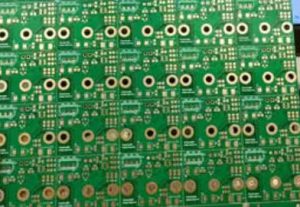
Depth Tolerance
Depth Tolerance Definition and Fundamental Meaning in PCB Manufacturing
Depth Tolerance: A Precise Definition Beyond Simple Vertical Accuracy
Depth Tolerance refers to the allowable deviation between the intended and actual depth of a PCB feature during fabrication. These features include, but are not limited to:
-
Blind vias
-
Back-drilled through vias
-
Counterbores and cavities
-
Copper thickness after etching
-
Dielectric removal depths
Unlike lateral tolerances that primarily influence connectivity, Depth Tolerance directly impacts electromagnetic behavior, especially at high frequencies.
In practical terms, Depth Tolerance defines how much vertical error a process can introduce before electrical, mechanical, or reliability failures emerge.
Why Depth-Tolerance Is Harder to Control Than XY Tolerances
In my experience, one reason Depth Tolerance receives less attention is its multi-variable dependency. Vertical accuracy is influenced simultaneously by:
-
Tool wear and runout
-
Material stack-up variability
-
Resin flow during lamination
-
Drill deflection and breakout
-
Etching anisotropy
Unlike trace width, which can be optically inspected across an entire panel, depth deviations often remain hidden until time-domain reflectometry (TDR) or field failures expose them.
This invisibility makes Depth Tolerance a latent risk—silent during inspection but destructive during operation.
Depth-Tolerance vs. Depth Accuracy: A Critical Distinction
It is important to distinguish between depth accuracy and Depth Tolerance:
-
Depth accuracy describes how close a single feature is to its nominal depth.
-
Depth-Tolerance defines the acceptable window within which depth variation remains functionally safe.
Designers often specify nominal depths without specifying Depth Tolerance, effectively transferring all risk to the fabricator. This is where design-manufacturing misalignment begins.
Depth-Tolerance Design Principles for Advanced PCB Structures
Depth-Tolerance Design Principles in Blind and Buried Via Architectures
Blind vias are among the most Depth Tolerance-sensitive structures in modern HDI PCBs. A deviation of even 20–30 µm can result in:
-
Residual copper barriers preventing proper plating
-
Over-drilling into target layers
-
Weak interlayer connections
From a design standpoint, conservative Depth Tolerance allocation must account for layer thickness variation, not just drill accuracy.
A principle I strongly advocate is “designing depth margins, not depth targets.” This means specifying allowable depth windows that align with realistic process capability rather than ideal geometry.
Depth-Tolerance Design Principles for Back-Drilled Via Stub Removal
Back-drilling is widely used to eliminate via stubs in high-speed designs. However, it is also one of the most failure-prone processes when Depth-Tolerance is underestimated.
If the back-drill depth stops too shallow:
-
A residual stub remains, causing impedance discontinuities.
If it goes too deep:
-
It damages signal layers or anti-pads, degrading reliability.
The design principle here is straightforward but often ignored:
Back-drill depth must be specified relative to the actual layer interface, not the nominal stack-up.
Impact of Depth-Tolerance on PCB Electrical Performance
Depth-Tolerance and Via Stub Resonance Behavior
Via stubs act as resonant structures whose length determines their resonant frequency. Even small depth deviations shift this resonance into operational frequency bands, resulting in:
-
Return loss degradation
-
Insertion loss spikes
-
Eye diagram collapse
Tight Depth-Tolerance control ensures stub lengths remain predictable and safely outside critical frequency ranges.
Depth-Tolerance Influence on Signal Integrity and Jitter
Signal integrity is not only about loss; it is about timing stability. Depth-induced impedance variations cause:
-
Reflections that distort edge timing
-
Mode conversion in differential pairs
-
Increased deterministic jitter
At high data rates, these effects accumulate, eroding system margin long before outright failure occurs.
Depth-Tolerance Effects on Power Integrity and Ground Return Paths
Depth inaccuracies also alter the vertical spacing between power and ground planes, affecting:
-
Plane capacitance
-
PDN impedance
-
High-frequency noise suppression
From a system-level perspective, poor Depth-Tolerance control can undermine even the most carefully designed decoupling strategies.
Typical Depth Tolerance Applications and Electrical Impact
| PCB Feature Type | Depth Sensitivity Level | Primary Electrical Risk | Typical Failure Symptom |
|---|---|---|---|
| Blind vias | High | Incomplete interlayer connection | Intermittent opens |
| Back-drilled vias | Very High | Residual stub resonance | Return loss spikes |
| Buried vias | Medium | Impedance inconsistency | Eye closure |
| RF cavities | High | Local field distortion | Insertion loss peaks |
| Embedded striplines | High | Dielectric thickness variation | Phase delay mismatch |
| Copper thickness after etch | Medium | Current density imbalance | Local heating |
Conclusion
As PCB technology advances toward higher speeds, higher densities, and thinner vertical geometries, the limitations of traditional two-dimensional design thinking become increasingly apparent. Throughout this article, Depth Tolerance has emerged not as a secondary manufacturing detail, but as a structural axis around which electrical performance, manufacturability, and long-term reliability revolve.
One of the most critical realizations is that Depth Tolerance operates silently. Unlike trace width violations or spacing errors, depth deviations often escape early detection, only to surface later as unexplained signal integrity degradation, EMI failures, or intermittent field issues. This makes Depth Tolerance uniquely dangerous—not because it is rare, but because it is frequently invisible until system margins are already exhausted.
From a design perspective, Depth Tolerance forces a shift from idealized stack-ups to process-aware engineering. Blind via depths, back-drill stop points, dielectric removal, and copper thickness evolution must all be treated as variables with realistic tolerance windows, not fixed values. Designs that acknowledge this reality consistently demonstrate higher first-pass success rates and more predictable electrical behavior.
From a manufacturing standpoint, Depth Tolerance represents a balancing act between precision and yield. Over-constraining depth increases cost and scrap, while under-specifying it transfers risk downstream. The most robust designs are those that intentionally allocate tight Depth Tolerance only where signal sensitivity demands it, and relax control elsewhere.
Ultimately, controlling Depth Tolerance is not about eliminating variation—it is about engineering with variation in mind. Designers who embrace this three-dimensional mindset gain a decisive advantage: fewer late-stage surprises, stronger collaboration with fabricators, and PCB products that perform as expected not just in simulation, but in the real world.
Beyond the surface, Depth Tolerance defines whether advanced PCB designs merely function—or truly endure.
FAQs
1. When should Depth Tolerance be addressed during the PCB design process?
Depth Tolerance should be considered during stack-up planning and interconnect strategy definition, not as a post-layout or fabrication-stage concern. Early consideration enables better performance-cost trade-offs and smoother manufacturing execution.
2. Why does Depth Tolerance matter more in high-speed PCB designs than in low-speed ones?
High-speed signals are sensitive to impedance discontinuities and resonant structures such as via stubs. Small depth deviations can shift resonant frequencies into operational bands, significantly degrading signal integrity, whereas low-speed signals are far more tolerant of such variations.
3. Can simulation tools accurately predict Depth Tolerance effects?
Most standard simulations assume ideal geometry and nominal stack-ups. Unless depth variation is explicitly modeled, simulations often underestimate the impact of Depth Tolerance, especially for via-related discontinuities and back-drilled structures.
4. How does Depth Tolerance influence via stub resonance?
Via stub resonance frequency is directly related to stub length. Depth Tolerance errors alter that length, potentially moving the resonance into critical frequency ranges, increasing return loss and insertion loss at specific frequencies.
5. Is tighter Depth Tolerance always better?
Not necessarily. Excessively tight Depth Tolerance increases manufacturing cost and reduces yield. The optimal approach is to apply tight control only where electrical performance demands it, and allow relaxed tolerances elsewhere.

- long board pcb
- Flexible PCBs
- Special PCB
- Express Printed Circuit Board
- Pcb Prototype
- LED PCB
- PCB
- Printed Circuit Board
- Pcb meaning
- Pcb manufacturer
- Rigid pcb board
- Rigid Flex PCB
 Quote
Quote
 E-mail