The Precision Anchor: How Depth Tolerance Ensures Inner-Layer Integrity in PCB Manufacturing
Introduction: Why Depth Control Has Become a Hidden Determinant of PCB Reliability
As printed circuit boards evolve toward higher density, thinner dielectric stacks, and more complex multilayer architectures, manufacturing accuracy is no longer judged solely by line width or registration. One of the most underestimated parameters—Depth Tolerance—has quietly emerged as a precision anchor that determines whether inner-layer structures remain electrically reliable or degrade over time.
In modern PCB manufacturing, especially in HDI, IC substrates, and high-reliability applications, Depth Tolerance governs how accurately material removal, drilling, laser ablation, and controlled-depth processes interact with inner copper layers. While often treated as a secondary mechanical constraint, Depth Tolerance directly influences signal integrity, insulation reliability, mechanical robustness, and long-term yield stability.
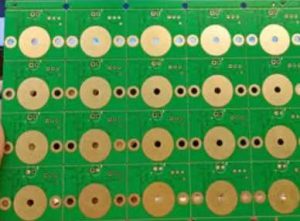
Depth Tolerance
Depth Tolerance Definition and Fundamental Meaning in PCB Manufacturing
Depth Tolerance Definition and Its Engineering Scope
Depth Tolerance refers to the allowable deviation between the intended depth and the actual achieved depth during controlled material removal or penetration processes in PCB manufacturing. Unlike simple thickness tolerance, Depth Tolerance focuses on localized vertical precision—how accurately a process stops at a defined depth relative to inner copper layers or dielectric boundaries.
Depth Tolerance applies to multiple PCB processes, including:
-
Mechanical drilling (controlled-depth drilling)
-
Laser drilling and laser ablation
-
Back drilling (stub removal)
-
Controlled-depth routing
-
Blind via and buried via formation
-
Cavity and counterbore creation
-
Inner-layer exposure processes
In practical terms, Depth-Tolerance defines how close a process can approach an inner copper layer without damaging it, while still achieving the required structural or electrical objective.
Depth Tolerance Versus Thickness Tolerance
Although often confused, Depth Tolerance and thickness tolerance serve different engineering purposes:
-
Thickness tolerance controls the total thickness of materials (laminates, prepregs, copper foils).
-
Depth Tolerance controls how precisely a process interacts with those materials at specific locations.
From a reliability perspective, Depth Tolerance is more critical in multilayer boards, where inner-layer copper patterns may be separated by only tens of microns. A deviation that appears insignificant on paper can result in:
-
Partial copper exposure
-
Dielectric thinning
-
Resin smear or cracking
-
Latent insulation failures
Depth-Tolerance Advantages in Modern PCB Manufacturing
Depth-Tolerance Advantages for Inner-Layer Protection
One of the primary advantages of well-controlled Depth-Tolerance is inner-layer copper preservation. When drilling or laser processes approach internal layers, insufficient depth control can:
-
Gouge inner copper planes
-
Create micro-notches that act as crack initiators
-
Reduce effective copper thickness
By maintaining tight Depth Tolerance, manufacturers ensure that inner-layer copper remains mechanically intact and electrically stable.
From my perspective, this advantage becomes especially critical in automotive, aerospace, and medical electronics, where even microscopic copper damage can propagate into catastrophic field failures.
Depth-Tolerance Advantages for Electrical Isolation
Depth-Tolerance directly influences dielectric thickness consistency, which affects:
-
Breakdown voltage
-
Insulation resistance
-
Partial discharge behavior
-
Long-term CAF resistance
Over-penetration reduces dielectric margins, while under-penetration can cause incomplete via formation or unreliable interconnections. Tight Depth Tolerance ensures that dielectric layers perform as designed—not merely as manufactured.
Depth-Tolerance Advantages for Yield and Cost Stability
Although tighter Depth-Tolerance often implies higher process control costs, it actually reduces total manufacturing cost by:
-
Minimizing scrap from inner-layer damage
-
Reducing rework related to back drilling errors
-
Stabilizing impedance and electrical test results
-
Improving first-pass yield
High-end PCB suppliers such as SQ PCB consistently emphasize Depth Tolerance control as a foundation for predictable, scalable production—especially in HDI and high-speed designs.
Depth-Tolerance Impact on PCB Electrical Performance
Depth-Tolerance Impact on Signal Integrity
Depth-Tolerance affects signal integrity through its influence on:
-
Stub length consistency (in back-drilled vias)
-
Dielectric thickness uniformity
-
Copper reference plane integrity
In high-speed digital designs, even small variations in via stub length can create impedance discontinuities and reflections. Poor Depth-Tolerance control results in inconsistent stub removal, leading to unpredictable eye diagram degradation.
From my own observation, many “mysterious” signal integrity problems trace back not to layout errors, but to marginal Depth Tolerance control during fabrication.
Depth-Tolerance Impact on Impedance Control
Impedance control is traditionally associated with trace width and dielectric constant. However, Depth-Tolerance introduces a third dimension—vertical accuracy.
In multilayer boards:
-
Excessive depth can thin reference planes
-
Insufficient depth can leave residual copper structures
-
Localized depth variation alters effective dielectric thickness
All of these factors influence impedance stability, particularly in tightly stacked high-speed layer pairs.
Depth-Tolerance Impact on Thermal and Mechanical Reliability
Depth-Tolerance also affects:
-
Copper-to-resin adhesion
-
Stress distribution during thermal cycling
-
Crack initiation points around vias and cavities
Over-cut features act as stress concentrators, accelerating fatigue under temperature cycling. Controlled Depth Tolerance ensures smoother transitions and more uniform stress distribution.
Depth-Tolerance Impact on Reliability Testing Outcomes
Depth-Tolerance Effect on Thermal Cycling Performance
Thermal cycling reliability is highly sensitive to localized material thinning. When Depth Tolerance errors reduce dielectric thickness near vias or cavities, thermal expansion mismatch becomes concentrated at weakened regions.
Over time, this can lead to:
-
Micro-crack initiation
-
Copper barrel fatigue
-
Progressive insulation degradation
Boards with nominally identical designs can exhibit drastically different thermal cycling lifetimes solely due to Depth Tolerance variation.
Depth-Tolerance Influence on CAF Resistance
Conductive Anodic Filament (CAF) formation is strongly linked to:
-
Dielectric thickness
-
Resin integrity
-
Fiber exposure
Excessive depth penetration may expose glass fibers or thin resin barriers, accelerating CAF growth under humidity and bias conditions. From a reliability engineering standpoint, Depth Tolerance is therefore a preventive control against latent CAF failures.
Depth-Tolerance Comparison Table
| Aspect | Tight Depth Tolerance | Loose Depth Tolerance |
|---|---|---|
| Inner-layer protection | Excellent | Inconsistent |
| Signal integrity | Highly stable | Variable |
| Yield consistency | Predictable | Fluctuating |
| Thermal reliability | Strong | Elevated failure risk |
| Manufacturing cost | Higher upfront | Higher long-term |
| Suitability for HDI | Ideal | Risky |
Conclusion
As PCB manufacturing continues its transition from traditional volume-driven production toward precision-driven engineering, Depth Tolerance must be redefined—not as a dimensional constraint, but as a strategic capability that underpins inner-layer integrity, electrical stability, and lifecycle reliability.
Throughout this article, Depth-Tolerance has been examined across multiple dimensions: definition, process control, electrical performance, reliability impact, and application-specific demands. What emerges clearly is that Depth Tolerance functions as a vertical governance mechanism within multilayer PCB structures. While horizontal parameters such as line width and spacing receive most design attention, it is Depth Tolerance that silently governs how close manufacturing processes can approach the limits of material and structural feasibility.
From a manufacturing perspective, Depth Tolerance exposes the true maturity of a PCB factory. Equipment sophistication alone is insufficient; consistent depth control demands disciplined calibration routines, data-driven process feedback, and a deep understanding of material behavior under mechanical and thermal stress. Manufacturers capable of holding stable Depth Tolerance across panel lots demonstrate not only technical competence, but also operational resilience.
From a design standpoint, Depth Tolerance represents an often-underutilized risk management lever. Designers who consciously incorporate Depth Tolerance margins into via structures, cavity definitions, and back-drilling schemes create layouts that are inherently more tolerant of real-world manufacturing variability. This approach does not weaken performance—on the contrary, it enhances robustness by aligning theoretical intent with practical execution.
More importantly, Depth Tolerance bridges the gap between short-term electrical success and long-term field reliability. Many PCB failures attributed to material defects or environmental stress are, in reality, delayed consequences of marginal depth control. Micro-damage to inner copper layers, localized dielectric thinning, or fiber exposure may escape initial testing but progressively undermine insulation and mechanical stability. In this sense, Depth-Tolerance operates as a form of preventive reliability engineering, quietly reducing the probability of latent failure.
Looking ahead, the importance of Depth-Tolerance will only intensify. Emerging technologies—such as ultra-high-speed interconnects, heterogeneous integration, and advanced IC substrates—are pushing vertical tolerances into single-digit microns. In these environments, Depth Tolerance ceases to be a background parameter and becomes a primary design constraint that shapes process selection, supplier qualification, and cost structure.
Ultimately, the most successful PCB manufacturers and system designers will be those who recognize Depth Tolerance as more than a specification on a fabrication drawing. They will treat it as a shared responsibility—designed thoughtfully, controlled rigorously, and reviewed continuously. When Depth Tolerance is managed with intention, it transforms from a hidden risk into a powerful enabler of precision, reliability, and trust across the entire electronics value chain.
FAQs
1. Is tighter Depth-Tolerance always better?
Not necessarily. Excessively tight Depth-Tolerance increases cost and complexity. The optimal value balances performance needs with manufacturability.
2. How does Depth-Tolerance differ from drilling accuracy?
Drilling accuracy focuses on positional alignment (X-Y), while Depth Tolerance controls vertical precision (Z-axis). Both are essential, but Depth Tolerance directly protects inner layers from damage.
3. Why is Depth-Tolerance more critical in HDI PCBs?
HDI boards have thinner dielectric layers and closer inner-layer spacing, leaving less margin for depth deviation without compromising reliability.
4. Can poor Depth-Tolerance cause latent PCB failures?
Yes. Micro-damage to inner layers or reduced dielectric thickness may pass initial testing but fail after thermal cycling or long-term operation.
5. How can designers reduce Depth-Tolerance risk?
By allowing reasonable depth margins, selecting capable manufacturers, and engaging in early DFM discussions focused on depth-critical features.

- long board pcb
- Flexible PCBs
- Special PCB
- Express Printed Circuit Board
- Pcb Prototype
- LED PCB
- PCB
- Printed Circuit Board
- Pcb meaning
- Pcb manufacturer
- Rigid pcb board
- Rigid Flex PCB
 Quote
Quote
 E-mail