Curved PCB, With the growing demand for compact and flexible electronic devices, Curved PCBs have emerged as an innovative solution for modern technology. Unlike traditional rigid PCBs, Curved PCBs allow for bending, shaping, and seamless integration into unique product designs. These PCBs are particularly useful in wearable devices, automotive displays, medical equipment, and aerospace applications, where space-saving and durability are essential.
This article explores what curved PCBs are, their advantages, manufacturing process, and real-world applications, highlighting how they are transforming the electronics industry.
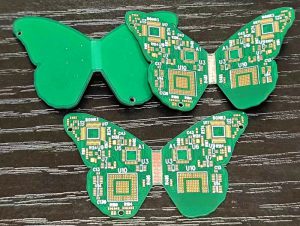
Curved PCB
What is a Curved PCB?
A Curved PCB, also known as a flexible PCB or 3D PCB, is a printed circuit board designed to be bent or shaped without compromising its electrical integrity. Unlike traditional rigid boards, curved PCBs can be manufactured using flexible materials such as polyimide (PI), polyester (PET), or flexible FR-4, allowing them to conform to non-flat surfaces.
Key Features of Curved PCBs:
- Bendable and shapeable design
- Lightweight and thin profile
- High durability and flexibility
- Reduced weight and space-saving benefits
- Improved shock and vibration resistance
Advantages of Curved PCBs
1. Space-Saving and Compact Design
One of the primary benefits of curved PCBs is their ability to fit into compact or non-traditional spaces, making them ideal for wearable technology, automotive electronics, and medical implants.
2. Improved Durability and Shock Resistance
Curved PCBs eliminate the need for connectors and cables, reducing mechanical stress points. This enhances shock resistance and improves the overall reliability of electronic devices, especially in high-vibration environments like automotive and aerospace applications.
3. Enhanced Electrical Performance
With fewer interconnections and solder joints, curved PCBs reduce signal loss, interference, and electrical resistance, ensuring better performance for high-frequency applications such as 5G and IoT devices.
4. Lightweight and Flexible Structure
Curved PCBs are lighter and thinner compared to conventional rigid PCBs, making them an excellent choice for applications where weight reduction is critical, such as drones, satellites, and consumer electronics.
5. Greater Design Flexibility
Engineers can design curved-PCBs to conform to the shape of the product, eliminating the need for flat circuit boards and bulky connectors, allowing for a more seamless and ergonomic product design.
Manufacturing Process of Curved PCBs
Producing Curved-PCBs requires advanced materials and techniques to ensure durability, flexibility, and electrical reliability. Here’s an overview of the manufacturing process:
1. Material Selection
- Polyimide (PI): Commonly used due to its high flexibility, heat resistance, and durability.
- Polyester (PET): Used for cost-effective flexible PCB solutions.
- Flexible FR-4: A hybrid approach combining rigid and flexible properties for certain applications.
2. Circuit Layer Formation
- The conductive layer (typically copper) is laminated onto the flexible substrate using etching or additive processes.
- Fine-line etching ensures that traces maintain electrical conductivity without breaking under bending conditions.
3. Drilling and Plating
- Precision laser drilling is used to create vias and mounting holes.
- Electroless plating is applied to improve connectivity and durability.
4. Solder Mask Application
- A protective solder mask is applied to prevent oxidation and improve component soldering reliability.
5. Testing and Quality Inspection
- Automated Optical Inspection (AOI) ensures proper alignment of circuit traces.
- Bend and stress testing are conducted to validate the PCB’s flexibility and durability.
Applications of Curved-PCBs
Due to their lightweight, durability, and flexibility, Curved-PCBs have become essential in multiple industries:
1. Wearable Devices
- Smartwatches and fitness bands
- Flexible medical implants and biosensors
- Augmented reality (AR) and virtual reality (VR) headsets
2. Automotive Electronics
- Curved dashboard displays and infotainment systems
- Adaptive lighting and LED panels
- Advanced driver assistance systems (ADAS)
3. Medical and Healthcare Equipment
- Portable ECG monitors and flexible medical imaging devices
- Disposable medical sensors and skin patches
- Drug delivery systems with embedded electronics
4. Aerospace and Military Applications
- Lightweight avionics and aircraft control panels
- Ruggedized military-grade flexible electronics
- High-frequency communication devices
5. Consumer Electronics
- Foldable smartphones and rollable OLED displays
- Flexible keyboards and touchscreen interfaces
- Smart textiles with integrated circuits
Challenges in Curved-PCB Design and Manufacturing
Despite their advantages, Curved PCBs present several challenges in design and production:
1. Material Limitations
Choosing the right substrate material is crucial, as not all materials provide equal flexibility, durability, and heat resistance.
2. High Manufacturing Costs
Curved PCBs require specialized manufacturing techniques, increasing production costs compared to standard rigid PCBs.
3. Complex Assembly Process
Integrating components onto a flexible surface can be more challenging than assembling on a rigid PCB, requiring customized soldering techniques and adhesives.
4. Reliability Under Repeated Bending
Repeated bending over time may lead to circuit fatigue and failure, requiring thorough stress testing during production.
Conclusion
Curved-PCBs are revolutionizing electronic design by enabling flexible, compact, and durable solutions across various industries. Their ability to conform to unconventional shapes, improve electrical performance, and reduce weight makes them an ideal choice for wearable devices, automotive electronics, aerospace systems, and medical applications.
As manufacturing technology advances, Curved PCBs will continue to play a pivotal role in next-generation electronic devices, pushing the boundaries of innovation and efficiency.
For businesses looking to develop high-quality curved PCBs, partnering with an experienced manufacturer ensures optimal performance, reliability, and design flexibility.
Contact Shuoqiang Electronics today to discuss your Curved PCB requirements and explore customized solutions for your unique applications!

- long board pcb
- Flexible PCBs
- Special PCB
- Express Printed Circuit Board
- Pcb Prototype
- LED PCB
- PCB
- Printed Circuit Board
- Pcb meaning
- Pcb manufacturer
- Rigid pcb board
- Rigid Flex PCB
 Quote
Quote
 E-mail