From Cathode to Circuit: Copper’s Long Journey and Its Impact on Your PCB Quote
Introduction
Copper has remained the backbone of electrical connectivity for centuries, yet its journey from raw mineral extraction to high-performance printed circuit boards (PCBs) is far more complex than most engineers or buyers realize. In today’s electronics ecosystem—driven by AI hardware, electric vehicles, and high-frequency communication systems—the role of copper is not only foundational but increasingly strategic.
When a PCB quotation is generated, copper is not simply another line item—it is often the single most influential variable affecting cost, performance, reliability, and manufacturability. From cathode production in refineries to ultra-thin foil lamination in multilayer boards, each transformation step introduces technical trade-offs and cost implications.
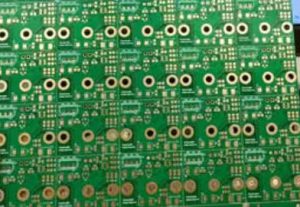
Copper
1. Copper Definition and Its Fundamental Properties in Electronics
1.1 Copper Definition in the Context of PCB Manufacturing
Copper is a highly conductive metal widely used in electrical and electronic applications due to its exceptional electrical and thermal properties. In PCB manufacturing, copper serves as the primary material for:
- Conductive traces
- Power planes
- Signal routing layers
- Vias and plated through holes
At its core, copper used in PCBs originates from refined cathodes, typically with purity levels exceeding 99.99%. These cathodes are processed into various forms such as:
- Copper foil
- Copper plating solutions
- Copper paste (in specialized applications)
1.2 Key Physical and Electrical Properties of Copper
Copper’s dominance in PCB design stems from several intrinsic properties:
- High electrical conductivity (~5.8 × 10⁷ S/m)
- Excellent thermal conductivity
- Ductility and flexibility
- Corrosion resistance (with proper treatment)
- Compatibility with multiple fabrication processes
These characteristics enable copper to support high-speed signals, high current loads, and efficient heat dissipation—critical in modern electronics.
1.3 Why Copper Remains Irreplaceable in PCBs
Despite ongoing research into alternative materials (such as aluminum or graphene), copper remains unmatched due to:
- Balanced cost-to-performance ratio
- Mature global supply chain
- Compatibility with existing manufacturing infrastructure
In essence, copper is not just a material—it is an industry standard that defines PCB performance expectations.
2. Copper Foil Production: The Bridge Between Raw Material and PCB
2.1 Copper Foil Types Used in PCB Manufacturing
Two primary types of copper foil are used:
Electrolytic Copper Foil (ED Copper)
- Produced via electrodeposition
- Lower cost
- Rough surface (better adhesion)
- Widely used in rigid PCBs
Rolled Annealed Copper Foil (RA Copper)
- Produced by rolling copper sheets
- Smoother surface
- Higher flexibility
- Ideal for flexible PCBs
2.2 Surface Treatment and Roughness Control
Copper foil undergoes surface treatment to improve adhesion with dielectric materials:
- Micro-etching
- Oxide treatment
- Anti-tarnish coating
Surface roughness plays a crucial role in:
- Signal integrity (especially at high frequencies)
- Insertion loss
- Reliability
2.3 Thickness Variations and Their Applications
Copper thickness is typically measured in ounces per square foot:
- 0.5 oz (thin, high-density designs)
- 1 oz (standard)
- 2 oz and above (power electronics)
Thicker copper increases current capacity but also raises:
- Material cost
- Etching complexity
- Manufacturing difficulty
3. Copper in Multilayer PCB Stack-Up Design
3.1 Copper Distribution Across Layers in Multilayer Structures
In multilayer PCBs, copper is distributed across signal layers, power planes, and ground planes. The way copper is allocated significantly influences both electrical performance and manufacturability.
Key considerations include:
- Symmetrical copper distribution to prevent warpage
- Balanced copper weight across layers
- Strategic placement of power and ground planes
Uneven copper distribution can result in:
- बोर्ड bending during lamination
- Internal stress accumulation
- Reliability degradation over time
3.2 Copper Balancing Techniques
To maintain structural integrity, designers often apply copper balancing techniques such as:
- Dummy copper filling
- Copper thieving patterns
- Grid copper structures
These techniques ensure:
- Uniform plating thickness
- Improved yield rates
- Reduced risk of delamination
3.3 Copper Thickness in Inner vs Outer Layers
Copper thickness varies between layers:
- Inner layers: typically thinner (0.5 oz or less)
- Outer layers: often thicker due to plating buildup
The plating process increases outer layer thickness, which must be accounted for during design to avoid impedance mismatches.
Copper Thickness vs Cost Impact Table
| Copper Thickness | Relative Cost Impact | Application |
|---|---|---|
| 0.5 oz | Low | HDI, fine-line circuits |
| 1 oz | Medium (standard) | General electronics |
| 2 oz | High | Power electronics |
| 3 oz+ | Very High | Industrial, automotive |
Conclusion
Copper’s journey from cathode to circuit is far more than a linear transformation of raw material into conductive pathways—it is a multidimensional process shaped by chemistry, physics, engineering constraints, and global economics. What begins as refined copper cathodes in large-scale smelting facilities ultimately evolves into precisely engineered conductive networks that define the performance and reliability of modern electronic systems.
Throughout this journey, copper consistently proves itself to be both indispensable and complex. Its unmatched electrical and thermal conductivity make it the ideal choice for PCB applications, yet these same advantages introduce challenges in processing, cost control, and design optimization. From foil production and surface treatment to etching, plating, and multilayer integration, every stage adds both value and variability.
One of the most critical takeaways is that copper is not merely a material cost—it is a system-level driver. Its thickness, distribution, roughness, and quality directly influence signal integrity, thermal management, mechanical reliability, and ultimately the success or failure of the final product. As PCB designs become more advanced—driven by AI computing, high-speed communication, and electrification trends—the margin for error in copper-related decisions continues to shrink.
Equally important is the realization that copper pricing is inherently volatile. Influenced by global demand, energy costs, mining output, and geopolitical conditions, copper introduces a layer of uncertainty into PCB quotations that cannot be ignored. This volatility reinforces the importance of strategic sourcing, long-term planning, and close collaboration between designers and manufacturers.
From a design perspective, engineers are increasingly required to think holistically about copper. Decisions regarding thickness, layer stack-up, and surface profile must balance performance requirements with manufacturability and cost efficiency. Overdesign can lead to unnecessary expenses, while underdesign can compromise reliability. The optimal solution lies in informed trade-offs, supported by data and experience.
This is where the role of a capable PCB manufacturing partner becomes especially valuable. Working with experienced suppliers such as SQ PCB enables access to deeper process knowledge, stable material sourcing, and practical design-for-manufacturing guidance. Such collaboration helps bridge the gap between theoretical design and real-world production, reducing risk while optimizing both cost and performance.
Looking ahead, copper will continue to evolve alongside emerging technologies. Innovations in ultra-low-profile foils, advanced plating techniques, and sustainable recycling practices will further enhance its role in next-generation electronics. At the same time, increasing demand from sectors such as electric vehicles, renewable energy, and high-performance computing will keep pressure on supply chains and pricing structures.
In conclusion, understanding copper’s full lifecycle—from cathode to circuit—is no longer optional for engineers, procurement specialists, or decision-makers in the electronics industry. It is a critical competency that enables smarter design choices, more accurate cost forecasting, and stronger supplier relationships.
By recognizing copper not just as a commodity, but as a strategic factor, companies can better navigate the complexities of PCB manufacturing and gain a competitive advantage in an increasingly demanding technological landscape.
FAQ
1. How can I reduce copper-related costs in PCB manufacturing?
You can reduce costs by optimizing copper thickness, improving layout efficiency, balancing layers, and collaborating with experienced manufacturers to refine design and material choices.
2. How does copper thickness affect PCB cost?
Thicker copper increases material usage, etching difficulty, and plating requirements, all of which raise manufacturing costs. However, it also improves current-carrying capacity and thermal performance.
3. Why is copper surface roughness important in high-speed PCBs?
Surface roughness affects signal loss due to the skin effect. Smoother copper surfaces reduce insertion loss and improve signal integrity in high-frequency applications.
4. Can recycled copper be used in PCBs?
Yes, recycled copper is widely used in PCB manufacturing. It retains its electrical and mechanical properties, making it a sustainable and cost-effective option.
5. What factors influence copper price fluctuations?
Copper prices are influenced by mining output, global demand (especially from EVs and renewable energy), energy costs, and geopolitical conditions.

- long board pcb
- Flexible PCBs
- Special PCB
- Express Printed Circuit Board
- Pcb Prototype
- LED PCB
- PCB
- Printed Circuit Board
- Pcb meaning
- Pcb manufacturer
- Rigid pcb board
- Rigid Flex PCB
 Quote
Quote
 E-mail