Barrier Against Moisture, Contaminants, and Corrosion: A Guide to Conformal Coating in PCBs
Introduction
As electronic systems migrate into harsher and less predictable environments, the traditional assumptions surrounding printed circuit board reliability are no longer sufficient. Moisture ingress, airborne contaminants, chemical corrosion, and particulate debris are no longer rare edge cases—they are daily operational realities for electronics deployed in automotive systems, industrial automation, renewable energy installations, aerospace platforms, and medical devices.
Within this context, Conformal Coating in PCBs has evolved from a secondary protective measure into a strategic design decision. It acts as an invisible barrier, selectively shielding vulnerable circuitry while preserving electrical functionality, heat dissipation, and serviceability. This article explores conformal coating not as a simple material choice, but as an integrated reliability philosophy embedded within modern PCB engineering.
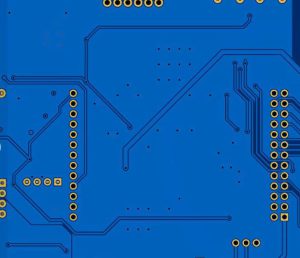
Conformal Coating in PCBs
Conformal Coating in PCBs: Definition and Functional Scope
Conformal Coating in PCBs as a Protective Engineering Layer
Conformal Coating in PCBs refers to a thin, polymer-based protective film applied directly onto assembled circuit boards. Unlike encapsulation or potting, this coating follows the contours of components, solder joints, and conductors without significantly altering board geometry or weight.
The primary function is environmental isolation. By forming a continuous dielectric barrier, conformal coatings prevent moisture condensation, block ionic contamination, and reduce the likelihood of corrosion-driven failure mechanisms such as dendritic growth or electrochemical migration.
Conformal Coating in PCBs Versus Other Protection Methods
From an engineering standpoint, conformal coating occupies a middle ground between bare-board protection and full encapsulation. It provides environmental resistance without fully sealing the board, enabling inspection, rework, and thermal exchange.
This balance explains why Conformal Coating in PCBs is favored in applications requiring long service life but also demanding maintainability—such as industrial controllers and transportation electronics.
Conformal Coating in PCBs: Material Categories and Performance Characteristics
Conformal Coating in PCBs and Common Coating Chemistries
Although the functional objective remains consistent, the materials used in conformal coating vary widely:
-
Acrylic-based coatings prioritize ease of application and rework.
-
Silicone coatings excel in high-humidity and wide-temperature environments.
-
Polyurethane coatings offer strong chemical resistance.
-
Parylene coatings deliver ultra-uniform coverage through vapor deposition.
Each chemistry presents trade-offs between mechanical protection, dielectric strength, cost, and processing complexity. Selecting the appropriate material is less about “best” performance and more about contextual optimization.
Conformal Coating in PCBs and Environmental Stress Profiles
A recurring misconception is that higher protection always equates to higher reliability. In reality, mismatched coating selection can introduce new risks—such as trapped moisture, reduced heat dissipation, or coating delamination under thermal cycling.
In my experience, the most successful designs treat Conformal Coating in PCBs as a response to a clearly defined stress profile rather than a generic safeguard.
Conformal Coating in PCBs: Design Principles and Engineering Logic
Conformal Coating in PCBs and Selective Protection Strategy
One of the most overlooked design principles is selectivity. Not all components benefit equally from coating. Connectors, high-voltage areas, and moving parts often require masking or controlled exclusion.
Effective Conformal Coating in PCBs design begins at the schematic and layout stage, not after assembly. Engineers must anticipate coating behavior around component density, shadowing effects, and edge coverage.
Conformal Coating in PCBs and PCB Layout Considerations
Layout decisions significantly influence coating effectiveness:
-
Tight component spacing can cause voids.
-
Sharp edges may lead to thin coverage zones.
-
Tall components can create coating shadow areas.
This is where collaboration between PCB designers and manufacturers becomes critical. Suppliers such as SQ PCB, known for their manufacturability-focused design support, can help align layout decisions with coating process constraints early in development.
Conformal Coating in PCBs: Impact on Electrical and Mechanical Performance
Conformal Coating in PCBs and Electrical Reliability
From an electrical standpoint, conformal coatings enhance insulation resistance and reduce leakage currents under humid conditions. This is particularly relevant for high-impedance analog circuits and high-voltage assemblies.
However, excessive coating thickness or poor material selection can alter parasitic capacitance or interfere with RF performance. This reinforces the need for controlled application and validation testing.
Conformal Coating in PCBs and Mechanical Durability
Mechanically, conformal coatings mitigate vibration-induced fatigue by stabilizing solder joints and reducing micro-movement of components. In automotive and industrial sectors, this secondary benefit often proves as valuable as environmental protection itself.
Conformal Coating in PCBs: Manufacturing Process Integration
Conformal Coating in PCBs and Application Methods
Application techniques include brushing, spraying, dipping, and vapor deposition. Each method affects thickness uniformity, cycle time, and cost.
For medium- to high-volume production, automated selective spraying offers the best balance between precision and throughput. Experienced manufacturers like SQ PCB integrate conformal coating considerations directly into their assembly workflows, reducing rework and process variability.
Conformal Coating in PCBs and Quality Assurance
Inspection under UV light, thickness measurement, and environmental stress testing are essential to verify coating integrity. A coating that looks acceptable under visible light may still contain voids or thin spots that compromise protection.
Conformal Coating in PCBs: Cost–Benefit Analysis and Engineering Trade-Offs
Conformal Coating in PCBs and Direct Cost Considerations
From a purely financial perspective, conformal coating introduces additional material, equipment, labor, and inspection costs. These expenses are often scrutinized during early project budgeting, especially for consumer or cost-sensitive industrial products.
However, evaluating Conformal Coating in PCBs solely based on upfront cost is a narrow view. The true economic value emerges when lifecycle costs are considered, including reduced warranty claims, lower field failure rates, and minimized downtime. In many industrial and automotive applications, a single avoided failure can offset the coating cost of hundreds or even thousands of boards.
Conformal Coating in PCBs and Hidden Savings Over Product Lifetime
Field failures rarely fail quietly. They often require diagnostic labor, logistics coordination, and customer relationship management. When electronics are deployed in remote or mission-critical systems, replacement costs escalate rapidly.
By extending operational life and stabilizing performance, Conformal Coating in PCBs functions as a cost-avoidance mechanism. In my experience, organizations that track long-term reliability metrics often find that coated assemblies deliver a significantly lower total cost of ownership, even when initial production costs are higher.
Conformal Coating in PCBs: Application-Specific Design Strategies
Conformal Coating in PCBs for Industrial Control Systems
Industrial control electronics are exposed to a unique mix of stressors: dust, oil vapors, vibration, and temperature variation. These conditions are rarely extreme in isolation, but their combined effect over time is highly destructive.
In such systems, conformal coating is best applied selectively, focusing on high-impedance circuits, sensor interfaces, and power regulation areas. This targeted approach preserves serviceability while significantly improving robustness. Here, Conformal Coating in PCBs acts less as armor and more as environmental conditioning.
Conformal Coating in PCBs for Automotive Electronics
Automotive environments introduce rapid thermal cycling, high humidity, and chemical exposure from fuels and road salts. Failure tolerance is extremely low, particularly for safety-related systems.
In this context, conformal coating supports compliance with stringent automotive reliability standards. More importantly, it adds a margin of safety that compensates for real-world usage conditions that are difficult to fully replicate in laboratory testing.
Key Aspects of Conformal Coating in PCBs
| Aspect | Description | Impact on PCB Performance |
|---|---|---|
| Environmental Protection | Forms a barrier against moisture, dust, chemicals, and airborne contaminants | Reduces corrosion, leakage currents, and electrochemical migration |
| Electrical Reliability | Increases surface insulation resistance and stabilizes high-impedance circuits | Improves signal integrity and reduces intermittent failures |
| Mechanical Stability | Reinforces solder joints and limits micro-movement under vibration | Enhances durability in automotive and industrial environments |
| Thermal Interaction | Adds a thin insulating layer without fully blocking heat transfer | Requires careful material selection for thermally sensitive designs |
| Design Integration | Must be considered during layout, component placement, and masking strategy | Improves manufacturability and coating consistency |
| Manufacturing Control | Depends on controlled application, curing, and inspection processes | Directly influences yield and long-term reliability |
| Maintenance & Rework | Varies by coating chemistry and removal method | Affects serviceability and lifecycle management |
| Cost vs. Value | Adds upfront cost but reduces long-term failure expenses | Lowers total cost of ownership over product lifespan |
Conclusion
Conformal Coating in PCBs represents far more than a thin protective layer applied at the end of manufacturing. It is a deliberate engineering choice that reflects how designers anticipate environmental stress, manage long-term reliability, and balance protection with manufacturability. In modern electronics—where devices are expected to operate reliably in humid, polluted, thermally unstable, or mechanically demanding environments—this coating has become an essential part of the system-level reliability strategy.
Throughout this article, it becomes clear that the effectiveness of conformal coating is not defined by the material alone. Instead, it is shaped by early-stage design decisions, realistic environmental assessment, disciplined manufacturing control, and appropriate validation testing. When these elements align, conformal coating acts as a silent stabilizer, reducing failure mechanisms that are otherwise difficult to predict or detect.
From my perspective, the most important insight is that conformal coating should never be used as a corrective measure for weak design. Its true value emerges when it reinforces already sound PCB architecture, extending service life and performance margins rather than masking vulnerabilities. As electronic systems continue to move closer to physical, chemical, and thermal limits, Conformal Coating in PCBs will remain a critical tool—one that rewards thoughtful integration and penalizes shortcuts.
FAQs
1. When should conformal coating be applied in the manufacturing process?
Only after final inspection and testing. Applying coating too early can trap defects and complicate troubleshooting.
2. Does conformal coating completely waterproof a PCB?
No. Conformal coating provides moisture resistance, not full waterproofing. Prolonged immersion or high-pressure exposure requires encapsulation or sealed enclosures.
3. Can conformal coating be removed for rework?
Yes, depending on the coating material. Acrylic coatings are easiest to remove, while parylene coatings are the most difficult.
4. Does conformal coating affect heat dissipation?
It can. While thin coatings have minimal impact, thick or poorly selected materials may reduce thermal transfer from components.
5. Is conformal coating required for all industrial PCBs?
Not always. Its necessity depends on environmental exposure, reliability targets, and lifecycle expectations.

- long board pcb
- Flexible PCBs
- Special PCB
- Express Printed Circuit Board
- Pcb Prototype
- LED PCB
- PCB
- Printed Circuit Board
- Pcb meaning
- Pcb manufacturer
- Rigid pcb board
- Rigid Flex PCB
 Quote
Quote
 E-mail