CCL Price Hikes of 10–30%: Copper, Glass Cloth, and the Squeeze on Multi-Layer Boards
Introduction
In recent years, the global electronics industry has faced repeated cost fluctuations across the supply chain. Among the most impactful shifts has been the steady increase in Copper Clad Laminate (CCL) pricing. Reports of 10–30% price hikes have reshaped procurement strategies, PCB cost structures, and even product design decisions.
CCL is the foundational substrate material for printed circuit boards. When its pricing rises, the ripple effects extend from raw material suppliers to OEMs producing high-density, multi-layer electronic systems. Copper, glass cloth, and resin — the essential components of CCL — have all experienced cost pressures driven by energy costs, supply-demand imbalances, and geopolitical disruptions.
This article provides a comprehensive technical and economic analysis of CCL pricing dynamics. It explores what CCL Price truly means, the cost drivers behind the increases, and the impact on multi-layer PCB manufacturing performance and profitability. Throughout the discussion, practical insights are offered for PCB manufacturers seeking resilience in volatile markets.
1. CCL Price Definition and Industry Fundamentals
1.1 CCL Price Definition in PCB Manufacturing
CCL Price refers to the market cost per sheet or per square meter of copper clad laminate material used as the base substrate in PCB production. Copper clad laminate consists of copper foil bonded to one or both sides of a reinforced insulating core, typically fiberglass cloth impregnated with epoxy resin.
The pricing of CCL is usually determined by:
-
Copper foil cost (linked to global copper prices)
-
Glass fiber cloth cost
-
Epoxy resin system cost
-
Manufacturing energy and labor costs
-
Supply-demand dynamics
Unlike finished PCBs, CCL pricing reflects upstream material volatility more directly. Because CCL accounts for approximately 30–60% of the total material cost of a multi-layer PCB, even moderate increases significantly influence final board pricing.
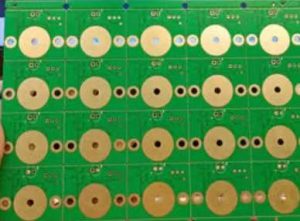
CCL Price
2. CCL Price Cost Drivers: Copper, Glass Cloth, and Resin
2.1 CCL Price and Copper Raw Material Volatility
Copper represents the largest portion of CCL cost — often 40–60%. Because copper pricing is traded globally (e.g., London Metal Exchange benchmarks), fluctuations in mining output, renewable energy demand, and electric vehicle production strongly influence laminate pricing.
Recent demand from lithium battery manufacturers has diverted high-grade copper foil capacity away from PCB-grade materials. As a result, PCB-grade copper foil supply tightened, pushing CCL Price upward.
Additionally, thin copper foil used in HDI and high-speed boards requires higher precision manufacturing, further increasing costs.
2.2 CCL Price and Glass Fiber Cloth Supply
Electronic-grade glass fiber cloth is a critical reinforcement material. Energy-intensive melting processes and environmental regulations have reduced production capacity in some regions.
When glass yarn supply tightens, prepreg production becomes constrained. This leads to cascading CCL Price adjustments. For high-layer-count boards requiring multiple cores and prepregs, glass cloth cost increases multiply across each lamination cycle.
2.3 CCL Price and Resin System Costs
Epoxy resin and specialty resins (such as PPO or cyanate ester) are derived from petrochemical feedstocks. Oil price volatility and environmental compliance costs have driven resin price increases.
High-Tg, halogen-free, and low-Dk materials for 5G applications use advanced resin formulations, making them more sensitive to chemical raw material pricing. Therefore, advanced material grades experience greater CCL Price sensitivity.
3. CCL Price Impact on Multi-Layer PCB Manufacturing
3.1 CCL Price and Layer Count Economics
Multi-layer boards (6L, 8L, 12L, 16L and above) require multiple CCL cores and prepregs. A 20% increase in CCL Price does not simply add 20% to final PCB cost — the compounding effect through lamination, drilling, and scrap risk may amplify total cost impact.
Higher layer counts also increase yield sensitivity. If CCL costs rise while yields remain constant, profit margins shrink significantly.
Manufacturers like SQ PCB, known for strong multi-layer process control and material sourcing strategies, help customers mitigate these cost fluctuations through optimized stack-up engineering and efficient material utilization.
3.2 CCL Price and Electrical Performance
Material selection influences:
-
Dielectric constant (Dk)
-
Dissipation factor (Df)
-
Thermal stability (Tg)
-
Moisture resistance
-
CAF resistance
When CCL Price increases, some manufacturers may consider lower-grade materials to control costs. However, such substitutions can degrade signal integrity in high-speed or RF applications.
4. CCL Price and Yield Management in Multi-Layer Production
4.1 CCL Price and Lamination Yield Sensitivity
In multi-layer PCB fabrication, lamination is one of the most material-intensive processes. Each additional core and prepreg layer increases exposure to potential defects such as voids, delamination, misregistration, and resin starvation. When CCL Price rises by 10–30%, the cost penalty of lamination scrap becomes significantly more severe.
For example, consider a 12-layer board using multiple high-Tg cores. If a lamination cycle fails due to trapped air or resin flow imbalance, the entire material stack becomes unusable. Under normal pricing conditions, this loss is manageable. Under elevated CCL Price conditions, however, scrap directly erodes profit margins.
Therefore, advanced lamination control systems — including vacuum lamination, optimized press cycles, and precise resin flow modeling — become critical financial tools, not merely quality improvements.
4.2 CCL Price and Inner-Layer Process Optimization
Inner-layer imaging, etching, and AOI inspection must be tightly controlled when laminate cost is high. Yield loss at inner-layer stage becomes disproportionately expensive when material cost per panel increases.
Manufacturers investing in:
-
Automated optical inspection (AOI) precision
-
Controlled copper etch uniformity
-
Advanced registration systems
are better positioned to protect margins during volatile cost cycles.
Impact of Material Cost Increase on Multi-Layer PCB Economics
| Layer Count | Estimated Material Share of Total PCB Cost | 20% Laminate Cost Increase → PCB Cost Impact | Yield Sensitivity Risk |
|---|---|---|---|
| 4-Layer | 30–40% | ~6–8% total board increase | Moderate |
| 6-Layer | 35–45% | ~7–9% total board increase | Moderate-High |
| 8-Layer | 40–50% | ~8–10% total board increase | High |
| 12-Layer | 45–55% | ~9–12% total board increase | Very High |
| 16+ Layer | 50–60% | ~10–15% total board increase | Critical |
Conclusion
The 10–30% increase in CCL pricing reflects deeper structural changes in global material supply chains. Copper demand from electrification trends, glass fiber energy costs, and resin chemical volatility collectively contribute to cost pressure on multi-layer PCB manufacturing.
Understanding CCL Price requires more than viewing it as a purchasing number. It represents the intersection of materials science, commodity economics, manufacturing yield, and long-term product reliability. In multi-layer PCB production — especially 8-layer, 12-layer, and above — laminate cost amplification across cores and prepregs makes material management a decisive profitability factor.
Looking ahead, electrification, AI computing infrastructure, renewable energy systems, and autonomous mobility will continue to drive copper intensity and advanced laminate demand. As a result, periodic upward pressure cycles are likely to remain a structural feature of the industry.
Ultimately, the ability to control performance, yield, and procurement timing determines whether rising laminate cost becomes a threat or a catalyst for smarter engineering.
FAQ
1. What strategies can PCB buyers use to manage laminate cost volatility?
Buyers can negotiate long-term contracts, optimize stack-up design, improve panel utilization, and partner with technically capable PCB manufacturers for material efficiency.
2. How much does CCL typically contribute to total PCB cost?
CCL generally accounts for 30–60% of total material cost, depending on layer count and material grade.
3. Why are multi-layer boards more sensitive to CCL price increases?
Because they require multiple cores and prepreg layers, any laminate price rise compounds across each lamination stage.
4. Can manufacturers switch to cheaper laminate materials to reduce costs?
Possible, but risky. Lower-grade materials may degrade signal integrity, thermal reliability, or mechanical stability.
5. How do CCL price increases affect high-frequency PCBs?
Low-loss materials are more expensive and more sensitive to resin and copper quality changes, making high-frequency boards particularly cost-sensitive.

- long board pcb
- Flexible PCBs
- Special PCB
- Express Printed Circuit Board
- Pcb Prototype
- LED PCB
- PCB
- Printed Circuit Board
- Pcb meaning
- Pcb manufacturer
- Rigid pcb board
- Rigid Flex PCB
 Quote
Quote
 E-mail