Annular Ring Integrity: Maintaining Capture Pad Reliability Under Tight Registration
Introduction
In modern printed circuit board (PCB) manufacturing, the relentless push toward higher density, smaller geometries, and multilayer complexity has introduced significant challenges in maintaining structural and electrical reliability. Among these challenges, annular ring integrity stands out as a critical factor influencing the long-term performance and manufacturability of PCBs. As design tolerances shrink and layer counts increase, ensuring sufficient copper around drilled holes—commonly referred to as the annular ring—becomes increasingly difficult.
At the heart of this issue lies Capture Pad Reliability, a concept that encapsulates the ability of pads to maintain electrical connectivity and mechanical stability despite inevitable manufacturing variations such as drill misregistration and etching deviations. While often overlooked during early design stages, inadequate attention to this aspect can lead to catastrophic failures, including open circuits, weak interconnections, and reduced product lifespan.
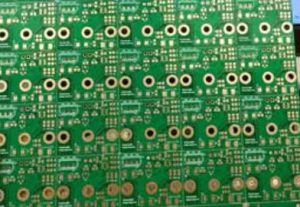
Capture Pad Reliability
1. Understanding Capture Pad Reliability: Definition and Core Concepts of Capture Pad Reliability
Capture Pad Reliability refers to the ability of a PCB pad surrounding a drilled hole (via or through-hole) to consistently maintain sufficient conductive material to ensure reliable electrical and mechanical connection, even under conditions of misalignment or process variation.
In essence, it is not just about meeting nominal design dimensions—it is about ensuring functional tolerance robustness.
1.1 The Role of Annular Rings
An annular ring is the copper area between the edge of a drilled hole and the edge of the pad. Its primary functions include:
- Providing a conductive interface for plated holes
- Ensuring mechanical anchoring of components
- Acting as a buffer against drilling inaccuracies
When annular rings are too small, even minor drill offsets can result in “breakouts,” where the hole edge cuts into or beyond the pad boundary.
1.2 Types of Annular Rings
- Internal Layer Annular Ring: More sensitive due to limited inspection capability
- External Layer Annular Ring: Easier to inspect but still critical
- Via Annular Ring: Essential for interlayer connectivity
Each type plays a role in overall Capture Pad Reliability, especially in multilayer and HDI (High-Density Interconnect) designs.
1.3 Key Metrics
- Minimum annular ring width
- Drill-to-pad alignment tolerance
- Fabrication allowance (etching + drilling)
From a design perspective, Capture Pad Reliability is achieved when these metrics are balanced to withstand worst-case manufacturing deviations.
2. Capture Pad Reliability in PCB Manufacturing: Process Sensitivities and Capture Pad Reliability Challenges
Maintaining Capture Pad Reliability is not solely a design issue—it is deeply influenced by fabrication processes.
2.1 Drill Registration Accuracy
Drilling is one of the most critical steps affecting annular ring integrity. Even with advanced CNC drilling systems, slight positional deviations occur due to:
- Material expansion and contraction
- Stack-up misalignment
- Tool wear
As layer counts increase, cumulative errors can significantly impact inner-layer pad alignment.
2.2 Imaging and Etching Variability
Photolithography and etching processes introduce additional uncertainties:
- Over-etching reduces pad size
- Under-etching may cause short circuits
- Misregistration between layers affects via landing
These factors collectively reduce effective annular ring width.
2.3 Lamination Effects
During multilayer lamination:
- Resin flow can shift inner layers
- Thermal expansion alters dimensions
- Pressure inconsistencies introduce distortion
These changes directly influence Capture Pad Reliability, particularly for inner-layer connections.
3. Failure Mechanisms Related to Capture Pad Reliability in Real-World Applications
When Capture Pad Reliability is compromised, failures rarely occur in isolation. Instead, they manifest as a chain reaction of mechanical and electrical issues that progressively degrade PCB functionality. Understanding these failure mechanisms is essential for both designers and manufacturers aiming to improve long-term reliability.
One of the most common issues is annular ring breakout, where the drilled hole partially or completely removes the surrounding copper pad. This typically occurs when drill misregistration exceeds the available annular ring margin. In high-density designs, even a minor positional shift can result in exposed hole walls, leading to intermittent or permanent open circuits. These failures are particularly problematic in inner layers, where inspection and rework are extremely difficult or even impossible.
Another critical failure mode involves barrel cracking. When the annular ring is insufficient, the plated through-hole (PTH) lacks adequate mechanical anchoring. Under thermal cycling conditions—such as those experienced during soldering or field operation—the mismatch in coefficient of thermal expansion (CTE) between copper and substrate materials causes stress concentration at weak نقاط. Over time, this leads to micro-cracks in the plating, eventually causing electrical discontinuity.
Additionally, pad lifting can occur during assembly processes. If the pad does not have enough copper area bonded to the substrate, mechanical forces from component insertion or rework can cause it to detach. This is especially critical in through-hole technology and high-reliability applications such as automotive and aerospace electronics.
From a systems perspective, these failures highlight that Capture Pad Reliability is not merely a geometric parameter—it is a multi-physics reliability factor involving mechanical stress, thermal cycling, and electrical continuity.
4. Advanced Materials and Their Role in Enhancing Capture Pad Reliability
Material selection plays a pivotal role in maintaining Capture Pad Reliability, especially as PCB designs push the limits of miniaturization and performance.
One important factor is the dimensional stability of the substrate material. High-quality laminates with low thermal expansion coefficients help minimize layer misalignment during lamination and thermal cycling. Materials such as high-Tg (glass transition temperature) FR-4 and advanced resin systems offer improved stability compared to standard materials.
Copper foil type also influences reliability. Rolled annealed (RA) copper provides बेहतर mechanical flexibility and resistance to cracking, making it suitable for applications requiring high durability. In contrast, electrodeposited (ED) copper is more commonly used due to its cost-effectiveness, but it may exhibit lower مقاومت to mechanical stress.
Another consideration is resin flow characteristics during lamination. Uniform resin distribution helps maintain layer alignment and reduces the risk of pad shift. Advanced prepreg materials are engineered to provide consistent flow properties, improving overall structural integrity.
Surface finishes, such as ENIG (Electroless Nickel Immersion Gold) and OSP (Organic Solderability Preservative), also indirectly affect Capture Pad Reliability by influencing solder joint quality and thermal behavior.
In my view, material selection should not be treated as a secondary consideration. Instead, it should be integrated into the overall design strategy, as it directly impacts the ability to maintain reliable interconnections under real-world conditions.
Cost vs. Reliability Trade-Off Table for Capture Pad Reliability Optimization
Balancing cost and reliability is a central challenge in PCB design. The following table provides a practical comparison of design and process choices, highlighting their cost implications and benefits to Capture Pad Reliability.
| Design / Process Choice | Cost Impact | Reliability Impact | When to Use | Trade-Off Consideration |
|---|---|---|---|---|
| Increase Annular Ring Size | Low to Moderate | High improvement | General-purpose and high-reliability boards | Slight increase in board size |
| Use High-Precision Drilling | Moderate | Significant improvement | HDI and multilayer PCBs | Requires advanced equipment |
| Adopt Laser Drilling (Microvias) | High | High for fine-pitch designs | Smartphones, wearables | Higher fabrication cost |
| Implement Teardrop Pads | Minimal | Moderate to high | All designs, especially tight layouts | Slight increase in design complexity |
| Use High-Tg Materials | Moderate | High (thermal stability) | Automotive, industrial | Higher material cost |
| Tighten Registration Tolerance | High | High | Aerospace, medical devices | Increased manufacturing complexity |
| Advanced Inspection (X-ray, AOI) | Moderate | Preventive reliability gain | High-value PCBs | Adds to production time and cost |
| Partner with Experienced Manufacturer (e.g., SQ PCB) | Variable | High (process optimization) | Complex or critical applications | Reduces risk of costly failures |
Conclusion
Maintaining annular ring integrity under tight registration conditions is one of the most demanding challenges in modern PCB design and manufacturing. Capture Pad Reliability serves as a crucial indicator of whether a design can withstand real-world variations and deliver consistent performance.
Throughout this discussion, it becomes clear that achieving robust reliability requires a holistic approach. It involves not only careful design practices—such as optimizing annular ring size and drill-to-pad ratios—but also precise manufacturing processes, advanced materials, and rigorous quality control.
Equally important is the collaboration between designers and manufacturers. Working with experienced partners like SQ PCB allows for better alignment between design intent and fabrication capability, reducing risks and improving outcomes.
In my view, the most successful PCB designs are those that embrace uncertainty rather than ignore it. By accounting for variability and building in sufficient margins, engineers can create products that are not only functional but also durable and cost-effective over their entire lifecycle.
FAQs
1. How does PCB material selection affect reliability?
Materials with better thermal stability and lower expansion rates help maintain alignment and reduce stress, improving overall reliability and performance.
2. Why is annular ring size important in PCB design?
Annular ring size ensures there is enough copper around drilled holes to maintain electrical connectivity and mechanical strength, even when drilling misalignment occurs.
3. What causes drill misregistration in PCB manufacturing?
Drill misregistration can result from material expansion, layer misalignment, machine tolerance limits, and tool wear during the drilling process.
4. How can designers improve Capture Pad Reliability?
Designers can improve reliability by increasing annular ring margins, optimizing drill-to-pad ratios, using teardrop pads, and collaborating with manufacturers for DFM optimization.
5. What are the risks of insufficient annular rings?
Insufficient annular rings can lead to open circuits, weak mechanical connections, increased resistance, and reduced product lifespan.

- long board pcb
- Flexible PCBs
- Special PCB
- Express Printed Circuit Board
- Pcb Prototype
- LED PCB
- PCB
- Printed Circuit Board
- Pcb meaning
- Pcb manufacturer
- Rigid pcb board
- Rigid Flex PCB
 Quote
Quote
 E-mail