Beyond Cost: Why Backdrill is a Necessary Investment in High-Frequency PCB Manufacturing
1. Understanding the Fundamentals: What Is Backdrill?
1.1 Backdrill Definition and Process
Backdrill is a mechanical process used in PCB manufacturing to remove unused portions of plated-through vias. During fabrication, a drill bit is used to selectively remove copper plating from the stub of a via that does not contribute to electrical connectivity. This is achieved by drilling from the surface into a specific depth, leaving the finished via only as long as necessary to connect the required layers. Every through-hole via is a vertical conductor that spans the entire thickness of the PCB. However, in multi-layer designs, not every via makes use of its full depth. The unused portion becomes a “stub,” and this stub behaves as a parasitic transmission line.
Backdrill selectively eliminates this unused portion.
What Backdrill does:
| Aspect | Impact |
|---|---|
| Removes unused via stub | Eliminates parasitic behavior |
| Controls depth | Preserves required connectivity |
| Uses mechanical drill bit | Reliable, predictable technique |
| Does not change layer design | Only modifies remaining geometry |
Backdrill is not an electrical test, a coating, or a microvia alternative.
It is a physical restructuring of the barrel to enable high-speed signal continuity.
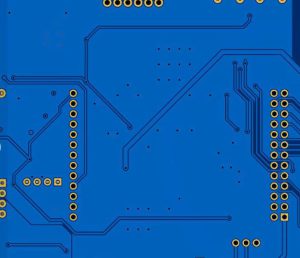
Backdrill
1.2 Why Via Stubs Are Problematic
A via stub acts as a miniature antenna. It reflects high-frequency signals, introduces resonances, and generates electromagnetic interference. As frequencies increase, the stub increasingly becomes a performance obstacle.
Key issues caused by via stubs:
-
Signal reflection
-
Bandwidth limitation
-
Increased insertion loss
-
Impedance variation
-
Resonance formation at specific frequencies
-
Crosstalk between adjacent transmission lines
-
Radiation and emissions
In digital systems with strict time budgets, these factors accumulate into lost eye openings, signal collapse, and compliance failures.
Backdrill removes the physical structure that causes these problems.
1.3 When Backdrill Is Most Frequently Used
Backdrill is typically requested in:
-
High-speed digital PCBs
-
RF and microwave systems
-
5G infrastructure
-
Aerospace and defense electronics
-
Telecommunications hardware
-
PCIe, SERDES, JESD204B, 10–56 Gbps systems
-
Data center switching
-
AI acceleration platforms
Whenever signal edge rates are short and bandwidth is wide, Backdrill becomes a priority.
2. Why Back-drill Is Not Optional: Necessity in High-Frequency PCB Manufacturing
2.1 Back-drill and the Physics of High-Frequency Signals
High-frequency signals behave more like electromagnetic waves than simple electrical current. They are highly sensitive to geometry, impedance, dielectric materials, and discontinuities. Stubs create partial reflections because the wave reaches the open end of a stub, reverses direction, and returns to the source.
This creates:
-
Delay uncertainty
-
Eye diagram collapse
-
Increased jitter
-
Degraded bit-error-rates
-
Compliance failure at standards testing
Backdrill is one of the few manufacturing actions that can permanently eliminate this type of structural defect.
2.2 Economic Decision: Pay Now or Pay Later
The paradox of Backdrill is that it is perceived as expensive, but ignoring it is costlier.
Skipping Backdrill causes:
| Cost Category | Consequence |
|---|---|
| Design | Additional constraints |
| Manufacturing | Lower yield |
| Testing | Compliance failures |
| Time-to-market | Delays |
| Operation | Reliability issues |
| Warranty | Returns and remediation |
If a $3 added cost prevents a $300 board failure, the ROI is indisputable.
More importantly, many companies waste more time debugging signal integrity than Backdrill costs in the first place.
2.3 Back-drill and PCB Reliability
A board that fails compliance testing because of resonance or EMI is not merely suboptimal—it is unsellable.
Backdrill:
-
Reduces signal distortion
-
Enhances impedance consistency
-
Minimizes radiated emissions
-
Decreases thermal stress concentration
-
Improves dielectric breakdown margins
Reliability does not only matter for aerospace or automotive.
It matters for consumer electronics, servers, AI accelerators, routers, and anything that must operate continuously.
2.4 Why High-Frequency Systems Cannot Rely on Simulation Alone
Pre-layout simulation cannot compensate for residual resonance.
Post-layout simulation cannot remove parasitic geometry.
Backdrill solves a problem that cannot be entirely modeled, predicted, or designed away.
Simulation predicts performance.
Backdrill enables that performance to materialize.
3. Performance Impact of Back-drill: Measurable Advantages That Justify Its Cost
3.1 Back-drill and Signal Integrity Enhancement
By removing via stubs, Backdrill improves:
-
Insertion loss
-
Return loss
-
Eye width
-
Eye height
-
Phase stability
Engineers often underestimate how a small change in via length impacts entire systems.
For example, a 10 mil stub can impair signals over 15 GHz.
A 50 mil stub can disable a 25 Gbps lane entirely.
Removing the stub resets signal behavior to its intended theoretical model.
3.2 Back-drill and EMI/EMC
Electromagnetic emissions are not only technical issues—they are regulatory issues.
A failed FCC Class B test can:
-
Delay product release by months
-
Require redesign
-
Trigger retesting cycles
Backdrill reduces emissions by removing a physical antenna.
This is one of the few EMI mitigation methods that does not require:
-
Shielding cans
-
Ground fences
-
Ferrites
-
Absorbing materials
In cost terms, Backdrill is cheaper than every one of those alternatives.
3.3 Back-drill and Power Efficiency
Signal distortion increases switching losses.
Switching losses increase total power consumption.
In high-density computing systems, power consumption is not a design variable—it is a thermal constraint and a regulatory limit.
Backdrill does not simply save microwatts.
It enables power budgets to be allocated to computational load rather than signal correction.
3.4 Back-drill and System Longevity
Long-term reliability is influenced by:
-
Thermal cycles
-
Mechanical stress
-
Vibration
-
Corrosion
Long, unused copper structures worsen these issues.
When Backdrill removes those structures, it indirectly extends product life.
4. Engineering Design Considerations: How to Design for Back-drill
4.1 Back-drill and Stack-Up Design
The most effective Backdrill implementation begins at the stack-up level.
Backdrill is not a post-processing band-aid—it is a structural design strategy.
Critical parameters to consider:
-
Layer-to-layer via transitions
-
Isolation of signal layers
-
Thickness of dielectric layers
-
Copper plating thickness
-
Pad geometry and sizes
Stack-ups optimized for Backdrill support:
-
Shorter stubs
-
More predictable resonance profiles
-
Lower insertion loss
-
Stable impedance targets
Poor stack-up choices cannot be rescued later by even perfect Backdrill execution.
4.2 Back-drill and Via Design Rules
When designing vias that will be Backdrilled, designers should consider:
-
Drill size and tolerance
-
Finished barrel length
-
Ring and land dimensions
-
Via anti-pad clearance
-
Targeted drill depth
Design teams should align with fabrication limits, such as:
-
Minimum drill diameter
-
Minimum pad size
-
Minimum clearance
-
Maximum aspect ratio
Ignoring these limits introduces manufacturing risk that often leads to:
-
Scrap
-
Rework
-
Engineering delays
Backdrill is precise but not magical.
4.3 When Back-drill Should Not Be Used
Although Back-drill is valuable, it is not ideal for every scenario.
Unsuitable cases include:
-
Low-frequency designs
-
Ultra-thin boards
-
Designs without long vias
-
Boards where power vias dominate
In such designs, manufacturing complexity may outweigh performance benefits.
However, these cases represent an increasingly small share of modern electronics.
Conclusion: Beyond Cost—Why Back-drill is a Necessary Investment in High-Frequency PCB Manufacturing
High-frequency PCB manufacturing has entered an era where traditional fabrication techniques are no longer sufficient to achieve the electrical performance, reliability, and miniaturization demanded by modern products. In this environment, Backdrill becomes more than a process decision—it becomes a strategic investment that directly impacts signal speed, system stability, and long-term functionality.
Although Backdrill introduces incremental cost and process complexity, its value cannot be evaluated through manufacturing expense alone. Instead, it must be measured through the lens of system-level benefits, including:
-
Reduction of stub-induced signal reflections
-
Lower insertion loss and improved eye diagrams
-
Higher channel capacity for complex serial interfaces
-
Better EMC compliance without costly post-design fixes
-
Greater reliability in harsh or thermally demanding environments
As the frequency of digital systems surpasses multi-GHz thresholds, the penalty for ignoring via stubs becomes exponentially more severe. Designs without Backdrill face measurable amplitude distortion, timing jitter, inter-symbol interference, and crosstalk—issues that cannot be solved through layout optimization alone.
This is why top-tier networking, aerospace, and telecommunications manufacturers treat Backdrill not as a discretionary premium, but as a standard baseline capability. The cost of not implementing it is far greater:
-
Increased failure rates in the field
-
Customer returns and reputation risk
-
Excessive signal-integrity engineering effort
-
Over-engineered materials and stackups to compensate
A meaningful insight is that Back-drill can reduce overall system cost, despite higher unit manufacturing price. It enables more compact designs, fewer layers, lower loss materials, and improved yield—benefits that cascade through manufacturing, assembly, and lifecycle support.
Furthermore, supply partners matter. Earlier in the article we mentioned SQ PCB because in high-frequency PCB fabrication, execution consistency determines performance. A manufacturer that understands the tight process windows, drill accuracy, layer registration, and verification standards required for Backdrill, contributes directly to the success of the product—not just its fabrication.
Ultimately, Back-drill is not an optional enhancement—it is a necessary engineering investment for systems where performance, reliability, and predictability matter. As frequencies rise, designs densify, and markets demand flawless connectivity, PCB fabrication must evolve accordingly. Manufacturers and OEMs that embrace this reality will build platforms capable of supporting the next generation of high-speed innovation, instead of struggling to retrofit yesterday’s infrastructure.
FAQs
1. How does Back-drill compare to laser-drilled blind vias for high-speed applications?
Laser-drilled blind vias eliminate stubs entirely, but require higher cost materials and process capability. Back-drill is a cost-efficient method to achieve similar high-speed performance using traditional via structures, which is why it is widely adopted in telecom and networking hardware.
2. How does Back-drill reduce signal reflections in high-frequency boards?
Backdrill removes unused via segments, eliminating the “stub” that acts as a resonant element. This reduces energy reflection, minimizes return-path disruptions, and helps maintain stable impedance and signal clarity.
3. Is Back-drill necessary for low-frequency or consumer electronics designs?
Not always. If operating frequencies are below 1 GHz and signal quality requirements are moderate, via stubs may not significantly affect performance. Backdrill becomes essential in high-frequency, high-speed digital designs such as networking, servers, radar, and telecom.
4. Does Back-drill weaken PCB mechanical strength?
When properly designed, no. The drilling depth is carefully controlled, and annular rings remain intact. In many cases, Backdrill improves reliability by reducing localized energy concentration and thermal stress.
5. Is there a cost-effective approach to implementing Back-drill in production?
Selecting an experienced manufacturer such as SQ PCB, designing optimized via structures, and applying Backdrill selectively only on critical nets can significantly reduce cost while maximizing performance benefit.

- long board pcb
- Flexible PCBs
- Special PCB
- Express Printed Circuit Board
- Pcb Prototype
- LED PCB
- PCB
- Printed Circuit Board
- Pcb meaning
- Pcb manufacturer
- Rigid pcb board
- Rigid Flex PCB
 Quote
Quote
 E-mail